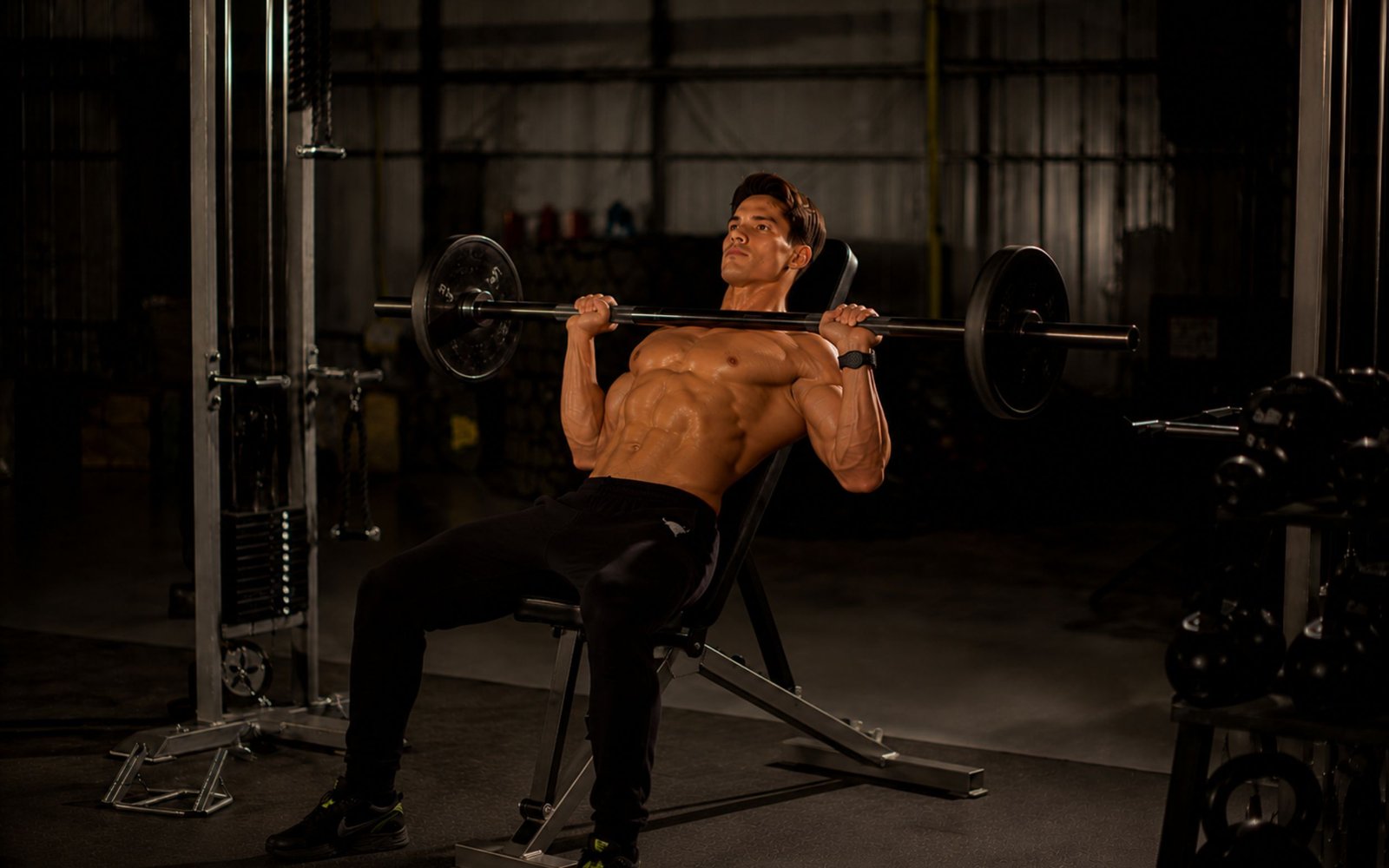
Incline Press: why this exercise remains a basis in bodybuilding

Développé couchéPectoraux · barre
The incline press is one of the most used exercises to develop the upper torso, improve thrusting and build fuller pectorals. It is particularly appreciated because it allows you to modify the working angle compared to the classic bench press. By tilting the bench, you change the trajectory, muscle recruitment and sensation on the top of the pectorals.
When we talk about inclined press, we are actually talking about a family of exercises. There is a version with inclined dumbbell press, a version inclined barbell press, a variation on inclined machine press, an execution on smith machine inclined press or even convergent and guided shapes depending on the equipment available. This diversity explains why the exercise remains present in almost all upper body strength training programs.
The main objective is often clear: better recruit the upper pectorals, build a balanced push and vary the work compared to the bench press. But depending on the equipment used, the sensations, stability, amplitude and technical difficulty change a lot. This is precisely what makes the subject interesting.
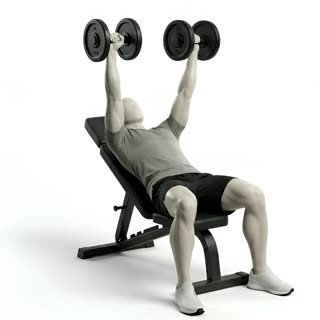
Dumbbell Incline Press: the most popular variation
The inclined dumbbell press is probably the version most appreciated by practitioners looking for a good compromise between freedom of movement, amplitude and muscular work. With dumbbells, each arm works independently, which often allows for better feel, more natural range of motion and finer recruitment of the pectorals and shoulders.
The variation inclined press with dumbbells is suitable for both intermediate and more advanced practitioners. It allows you to choose your trajectory, slightly adjust the width of your arms and avoid certain sensations of blockage sometimes felt at the bar.
We also find formulations like inclined dumbbell press, inclined dumbbell press, inclined dumbbell press or inclined dumbbell press. All refer to the same logic: use dumbbells to push on an inclined bench and accentuate the work of the upper chest.
Inclining dumbbell press muscles used
The inclined dumbbell press working muscles is of great interest to practitioners who want to know what they are really working on. As a priority, the exercise uses the pectorals, with a greater emphasis on the clavicular portion, that is to say the top of the pectorals. The anterior deltoids also participate strongly in the movement, as do the triceps.
Research such as inclined dumbbell press upper pectorals, inclined dumbbell press pectorals, inclined dumbbell press press muscle and inclined dumbbell press muscle requested clearly show that this anatomical dimension is of interest to practitioners. If the bench is well adjusted and the technique is clean, the top of the pectorals is generally better highlighted than on a flat bench press.
Neutral grip dumbbell incline press
The neutral grip dumbbell incline press consists of keeping the palms facing each other, or almost, during the movement. This position may be more comfortable for certain shoulders, especially in people who are sensitive to external rotation or who feel discomfort with opening their elbows too wide.

Développé assis haltèresÉpaules · halteres
The neutral grip often gives a smoother, more natural feel. It slightly modifies recruitment, but remains entirely valid for developing the pectorals and triceps. We also find this logic in similar research such as neutral grip dumbbell bench press, neutral grip seated dumbbell press or neutral grip dumbbell inclined curl, even if the latter sometimes relate to another exercise.
Incline dumbbell press 30 or 45 degrees
The question inclined press 30 or 45 degrees comes up very often, and it is important. In practice, many practitioners find that 30 degrees is a very interesting angle for targeting the top of the pectorals without transferring the work too much to the front of the shoulder. At 45 degrees, the exercise can become more “shouldered” for some people.
Développé incliné haltèresPectoraux · halteres
This is why we find queries like inclined dumbbell press 30, inclined dumbbell press incline, inclined dumbbell press incline, inclined dumbbell press angle, inclined dumbbell bench press incline or inclined dumbbell bench press incline. The right angle is often the one that allows you to feel the top of your pectorals while keeping your shoulders comfortable.
Incline Bar Press: stability, load and progression
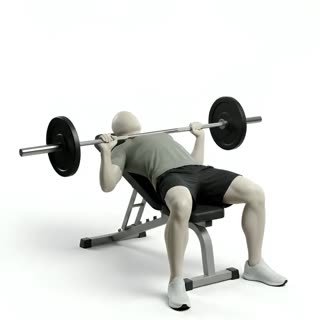
The inclined barbell press remains a great reference for practitioners who want to load heavier and follow a progression that is easier to measure. With the bar, the movement is more stable laterally, but also more constrained. The trajectory is less free than with dumbbells, which can be an advantage or a disadvantage depending on body shape and technical level.
The version free bar inclined press requires real coordination, good placement of the shoulder blades and a regular trajectory. For some, it is the best basis for progressing in strength. For others, it puts more stress on the shoulders than dumbbells.
Inclining barbell press muscles used
The inclined barbell press muscles used are generally the same as for the dumbbell version: upper pectorals, anterior deltoids and triceps. The difference mainly comes down to stability, amplitude and the way each side works.
A bar often allows more load to be moved, but it reduces the independence of the arms. This can mask a slight imbalance. This is why some practitioners alternate between barbell and dumbbells depending on the cycles.
Incline bench press position and incline
Research such as inclined bar press position, inclined bar press press and inclined bar weight press show that practitioners want concrete benchmarks. The ideal position depends on the bench, arm length and shoulder mobility, but a few basics remain useful: shoulder blades tight and lowered, feet stable on the ground, rib cage open, controlled trajectory and amplitude controlled.
The inclination of the bench must remain consistent with the objective. Too weak, we get closer to a classic bench press. Too high, we shift more towards a shoulder press.
Incline Machine Press: guided, convergent and accessible
The inclined machine press attracts many practitioners because it simplifies stability. The machine reduces some of the technical constraints and allows you to concentrate more on pushing and muscular contraction. This is often a good option for beginners, for series close to failure or for those who want to limit compensation.
There are several variants: guided machine incline press, convergent machine incline press, convergent incline press, convergent machine incline press, but also references from brands or gym chains such as basic fit machine incline press, matrix machine incline press, technogym machine incline press or inclined press machine fitness park.
Incline press converging machine
Push-upPectoraux
The converging machine inclined press is attractive because it offers a more natural path for the arms. The handles converge forward, which can approximate the way many exercisers naturally push up with dumbbells. This often gives a good feeling on the pectorals.
Variants like basic fit convergent machine incline press, convergent seated press, convergent seated press or convergent machine decline press show to what extent this type of machine has established itself in modern gyms.
Machine or dumbbell incline press
The question inclined machine or dumbbell press often comes up. In reality, both have their place. Dumbbells offer more freedom, more amplitude and more stabilizing work. The machine offers more safety, more stability and sometimes a better ability to push close to failure.
For many practitioners, the best solution is to use both at different points in the program. This also applies to the query incline press with dumbbells or machine or incline press with dumbbells or machine.
Incline Press Smith Machine: guidance and control
The smith machine incline press is very popular, especially in rooms where safety and ease of installation are very important. The bar follows a fixed trajectory, which facilitates stability, but also imposes a more rigid angle. This may suit some practitioners and less so for others.
Searchs like dev incline smith machine, developpe incline smith machine, developpe incline smith, smith incline press, smith machine guided incline press or smith machine 30 incline press show that this variation is widely used.
Smith incline bench press
The question of angle comes up here too. We find incline smith press and incline smith press. The correct adjustment depends on the bench and the trajectory imposed by the Smith. On some machines, a low angle works very well. On others, too steep an inclination gives an unnatural trajectory.
This is a point to test depending on the room. The right setting is one that allows a fluid push, without shoulder pain and with a clear sensation on the top of the pectorals.
Incline Press Dumbbells or Barbell: which to choose?
The question inclined dumbbell or barbell press is a great classic. Dumbbells offer more freedom, more range and more independence between the arms. The bar often allows more load, easier progression to calculate and greater stability.
The answer depends on the profile of the practitioner. A beginner can progress with both, provided they learn good technique. An advanced practitioner can use the barbell for strength and the dumbbells for amplitude and feel. It's the same logic for inclined press with dumbbells or dumbbells and inclined press with dumbbells or barbell.
Barbell bench press equivalence
PompesPectoraux
Queries like equivalence of barbell bench press, barbell bench press vs barbell bench press, dumbbell bench press or barbell bench press or bar weight bench press show that many people are looking to compare their performances. There is no perfect equivalence. Dumbbells require more stabilization, so the total load handled is often lower than with the bar.
It is better to compare your progress within the same variation rather than seeking a strict conversion between formats.
Incline Dumbbell Press Weight: how much to take?
The subject of weight comes up very often. We find inclined dumbbell bench press, dumbbell bench press weight, dumbbell bench press weight beginner, dumbbell bench press medium weight and dumbbell bench press what weight.
The right weight depends on the level, technique, number of repetitions and goal. A beginner should especially look for a load that he can control with a clean trajectory. An advanced practitioner can load more, but without losing amplitude or scapular placement.
In practice, it is better to start too light than too heavy. The incline press is an exercise where technique matters a lot. A poorly managed load often causes you to lose the benefit of the movement.
Incline Press Without Bench: is it possible?
Research such as inclined dumbbell press without bench or dumbbell bench press without bench shows that some practitioners want to reproduce the movement at home. Without an incline bench, it's difficult to do a true incline press. However, we can get closer with variations on the ground, against a support or with an improvised angle, but it will never be exactly the same exercise.
The bench remains an important element in creating the specific angle that distinguishes the incline press from the classic bench press.
Incline Press and similar variations: seated, declined, military
In related searches, we see similar variants appear such as declined press with dumbbells, declined press with dumbbells or barbell, declined smith machine press, seated smith machine military press, seated press with dumbbells, seated military press with dumbbell or seated shoulder press with dumbbells.
These exercises are interesting, but their objectives must be clearly distinguished. The decline places more emphasis on the lower pectorals. The soldier targets the shoulders more. The incline press remains the intermediate variant which allows you to work the upper pectorals without completely switching to the anterior deltoid.
Basic Fit Incline Press, Fitness Park and indoor machines
Keywords like inclined dumbbell press basic fit, inclined dumbbell press basic fit, inclined dumbbell press basic fit, inclined dumbbell press basic fit or inclined dumbbell press fitness park show that many practitioners are looking for guidelines based on their gym.
The principle always remains the same: identify the available equipment, correctly adjust the bench or machine, choose a suitable load and keep a consistent trajectory. Brands and brands change, but the technical fundamentals remain the same.
How to do the incline press correctly
Whatever variant you choose, a few rules remain essential:
 Adjust the bench to a moderate incline.
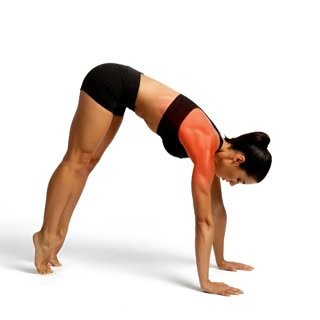 Keep shoulder blades tight and stable.
 Place your feet firmly on the ground.
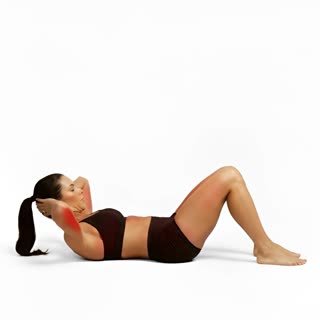 Control the descent instead of suffering it.
 Push without suddenly locking your shoulders forward.
- Choose a load compatible with true amplitude.
Good execution allows you to feel your pectorals better, protect your shoulders and make more lasting progress. The goal isn’t just to push heavy. The goal is to just push.
Conclusion: why the incline press deserves a real place in your program
The inclined press remains one of the best exercises for building a balanced torso and developing the upper pectorals. Whether you choose a barbell incline press, a barbell incline press, a machine incline press version, a convergent machine incline press or a smith machine incline press, the main thing is to choose a variation adapted to your body type, your gym and your goal.
Between inclined dumbbell or machine press, inclined dumbbell or barbell press, inclined dumbbell or dumbbell press, inclined dumbbell or dumbbell press, inclined dumbbell press, inclined dumbbell press angle, inclined dumbbell press, muscles used, inclined press bar muscles used, smith incline press, inclined press with dumbbells and inclined press 30 or 45 degrees, the best answer often remains simple: test, observe your sensations and keep the technique at the center of the movement.
A well-executed incline press is not only used to pump up the pectorals. It also improves the quality of pushing, upper body balance and the overall consistency of a strength training program.
You might also like
