Kickboxing
Discover the definition of kickboxing, its origin, its rules, its techniques and the differences with boxing, Thai boxing, full contact and other combat sports.
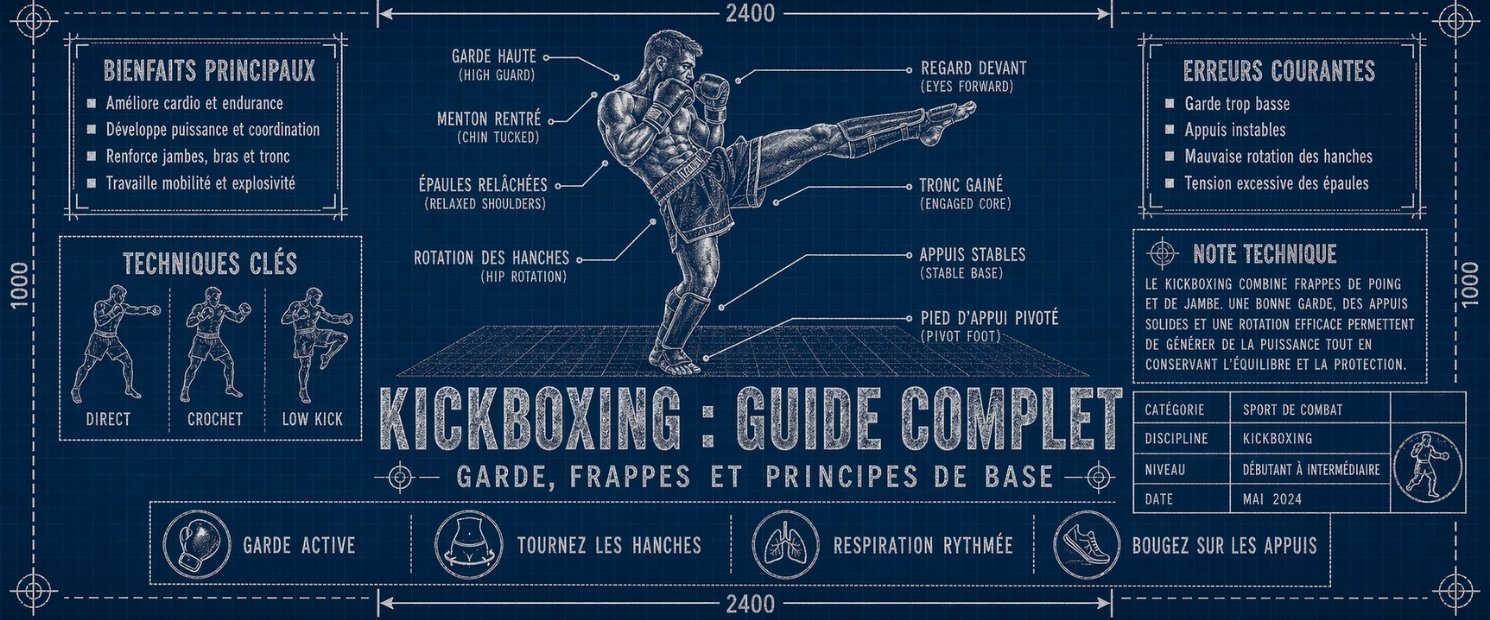
Kickboxing: definition, origin and differences with other boxes
To talk about kickboxing definition is to talk about a foot-fist combat sport that combines striking techniques with fists and kicks. Kickboxing lies at the crossroads of several modern martial traditions. It is often associated with the world of the ring, standing combat, intense cardio and complete physical preparation.
Kickboxing attracts both practitioners who want to learn to defend themselves and athletes who are looking for a demanding, structured and dynamic discipline. This practice develops coordination, speed, power, endurance and precision. It also relies on mastery of rhythm, distance and timing.
In its clearest sense, the kickboxing definition therefore designates a percussion discipline in which fighters mainly use the fists and legs according to codified rules. On the other hand, depending on the federations, schools and countries, the word kickboxing can cover slightly different formats. It is for this reason that it is useful to explain its origin, the rules and the differences with other forms of boxing.
Kickboxing definition: what exactly is kickboxing?
Kickboxing is a standing combat sport. The practitioner hits with his fists as in English boxing, but he also uses his legs to hit the opponent with different types of kicks. The logic of combat is based on attack, defense, movement, distance control and technical sequence.
A good kickboxing definition must emphasize three elements. First of all, it is a percussion discipline. Then, she relies on foot-fist work. Finally, it stands out from other practices by its regulatory framework, its style of travel and its technical heritage.
The basics that define kickboxing
- use of fists and feet;
- mainly standing combat;
- guard work, dodging, blocking and countering;
- fast and explosive sequences;
- importance of cardio, core strength and mobility;
- sports framework with rules, refereeing and categories.
What kickboxing is not
Kickboxing is not simple boxing with a few kicks thrown in at random. It is also not a discipline identical to Muay Thai, full contact or MMA. Each practice has its own codes, technical authorizations, way of moving and training culture.
Origin of kickboxing: how this sport was born
The origin of kickboxing is linked to the meeting between several modern forms of combat. The discipline developed in the 20th century from already existing striking systems, including forms of combat karate, Western boxing and Asian percussion disciplines. Over time, the term kickboxing has been used to designate different competitive formats organized around foot-fist strikes.
In the modern history of combat sports, kickboxing has gained visibility thanks to ring competitions, the professionalization of fights and international media coverage. Its evolution was also influenced by Japan, the United States and Europe, where different schools helped establish distinct styles and regulations.
Why its origin may seem multiple
Kickboxing has a clear identity today, but its roots are multiple. Some versions place more emphasis on the heritage of contact karate. Others recall the influence of boxing and Thai practices. This diversity explains why the definition of kickboxing can vary slightly depending on the sporting context.
The rules of kickboxing: how a fight takes place
Kickboxing is generally practiced in a ring or a defined area, with rounds, a referee, gloves, a mouth guard and protection adapted according to the level. The goal can be to win on points, by referee stoppage, by abandonment or sometimes by knockout depending on the regulations and formats.
The fighter must score with clean strikes, control his technique, maintain his guard and manage his effort. The quality of a fight does not only depend on strength. It also depends on precision, strategy, opponent reading and the ability to move forward under pressure.
The most common techniques
- jab;
- cross;
- hook;
- uppercut depending on the formats;
- front kick;
- roundhouse kick ;
- side kick depending on the school;
- low kick or middle kick depending on the rules.
Kickboxing and boxing: what is the basic difference?
When we compare kickboxing with the other worlds of boxing, the first difference is the authorized arsenal. In English boxing, only punches are allowed. In kickboxing, kicks enrich offensive and defensive work. This profoundly changes combat distance, supports, guarding and strategy.
English boxing promotes a very detailed reading of movements of the torso, short footwork and hand work. Kickboxing opens up the technical field with the legs. The practitioner must therefore manage more angles of attack, more variations in distance and a permanent threat to both the upper and lower body.
Kickboxing vs English boxing
- English boxing: fists only;
- kickboxing: punches and kicks;
- English boxing: closer distance;
- kickboxing: more variable distance;
- English boxing: focus on the bust, head and trunk;
- kickboxing: strong integration of the lower body and leg work.
Difference between kickboxing and Thai boxing
Confusion between kickboxing and Thai boxing is common, but the two disciplines are not identical. Thai boxing, or Muay Thai, generally allows a broader range with elbows, knees, standing clinch and particular clinch work. Kickboxing, according to its classic rules, further limits these actions.
The visual style also changes. Muay Thai places great importance on knee strikes, clinch control and certain cadence logics. Kickboxing often maintains a rhythm more linked to foot-fist sequences, with different mobility and reading.
Kickboxing vs Muay Thai
- kickboxing: more structured foot-fist discipline depending on the format;
- Thai boxing: frequent addition of knees, elbows and clinch;
- kickboxing: emphasis on fast sequences and mobility;
- Muay Thai: more complete work in close percussion;
- kickboxing: more variable framework depending on the federation;
- Thai boxing: very marked traditional technical identity.
Difference between kickboxing and full contact
Full contact belongs to the same big family as kickboxing, but it historically follows specific rules. In some forms of full contact, low kicks are not permitted, and strikes are often directed above the waist. Modern kickboxing, depending on its versions, can integrate low kicks and a wider range of strikes with the legs.
This difference is important, because it changes the way of fighting. As soon as the legs can be attacked more freely, the management of support, movements and rhythm is no longer the same.
Difference between kickboxing and MMA
kickboxing is a standing striking sport. MMA mixes several dimensions: percussion, wrestling, projection, ground control and submission. Even if many MMA fighters have a base in kickboxing, the two disciplines do not respond to the same sporting logic.
Kickboxing seeks standing efficiency in a specialized setting. MMA requires you to think about the fight in all its phases. An excellent kickboxer will have to adapt his posture, his guard and his tactical choices if he moves into a mixed setting where takedowns are possible.
Why practice kickboxing?
kickboxing appeals because it offers a complete practice. It is both a technical sport, intense cardiovascular work, a school of discipline and an excellent fitness tool. It develops breathing, reflexes, explosiveness, coordination and the ability to remain lucid under effort.
On a physical level, kickboxing uses the entire body. The legs produce power and support movement. The trunk stabilizes and transmits energy. The shoulders, arms and back participate in striking, guarding and blocking. The energy expenditure can be very significant, especially when the session alternates technique, bag, paos, movements and physical circuits.
The benefits most often observed
- cardio improvement;
- overall strengthening of the body;
- better coordination;
- gain in speed and responsiveness;
- work of discipline and concentration;
- self-confidence and stress management.
Kickboxing for beginners: what you need to know
Beginning in kickboxing does not require you to already be flexible, powerful or experienced. Above all, you must agree to learn the basics: guarding, movement, distance, breathing, simple strikes, defensive controls and basic sequences. Progression is built with repetition and regularity.
The first sessions are often used to understand foot placement, hip alignment, punch trajectory and quick return to guard. Over time, the practitioner gains fluidity, endurance and precision.
The fundamentals to learn as a priority
- maintain a stable guard;
- move without getting unbalanced;
- hit with control;
- chain fists and legs;
- quickly return to defensive position;
- manage your breathing during exercise.
Basic equipment for kickboxing
The practice of kickboxing requires suitable equipment to progress in good conditions. Gloves protect hands and reduce shock. Shin guards are essential in formats where the legs are stressed. The mouthguard, the shell depending on the case and sometimes the helmet are also part of the important protection.
The choice of material depends on the level, the type of course and the intensity of the contact. Good equipment improves safety, but it also helps you train with more confidence and consistency.
Kickboxing, fitness and physical preparation
kickboxing also exists in a fitness-oriented form, without direct opposition. In this context, we find the gestures of combat, but the session mainly aims at physical conditioning, coordination and energy expenditure. This allows a wider audience to benefit from the benefits of kickboxing without entering into a competitive logic.
Physical preparation nevertheless remains a pillar of the discipline, even in traditional clubs. A good kickboxer works on his cardio, mobility, power, core, recovery and ability to repeat intense efforts.
Kickboxing definition: what you need to remember
The best way to summarize kickboxing is simple: it is a structured, dynamic and demanding foot-and-fist combat sport, based on standing strikes, technical precision and distance management. Its identity is understood even better when we place it in its history and compare it to other forms of boxing.
kickboxing differs from English boxing by the use of the legs. It differs from Thai boxing by a framework that is often more limited according to the rules. It differs from MMA by its specialization in standing combat. This clarity is its strength. The discipline is readable, complete and very educational.
Between technique, cardio, coordination, rigor and commitment, kickboxing has established itself as a practice in its own right in the world of combat sports. Understandably, there is more to it than just hitting hard. It is based on a real culture of placement, rhythm, control and efficiency.