Lateral Raise: Complete Guide
Find out how to successfully do a lateral raise with dumbbells, pulley, machine or elastic. Techniques, muscles worked, seated, standing variations, for the shoulder and leg.
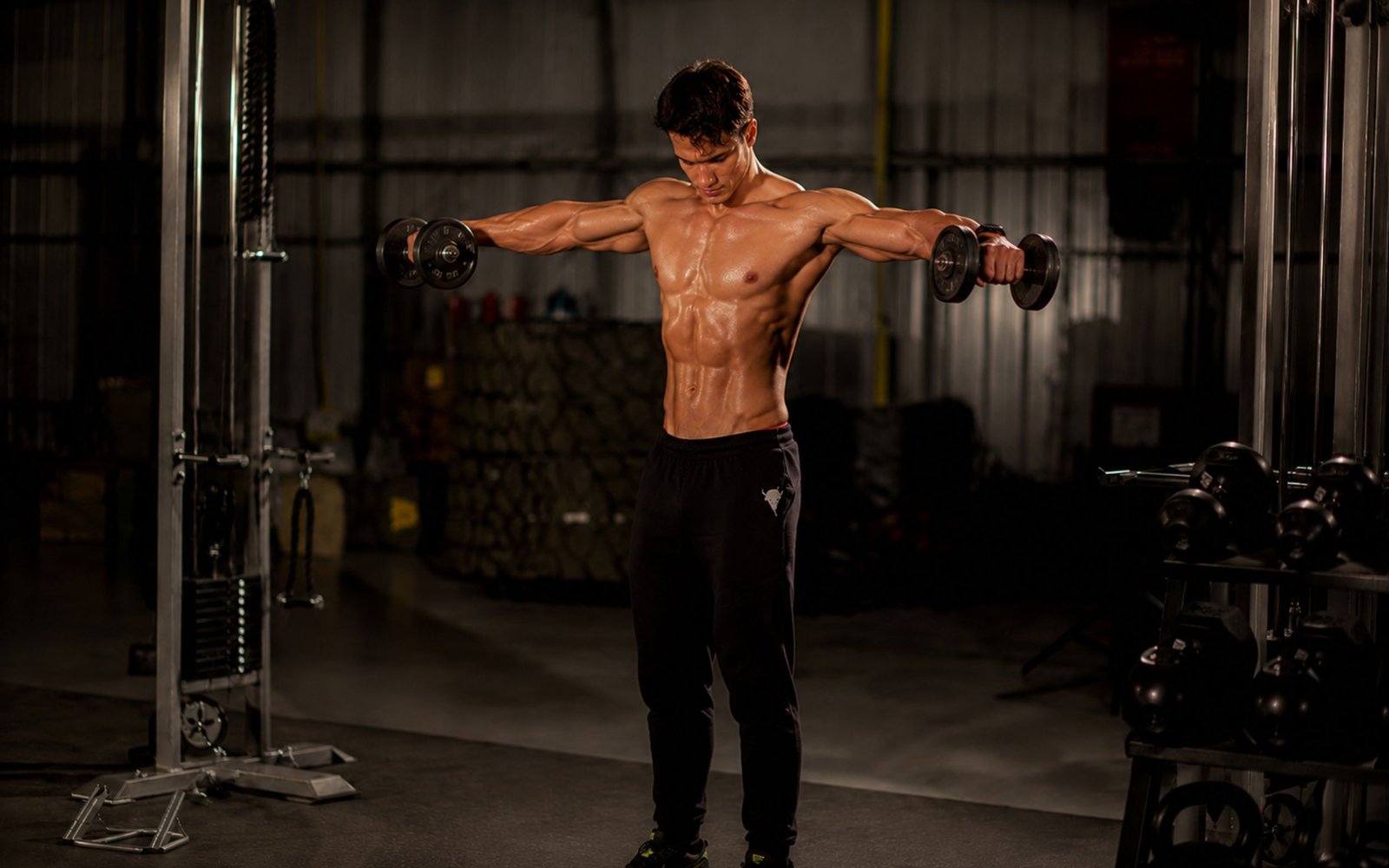
Lateral raise: a key exercise for building balanced shoulders
The lateral raise is one of the most sought-after exercises when you want to develop broader, more stable and more aesthetic shoulders. This movement seems simple at first glance. However, it raises many questions about the correct execution, the choice of equipment, the weight to use, the most effective variation and the muscles actually used.
The research also covers several intentions. Some people want to better understand the lateral shoulder raise. Others look for a more targeted version with dumbbells, pulley, machine or elastic. Another part of Internet users is also interested in the lateral leg raise, which corresponds to a different gesture, more linked to the work of the hips and glutes.
To correctly meet all of these expectations, it is necessary to distinguish between movements for the shoulder and movements for the leg. It is also necessary to explain how to progress without cheating, without injuring yourself and without turning the exercise into an uncontrolled swing. This is precisely what this guide will detail.
Dumbbell lateral raise: definition, interest and muscles worked
The haltere lateral elevation consists of raising the arms to the side with a load held in each hand, until reaching or approaching horizontal depending on the level and the technique chosen. The main objective is to target the middle fascicle of the deltoid. This work directly contributes to the broader appearance of the shoulders.
The question dumbbell lateral raise which muscle comes up often, and it is legitimate. The main muscle used is the middle deltoid. The anterior deltoid intervenes slightly. The upper trapezius can also participate, especially if technique deteriorates. The stabilizing muscles of the scapula and trunk also play an important role.
In gym vocabulary, the dumbbell shoulder lateral raise remains a reference for isolating the upper body without relying solely on presses. It allows you to complete a shoulders, upper body or hypertrophy program with a more targeted exercise.
Standing Dumbbell Lateral Raise
The standing dumbbell lateral raise is the most common version. It allows natural amplitude and gives great freedom of placement. However, it requires more control of the bust, core and tempo, because it is easier to cheat using momentum.
This variation works very well for practitioners who know how to stabilize their posture. It is also suitable for those who want to learn to feel the shoulder without being too constrained by a machine.
Seated dumbbell lateral raise
The seated dumbbell lateral raise partially reduces the assistance from the lower body. This posture limits swaying and often encourages better control of the movement. It is very useful for feeling more of the middle deltoid and less of the rebound of the legs or pelvis.
When we talk about seated lateral elevation, we often think of a stricter form of the gesture. This can be a real advantage if you tend to load too heavy or accelerate without control.
The formula seated dumbbell lateral raise simply refers to this version performed on a bench or on a stable seat with two dumbbells. For many practitioners, this is an excellent way to improve the quality of execution.
Seated or standing lateral raise
The question lateral elevation sitting or standing comes up very often. In reality, both versions are of interest. The standing version is freer and more natural. The seated version is often stricter and technically cleaner.
The right choice depends on your level, control and goal. If you are looking for precision, sitting is often more relevant. If you want to work on your overall coordination, standing can be very interesting.
Seated Dumbbell Lateral Raise
The search for seated lateral raise with dumbbells corresponds to a very practical intention. This variation is ideal for learning to lift properly, keep your elbows slightly bent and avoid transforming the movement into a trapezius pull.
It is well suited to intermediate practitioners, but also to beginners who want to feel more of the shoulder without spreading themselves too thin.
Dumbbell bench lateral raise
The lateral dumbbell bench elevation can refer to several variations. Most often, it is either a seated execution on a bench, or a version where the bench is used to stabilize the body. The bench then becomes a technical support to better isolate the shoulder.
This approach often helps to better feel the muscular work. It is useful if you tend to compensate with the bust.
Incline bench dumbbell lateral raise
The inclined dumbbell lateral raise is a very interesting variation for modifying the starting angle and limiting certain compensations. In an inclined position, the deltoid works differently, and the tension may be more noticeable from the start of the amplitude.
This version is appreciated by practitioners who want to vary the sensations while maintaining a logic of isolation. It can also be useful to better control the trajectory.
Bent-over dumbbell lateral raise
The benched dumbbell lateral raise changes the line of force and can place more emphasis on certain fibers of the deltoid depending on the angle chosen. This movement requires more rigor, because incorrect placement can transform the exercise into an imprecise or uncomfortable movement for the upper back.
It is sometimes found among advanced practitioners who seek to diversify muscular recruitment without leaving the family of lateral elevations.
Dumbbell side raise
The request dumbbell lateral elevation is essential. Many practitioners load too heavy and end up completely losing the benefit of the movement. For this exercise, it is often better to choose a moderate weight, keep your execution clean and control each repetition.
A suitable weight allows you to feel the muscle working without swinging your torso or excessively shrugging your shoulders. Quality always remains more profitable than ego loading.
Lateral dumbbell raise for women
The women's dumbbell lateral raise responds to a frequent intention in the gym. Many women use this exercise to strengthen shoulders, improve posture, and build a more toned upper body. This is not a movement reserved for a particular gender or level.
The logic remains the same for everyone. A well-chosen load, a controlled tempo and a proper amplitude give better results than an overly ambitious weight.
Dumbbell lateral raise in English
The search for dumbbell lateral raise in English is common among people who read international programs. The most common expression is dumbbell lateral raise. You can also find seated dumbbell lateral raise for the seated version.
Knowing this term helps to better understand Anglo-Saxon videos, applications and programs. This is particularly useful if you follow fitness content in English.
Pulley Lateral Raise: Continuous Tension and Superior Control
The pulley lateral elevation is very popular for a simple reason. The tension remains more constant than with dumbbells throughout a large part of the movement. This often allows you to feel the shoulder better, especially at the bottom and in the middle of the range of motion.
The cable variant also allows more precise adjustment of the trajectory. It becomes interesting for practitioners who want a more continuous stimulus and less dependent on pure gravity.
Low pulley lateral elevation
The low pulley lateral raise is undoubtedly the best-known pulley version. The grip starts from the bottom, often near the hip or slightly in front of the body, then the arm rises laterally. This setup creates tension from the start.
This is one of the reasons why this variant is often considered very effective in hypertrophy. It helps to feel the deltoid working where the dumbbell is sometimes less demanding.
The research low shoulder pulley lateral raise precisely reflects this intention. Practitioners want a more specific version for the shoulder, with regular tension and better control of the movement.
Unilateral Low Pulley Lateral Raise
The formula unilateral low pulley lateral raise designates an arm-by-arm execution. This approach allows you to better concentrate on the side being worked, to correct asymmetries and to better feel the targeted shoulder.
It matches the logic of unilateral pulley lateral elevation, very useful when one arm dominates the other or when you want to improve the quality of contraction. Unilateral work often promotes better muscle connection.
The request lateral elevation 1 arm low pulley corresponds to this same idea. Only one arm works, the other remains free, which allows you to concentrate entirely on trajectory and placement.
Hip pulley lateral raise
The search for hip pulley lateral raise often comes up because many practitioners start with the handle placed near the hip. This starting position allows for a better draw line and interesting tension throughout the movement.
This detail changes the feeling. If the pulley is incorrectly adjusted, the movement becomes less fluid and sometimes less focused.
High Pulley Lateral Raise
The high pulley side raise is less common, but can be used to change resistance or work from another angle depending on the machine and setting available. It requires a little more experience to properly organize the trajectory.
This is not necessarily the first variation to learn. On the other hand, it can enrich a more advanced program.
Pulley side elevation opposite
The lateral pulley elevation opposite is often carried out between two cable columns. This configuration allows you to choose several angles, to work unilaterally or bilaterally, and to very finely adjust the resistance line.
It is very popular in well-equipped rooms, because it offers real freedom of adjustment. It is an excellent tool for variation without leaving the logic of isolation.
Shoulder pulley lateral raise
The keyword shoulder pulley lateral raise shows that practitioners are looking for a variant clearly oriented towards shoulder development. This is precisely where the pulley stands out. It maintains constant tension and helps avoid certain dead zones of movement.
For many, it gives a better muscle burning sensation. This does not mean that it systematically replaces the dumbbell, but it complements the work very well.
Pulley or dumbbell lateral elevation
The question pulley or dumbbell lateral raise does not have a single answer. Dumbbells are simple, accessible and effective. The pulley provides more continuous tension and better control of resistance depending on the angle.
In an intelligent program, both can coexist. The choice depends on the level, the equipment available and the type of sensation sought.
The formula dumbbell or low pulley lateral raises sums up this debate very well. Dumbbells give intuitive execution. The low pulley allows for a more constant stimulus. Both have a real place in serious progression.
Pulley lateral elevation in English
The search for pulley lateral elevation in English is mainly used to find the name in foreign applications and programs. The most common expression is cable lateral raise. For the unilateral version, we often find single arm cable lateral raise.
This vocabulary is useful if you use bodybuilding programs, training apps or video content in English.
Lateral machine elevation: interest, brands and indoor use
The lateral elevation machine is often chosen by those who want a guided, stable movement that is easier to reproduce from one session to the next. The machine reduces certain technical variables and sometimes allows you to better concentrate on muscular sensation.
It may be suitable for beginners, practitioners recovering from slight discomfort or those who want to push a little more effort without having to manage balance as much.
Guided machine lateral elevation
The guided machine lateral elevation offers a predefined trajectory. This technical support can be useful if you have difficulty stabilizing the movement with dumbbells or if you feel the trapezius taking over too much.
The guided machine often makes it possible to better standardize the repetition. This is interesting for following a cleaner progression over time.
Shoulder machine lateral raise
The query shoulder machine lateral raise shows that users are looking for a tool specifically designed to target the middle deltoid. Many lateral elevation machines are designed for just this, with cushions, lever arms or suitable handles.
Depending on the quality of the material, the feel can be very good. The machine then becomes a serious option for shoulder work.
Lateral elevation machine or dumbbell
The debate lateral elevation machine or dumbbell is classic. The machine offers stability and reproducibility. The dumbbell offers freedom, coordination and accessibility.
In practice, the two complement each other well. Dumbbells teach you to control the movement. The machine often makes it possible to find local fatigue that is easier to manage.
Lateral shoulder raise machine
The expression shoulder lateral elevation machine refers to the same need: to isolate the shoulder without too many parasitic variables. This variation is interesting when you want to add training volume after presses or at the end of the session.
It can also be more reassuring for certain profiles who feel less comfortable with free charges.
Lateral raise machine basic fit, Fitness Park, Technogym, Gym80, Hammer, On Air
Research like lateral elevation machine basic fit shows that practitioners want to find the right machine in their gym. Depending on the club, it may be called deltoid machine, lateral shoulder machine or lateral raise machine.
The request lateral elevation machine fitness park meets the same need. The user wants to know if their room offers a dedicated station or a nearby movement on a guided device. You often have to look at shoulder machines or independent arm stations.
The keyword lateral elevation machine technogym is common in rooms equipped with this brand. The important thing remains less the commercial name than the quality of the ride, the comfort of the backrest and the placement of the elbows or handles.
The search lateral elevation machine gym80 refers to machines often appreciated for their solidity and their trajectory. If your gym has one, the most useful thing is to adjust the seat correctly and maintain a smooth rise without trying to cheat at the end of the amplitude.
The query lateral elevation machine hammer often corresponds to Hammer Strength machines or close variants. These models sometimes allow unilateral or convergent execution depending on the design.
The keyword lateral elevation machine on air also appears in some room searches. Whatever the brand, the logic remains the same: good adjustment, clean trajectory and controlled tension.
Lateral shoulder raise: common errors and normal sensations
The lateral shoulder raise is very effective, but only if the technique respects a few simple principles. The most common thing is to lift too high, too quickly, with loads that are too heavy and trapezoids that take up all the work.
The goal is not to throw the dumbbells towards the ceiling. The goal is to climb laterally with control, keeping the shoulders relatively low and feeling the middle deltoid do most of the work.
Seated shoulder lateral raise
Research seated shoulder lateral raise shows that a large number of practitioners seek a stricter execution. This seated version helps limit momentum and refocus effort on the shoulder.
It is very suitable for those who tend to transform the exercise into a standing swing. It makes the movement more readable.
Bench shoulder lateral raise
The bench shoulder lateral raise uses the bench as a support to better organize the body. It can be used seated, inclined or supported depending on the variations. The bench helps create a more stable technical framework.
This often improves the quality of repetition. And in an isolation exercise, this detail matters a lot.
Lateral shoulder raise weight
The request lateral elevation shoulder weight relates to the question of correct loading. If the weight forces you to raise your shoulders, swing your torso or break alignment, it is already too high.
The right weight is that which allows clear control from the beginning to the end of the series. In this exercise, muscular sensation and the quality of the movement remain priority.
Lateral shoulder raise for women
The lateral shoulder raise for women is often sought for the purposes of aesthetics, posture and strengthening of the upper body. Many women benefit from including this exercise to balance the silhouette and strengthen the shoulder girdle.
The principle of execution remains the same. Progress is made with patience, technique and regularity.
Elastic shoulder lateral raise
Research elastic shoulder lateral elevation shows that there is also a strong demand for variations at home or as a warm-up. The elastic allows you to work the shoulder with increasing resistance, practical for light to moderate strengthening.
This option is useful when you do not have dumbbells or when you want more progressive work at the end of the amplitude.
Shoulder cracking lateral raise
The query lateral elevation cracking shoulder deserves a careful response. A cracking shoulder without pain is not always alarming. On the other hand, if the crunch is accompanied by discomfort, loss of strength or pain, you must reduce the load, check the technique and seek professional advice if necessary.
On a practical level, it is often necessary to review the amplitude, warm-up, tempo and scapular stability. Better controlled execution sometimes immediately improves the sensation.
Lateral elevation with elastic: a very useful option at home
The elastic lateral elevation allows you to work the shoulders with little equipment. It is useful for home sessions, warm-ups, strengthening circuits or phases where you want to reduce the joint load.
The movement remains close to that performed with dumbbells. The difference mainly comes from the resistance profile, which increases as the elastic stretches.
The lateral elevation with elastic formula is often sought after by practitioners who want to strengthen their shoulders without access to a room. This is a good solution provided you maintain appropriate tension and clean movements.
In a structured program, the elastic does not always completely replace the dumbbells or the pulley. On the other hand, it complements the work very well, particularly for volume, active mobility and gesture quality.
Elastic frontal elevation
Research elastic frontal elevation concerns a different exercise, more oriented towards the front of the shoulder. It should not be confused with the lateral elevation, which mainly targets the middle fasciculus of the deltoid.
Comparing the two is useful, because many practitioners still mix lateral work and frontal work. But the sensations and the objectives are not the same.
Low pulley front elevation
The low pulley front elevation follows the same logic of comparison. This variation works more of the front of the shoulder with continuous tension. It does not have the same goal as the lateral elevation, even if the two exercises can be complementary.
The most important thing is not to substitute them without thinking. Everyone has their role in the overall development of the shoulder.
Low rope pulley front elevation
The search for low rope pulley front elevation shows that some users are looking for grip variants. The rope modifies the comfort and sometimes the trajectory, but the exercise remains frontal, therefore different from the lateral elevation.
This precision is important to organize a coherent session. We do not stimulate exactly the same portions of the deltoid.
Low shoulder pulley front raise
The keyword low shoulder pulley front elevation completes this intention. He reminds us that the front of the shoulder can be worked on the pulley, but that this does not replace the need to also use the lateral beam to obtain a complete shoulder.
It is often the intelligent combination of angles that produces the best visual and functional result.
Seated lateral raise, on bench or machine: which variation to choose?
The search for lateral elevation seated on a bench reflects a need for precision. The bench helps stabilize the core, making the climb cleaner and easier to control.
For many practitioners, this variation improves muscle sensation. It reduces unnecessary movements and helps you stay focused on your shoulder.
The formula lateral elevation seated with leaning torso is even more specific. It modifies the position of the torso and can influence muscle sensation. It is aimed more at practitioners already capable of controlling the classic version.
This variant requires more precision. It is not necessarily essential at the beginning, but it can be very interesting in a logic of specialization.
The request for seat lateral elevation machine shows that some people want a version combining stability and guidance. This is a good option for those who prefer to focus on local effort rather than coordination.
The seated machine often makes it possible to standardize the series. This makes it easier to track progress.
Lateral leg raise: a different movement, focused on hips and glutes
The lateral leg raise does not work the shoulder. Here, we are talking about a hip abduction movement, often used to strengthen the gluteus medius, gluteus minimus and pelvic stability.
This confusion is common, because the expression “lateral raise” can refer to either an arm raise or a leg raise. It is therefore necessary to clearly distinguish the two families of exercises.
Lateral leg raise on the ground
The lateral leg raise on the floor is one of the most accessible versions. We generally position ourselves on our side, then raise our upper leg in a controlled manner. It’s a hip strengthening classic.
This variant requires little material. It is very suitable for recovery, general physical preparation or activation work.
Lying Lateral Leg Raise
The lying leg lateral raise is very close to the floor variation. The person lies on their side, the pelvis is stable, then the leg rises without excessive rotation of the trunk. This work strongly requires the hip stabilizing muscles.
The main instruction is to keep the gesture clean. It is better to have a slightly shorter amplitude than a movement compensated by the back.
Lateral leg raises lying on the side
The search lateral leg raises lying on the side corresponds to this same family of exercises. Lying on your side limits compensation and often allows you to feel the gluteus medius better.
It’s an excellent base for learning the movement. It is often used in rehabilitation, active mobility and targeted strengthening.
Standing Lateral Leg Raise
The standing lateral leg raise introduces more balance work. This variation can be done with body weight, with elastic or with a pulley. It requires more stability of the pelvis and trunk.
It is interesting for the transfer to walking, running and functional movements. It better prepares for global coordination.
Lateral leg raise
The term lateral leg raise is often used in simpler or more general language. It generally refers to the same logic of lateral lifting of the leg to strengthen the hip abductors.
The movement can be performed standing, lying down or with accessories. The objective remains to improve lateral control of the pelvis and lower limb.
Lateral leg raise muscles used
The question lateral elevation of the leg muscles used is very relevant. The main muscles are the gluteus medius, the gluteus minimus and, depending on the variation, certain deep hip stabilizers. The trunk also intervenes to prevent the pelvis from tipping.
This work is important for stability, balance, posture and sometimes the prevention of certain compensations when walking or running.
Lateral leg raises with elastic
The lateral leg raises with elastic increase resistance and intensify the work of the hips. The elastic can be placed above the knees, at the ankles or on a more specific system depending on the objective.
This variation is often used to activate the glutes before a leg session. It also works very well on a home circuit.
The search for elastic leg lateral elevation responds exactly to this need. It designates the same type of work, with elastic resistance applied to the lateral movement of the leg.
Pulley Lateral Leg Raises
The lateral leg raises on the pulley provide more regular resistance than the elastic. An ankle strap and low pulley are generally used to create a controlled hip abduction movement.
This variant is appreciated for its precision. It also makes it easier to monitor load and progress.
The low pulley side raise with ankle bracelet formula corresponds exactly to this execution. The ankle bracelet transforms the low pulley into a very interesting tool for targeting the hips properly.
Partial lateral elevation: useful or useless?
The partial lateral elevation consists of voluntarily reducing the amplitude. In some cases, this can be useful to extend a series, maintain tension in a specific area or work around a less comfortable amplitude.
On the other hand, this option should not systematically replace the full controlled amplitude. Used intelligently, it can complete the job. Used too early, it can mask poor technique or excess load.
When to use partial amplitude
- to add a few controlled repetitions at the end of the series;
- to maintain tension without cheating with the bust;
- to work on a specific portion of the gesture;
- to temporarily adapt to mild discomfort, with professional advice if necessary;
- to vary the stimulus in an advanced cycle.
Lateral raise: should you choose dumbbells, pulley, machine or elastic?
The choice depends above all on your context. If you're training at home, the dumbbell and resistance band will often be the simplest options. If you are indoors, the pulley and the machine become very interesting for varying the tension profiles.
The lateral elevation machine or dumbbell does not oppose two incompatible worlds. The machine can be used to insulate. The dumbbell can be used to learn the gesture. The pulley can add DC voltage. The elastic can help complete or warm up.
So the important thing is not to choose just one option forever. The important thing is to understand what each tool brings and use it at the right time in your progress.
Simple guidelines for correctly performing the lateral shoulder raise
- keep the torso stable;
- raise your arms to the side without throwing the load;
- avoid shrugging your shoulders excessively;
- keep a slight bend in your elbows;
- choose a weight compatible with real control;
- stay attentive to the sensation in the middle deltoid.
Conclusion: lateral elevation is simple in appearance, technical in practice
The dumbbell side raise, the pulley side raise, the machine side raise and the elastic side raise all meet slightly different needs. The common point remains the same: creating precise, controlled and consistent work to develop the shoulder or, in the case of the legs, hip stability.
Variations like seated dumbbell lateral raise, low pulley lateral raise or seated machine lateral raise are not unnecessary details. They change stability, tension, coordination and sometimes the quality of feeling.
Finally, searches around crack shoulder lateral raises, pulley or dumbbell lateral raises or even lateral leg raises with elastic band clearly show that users are looking for more than just an exercise name. They want safe execution, intelligent choice of equipment and a true understanding of the target muscles. This is exactly what allows lasting progress, without confusion and without ineffective repetitions.