Supination Traction
Discover the supination pull, the muscles used, the role of the biceps, the differences with pronation, the tight grip, the Australian pull and useful variations in bodybuilding.
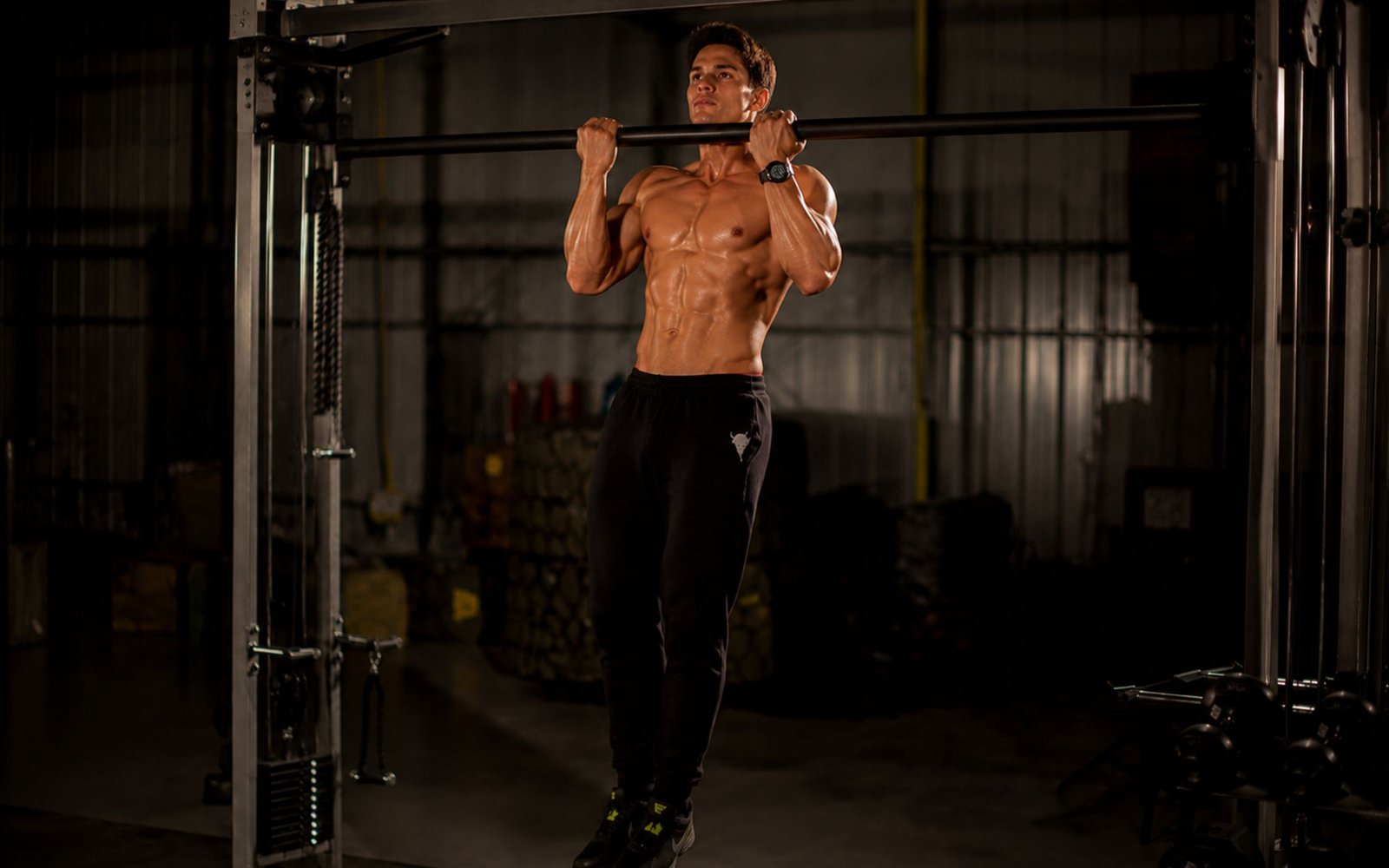
The supination pull-up is one of the best-known variations of the horizontal bar pull-up. It is performed with the palms turned towards you, which corresponds to the supinated grip. In bodybuilding vocabulary, this variation is often called chin-up. It is very popular because it allows you to work your back, arms and core, with a feeling that is often clearer in the biceps than in pronation.
If this traction comes up so often in research, it is because it lies at the crossroads of several objectives. Some people want to know if it is easier. Others seek to understand which muscle it really targets. Still others want to compare the supination or pronation traction, to know if the biceps supination traction is really more marked, or to understand the benefit of a tight grip supination traction.
When used correctly, this variation is an excellent tool for gaining strength, improving the quality of the vertical pull and building a more powerful upper body. But to get the most out of it, you need to understand precisely what it changes compared to pronation, the neutral grip and similar exercises like the vertical supination pull-up in the gym.
Supination or Pronation Traction: what is the difference between the two holds?
The question traction supination or pronation comes up constantly, and it makes sense. In both cases, it involves pulling your body towards a bar. But the position of the hands modifies the mechanics of the movement, the sensation and sometimes the ease of execution.
With supination, the palms look toward you. With pronation, they look forward. This difference changes the involvement of the forearms, the elbow and the sensation of work in the arms. This is what also explains searches like traction supination vs pronation or traction pronation or easier supination.
Supination vs pronation traction: is the easiest always the same?
For many practitioners, the supinated pull-up is easier than the pronated pull-up. The main reason is simple: supination often allows you to better recruit the elbow flexors, particularly the biceps. This extra help often makes climbing easier, especially for beginners or those who already have good arm strength.
This does not mean that supination is systematically better. This means that it is often more accessible. Pronation, for its part, is very beneficial for the back and often gives a more marked sensation in the latissimus dorsi and upper back.
In practice, the best choice depends on your objective. If you are looking for a more arm-oriented vertical pull that is easier to master, supination is very useful. If you want more back-style work, pronation retains a major role.
Australian traction supination or pronation
The comparison Australian traction supination or pronation is based on the same logic. In reverse row, supination often puts the biceps more forward, while pronation often accentuates the sensation in the upper back and scapula. Both are relevant. The Australian pull-up remains an excellent learning step before mastering the complete chin-ups.
Traction Supination Muscle: which muscles really work?
The research traction supination muscle or traction supination which muscle shows that many want a clear answer. In reality, supination traction never works just one muscle. It is a complete polyarticular upper body exercise.
The main muscles are the latissimus dorsi, biceps, brachialis, upper back muscles, forearms and core. The scapula must remain well controlled, which also involves the stabilizing muscles of the scapula. The result is a very rich movement, both in strength and coordination.
Supination traction muscle used
When we talk about supination muscle traction, we can summarize the main recruitment in this way:
- latissimus dorsi;
- biceps brachii;
- anterior brachialis;
- brachioradialis and forearm muscles;
- rhomboids and trapezoids;
- abdominal sheathing.
Formulations such as supination traction of muscles used, supination traction of muscle worked and supination traction of targeted muscle all refer to the same idea: supination traction is both a back exercise and an arm exercise, with a particularly interesting participation of the biceps.
Supination muscle traction worked: more arms, but still back
A common mistake is to believe that supination turns the pull-up into a simple biceps exercise. This is not the case. The back remains central. The latissimus dorsi remains one of the major engines of movement. On the other hand, supination often allows you to feel the arms better and to better exploit the flexion of the elbow, which increases the sensation on the biceps.
In other words, if you are looking for a vertical pull where the arms take up more space than in pronation, the supination pull is a very good answer. But it never stops being a back exercise.
Supination Biceps Traction: why this variation is so popular
The biceps supination traction is one of the main themes of this exercise. Many practitioners choose it precisely because they want to recruit their arms more, and especially the biceps brachii. This is also what explains requests like short biceps supination traction, biceps portion supination traction, biceps focus supination traction or back supination traction.
The supinated grip promotes a forearm position which makes biceps work more natural when climbing. This does not mean that a portion of the biceps is completely isolated, but it clearly reinforces the perception of work in the arm among many practitioners.
This particularity makes supination traction very useful for people who want to progress on their back while developing a denser upper arm. It is also an excellent bridge between back movements and more isolating exercises for the biceps.
Supination focus biceps traction: good idea or mistake?
The research supination focus biceps traction makes sense, provided you remain accurate in the analysis. Yes, supination traction helps the biceps a lot. No, it's not a high bar curl. If you are looking for a complete, dense, useful exercise for the back and arms, supination traction is excellent. If you are looking to isolate the biceps, you must supplement it with other exercises.
In practice, the best use of the supination pull-up is often to consider it as a high-potential vertical pulling exercise for the arms, not as an isolation movement.
Tight Grip Supination Traction: for whom and why?
The close grip supination traction is a very sought-after variation. Many practitioners find this version more natural, more fluid and easier to feel in the arms. Reducing the distance between the hands slightly changes the trajectory and can accentuate the sensation in the biceps and central part of the back.
Research such as supination traction tight grip muscles used show that we often expect even more significant recruitment of the arms from this variant. This is often true in terms of feeling, especially among practitioners who already have a good technical foundation.
Supination traction tight grip muscles used
The supination traction tight grip muscles used primarily concerns the latissimus dorsi, biceps, brachialis and forearms. The upper back always participates, as does the core. What changes is above all the sensation. Many perceive the flexion of the elbow and the proximity of the arm work more.
This variant may also be suitable for people who find the trajectory more comfortable than with a wider grip. As always, the right choice depends on your body shape, your shoulder comfort and your goal.
Tight Grip Supination Pull-Up: a good addition in the gym
The research close grip supination pulldown, close grip supination vertical pulldown, supination close grip horizontal pulldown, supination close grip chest pulldown and supination tight grip high pulley pulldown show that many want to find the logic of the supination pulldown in machine or pulley version.
In the room, these variations are very interesting. They make it possible to reproduce part of the traction motor diagram, while reducing the overall difficulty. They are perfect for learning to pull with your elbows, to better feel the latissimus dorsi and to progress before returning to the high bar.
The chest pull in supinated tight grip is particularly useful for those who want a more accessible alternative. Likewise, the horizontal pulldown in tight grip supination can strengthen the work of the upper back and improve scapular retraction.
Traction Supination Bodybuilding: how to integrate it into a program
The supination bodybuilding traction has its place in a back, arm or upper body program. It can be used as a primary pull-up exercise, as a progression movement to more complex pull-ups, or as a tool to develop better balance between the back and biceps.
In a classic program, it can be placed at the start of the backstroke session if the objective is performance and progress. It can also be used later in the session, after a vertical pull-up or a row, to accentuate the work of the arms and upper back.
For a beginner, the most relevant is often to start with assisted repetitions, slow eccentrics, or Australian pull-ups. For an experienced practitioner, you can add weight, tempo or pauses at the top of the movement.
Australian Supination Muscle Traction: a real intelligent progression
The Australian supination muscle traction is an extremely interesting step to progress. It is performed on a low bar, with the body inclined. The pull is more accessible than with full traction, but the engine diagram remains very useful.
This variation allows you to develop your back, arms and core while learning to control your shoulder blades. It is very suitable for beginners, people returning to training, or those who want to build volume without tiring as much as on the high bar.
Done well, it prepares very well for complete supination traction. It is one of the best tools for progression when you still lack the strength to do clean repetitions.
Back Supination Traction: myth or reality?
Research back supination traction shows that there is still frequent confusion. Some people think that supination is only a biceps exercise. Others think, on the contrary, that it remains primarily a back exercise. The truth lies somewhere in between.
The back is clearly working. The latissimus dorsi remains a major player. The upper back also participates strongly. On the other hand, the role of the biceps is more visible and more felt than in pronation. It is this double identity that makes the exercise rich.
Pectoral Supination Traction: do they really work?
The question pectoral supination traction comes up sometimes, often out of confusion. The pectorals are not the main muscles for supination traction. They can intervene slightly as stabilizers depending on the trajectory, but they do not constitute the major target of the movement.
If your main objective is the chest, it is better to focus on presses, push-ups or specific exercises. For this, an article like Exercise for the pectorals will be more suitable. Supination traction remains primarily a vertical pulling exercise for the back and arms.
Supination or Pronation Traction: which one to keep long term?
In the long run, it is rarely necessary to choose just one socket forever. The comparison supination traction or pronation especially makes sense when you want to know where to start or what to prioritize in a given phase.
Supination is often more accessible and richer in sensation for the biceps. Pronation is often more demanding and very interesting for the back. The two complement each other perfectly. Alternating them in a well-constructed program often allows for better progress, while avoiding repetitive overloads on the same trajectory.
How to progress on supination traction
To progress in supination traction, you must develop several qualities at the same time. First, back strength. Next, elbow flexion. Finally, trunk stability and scapular control. The best progression tools are often:
- assisted pull-ups;
- slow eccentrics;
- suspensions;
- Australian pull-ups;
- vertical pulls in supination;
- good additional work on the back and arms.
Sustainable progress relies above all on the quality of the gesture. Few clean repetitions are better than many unorganized repetitions.
Conclusion: supination traction remains a safe bet for the back and biceps
Well executed, it helps build the back, arms and the quality of the vertical pull. The most important thing is not just to succeed in climbing. The most important thing is to climb cleanly, choose the right variation and progress consistently.