Stretched Leg Deadlift: a key exercise for the posterior chain

Développé couchéPectoraux · barre
The straight leg deadlift is one of the great hip hinge exercises. It is sought after by practitioners who want to strengthen the hamstrings, glutes, lower back and the entire posterior chain. Although it sometimes remains less popular than the squat or the bench press, it nevertheless plays a major role in a well-constructed program.
The movement is based on a simple idea: push the hips back, keep the spine stable, control the descent and come back up using mainly the power of the back of the body. This mechanics explains why practitioners are so interested in straight leg deadlifts working muscles, in the work of straight leg deadlift hamstrings and in the role of straight leg deadlift hamstring glutes.
We also find many variations in the searches: deadlift with straight legs dumbbells, deadlift with straight legs machine, deadlift with straight legs smith machine, deadlift with straight legs kettlebell, deadlift with elastic straight legs or even deadlift with legs tense without weight. This clearly shows that the movement can be adapted to several contexts, from beginners in the gym to practitioners at home.
Stretched Leg Deadlift in English: what is the exercise called?
Many practitioners look for the name stretched leg deadlift in English to better follow international content. In practice, we often find the formulations “stiff-leg deadlift” or “stiff-legged deadlift”. The Romanian variation is generally called the “Romanian deadlift”, which also explains the interest in comparisons between the two. :contentReference[oaicite:1]{index=1}
Searches like semi-extended leg deadlift in English also show that there is a gray area in the vocabulary. Many practitioners mix straight legs, semi-stretched legs and Romanian. In practice, these variants are close, but they are not strictly identical.
Tight Leg Deadlift: which muscles are really used?
The deadlift with straight legs, muscles used mainly correspond to the hamstrings, glutes and erector muscles of the spine. The forearms and upper back also help maintain the load, but the heart of the movement remains centered on the posterior chain.
The question straight leg deadlift for the hamstrings comes up often, and it makes sense. The straighter leg version generally increases the mechanical tension on the ischios, provided that the technique is good and that you maintain real control of the pelvis and spine. The technical contents of ACE and NASM rightly remind us that variants close to the Romanian deadlift strongly target the hamstrings and glutes, with even more tension on the ischios when the knees are less bent. :contentReference[oaicite:2]{index=2}
The movement is therefore particularly interesting for those who want to develop the back of the thigh, improve their hip hinge, strengthen core stability and complete a lower body program more dominated by the quadriceps.
Deadlift straight legs glute hamstrings
When we talk about stretched leg hamstring glute deadlift, you need to understand the biomechanical logic. The hamstrings control the descent and play a major role in the ascent. The glutes are mainly involved in hip extension, particularly when the practitioner returns to the high position with a good hip thrust.
This complementarity explains why exercise is so appreciated for the objectives of performance, hypertrophy and aesthetics of the lower body.
Stretched Leg or Romanian Deadlift: what’s the difference?
The comparison between straight-legged or Romanian deadlift is one of the big questions surrounding this exercise. Searches like difference straight leg vs. straight leg deadlift and romanian deadlift vs straight leg lift show that many want to distinguish the two.
In practice, the most common difference concerns knee flexion and execution style. The Romanian deadlift is generally done with a slight bend in the knees and a very marked hip hinge intention. The straight leg version keeps the knees even more fixed and often accentuates the feeling of stretching on the back of the thigh. ACE also specifies that the variant with straighter legs is more advanced and puts more load directly on the hamstrings. :contentReference[oaicite:3]{index=3}
In other words, the two exercises are close, but the straight leg deadlift often requires more mobility, more control and better awareness of placement.
Difference of straight leg deadlift and Romanian in practice
If we simplify:
 Romanian is often more tolerant and more accessible for learning the hip hinge.
 Stretched legs often place more emphasis on the tension of the hamstrings.
 The Romanian leaves a little more room for knee flexion.
- Stretched legs require more caution regarding the amplitude and placement of the back.
For many practitioners, Romanian is a better entry point. The straight legs then becomes a more specific variation.
Deadlift Straight Legs Dumbbells: freedom, amplitude and symmetry
The straight-legged dumbbell deadlift is a great option for those who want more freedom of movement. Dumbbells often allow you to descend with a more natural trajectory, to better adapt to your body shape and to limit certain constraints imposed by the bar.
The question straight leg deadlift with dumbbells or barbell often comes up. Dumbbells promote arm range and independence. The bar generally makes it easier to load more and standardize the movement. The choice depends on the level, the objective and the feeling.
Light Dumbbell Straight Leg Deadlift
light dumbbell straight leg deadlift is a very good approach to learning the movement. With a moderate load, you can better feel the work of the hamstrings, control the pelvis and avoid compensating with your back. This version is useful for learning, warming up or technical work.
Deadlift straight legs what weight
The question straight leg deadlift what weight does not have a universal answer. The right weight is the one that allows you to maintain a stable back, a real hip hinge and good control until the end of the series. The movement must not be guided by the ego. It must be driven by quality.
Research such as straight-legged deadlift with weights, straight-legged deadlift with weights and straight-legged deadlift without weights shows that progression can begin very simply. Without weight, we learn the gesture. With weights, we develop strength and muscle mass.
Deadlift Straight Legs Bar: stability and load
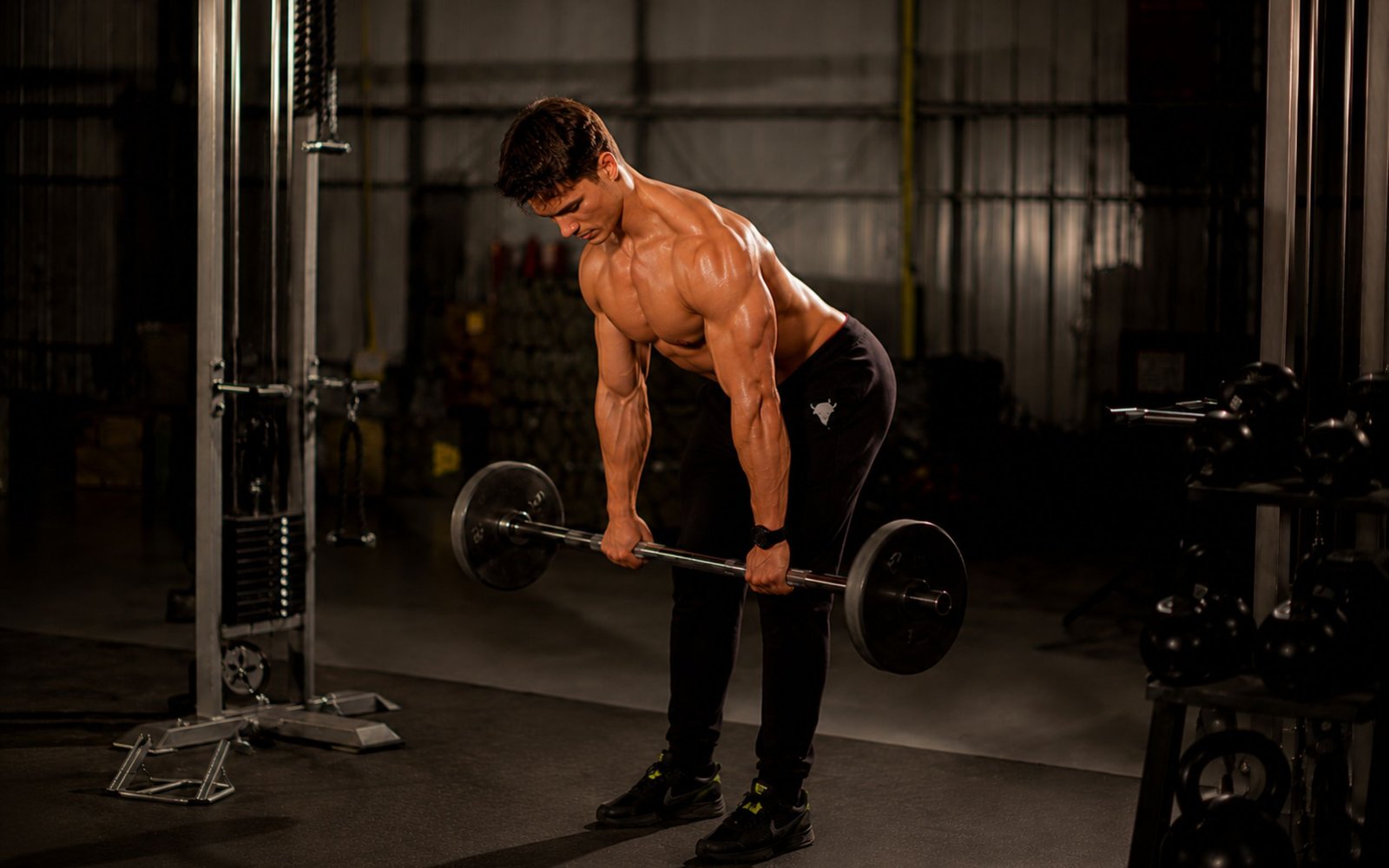
With a bar, the straight-legged deadlift often becomes more laterally stable and easier to quantify in progression. Many practitioners appreciate this version because it gives clear benchmarks on load, series and performance.
The counterpart is that the bar imposes a stricter trajectory. You must therefore be careful to keep the bar close to the body, to push the hips backwards and not to seek too great an amplitude if mobility does not allow it.
A good guideline is simple: go only as low as you can keep the spine stable and feel the hamstrings really working.
Smith Machine Straight Leg Deadlift: guidance and relative safety
The smith machine straight leg deadlift attracts practitioners who want a more guided trajectory. The Smith provides an additional form of stability, which can be reassuring for learning or working with a little less mental load on balance.
But we must also keep in mind that the imposed trajectory is not always ideal for all body types. Depending on the machine and the orientation of the rails, some users may find the movement very fluid, others less natural. This format can be useful, but it does not necessarily replace free work in the long term.
Semi-extended leg machine deadlift
semi-stretched leg machine deadlift refers to a slightly more accessible version. Keeping the knees slightly unlocked often reduces extreme strain on the hamstrings and improves overall control. For some practitioners, it is a very good transition between technical learning and busier work.
Deadlift Straight Legs Kettlebell and elastic
The kettlebell straight leg deadlift is interesting for practitioners who train at home or who want a more compact and more mobile version. With a kettlebell, the load is centered, which can improve hip hinge sensation for some people.
The elastic straight leg deadlift brings yet another logic. The elastic is very useful for learning the movement, creating progressive tension and working with less load. It is well suited for warm-up, recovery or light rehabilitation, as long as the movement remains clean.
Stretched Leg Machine Deadlift: should you use it?
The straight leg machine deadlift exists in several forms depending on the gym. Some machines reproduce a hinge movement, others move away from it. In all cases, the usefulness of the equipment must be judged according to the quality of the sensation, the fluidity of the movement and the ability to maintain tension on the right muscle groups.
A machine can be useful to concentrate more on muscular work without thinking too much about balance. On the other hand, it does not always replace learning the true free hip hinge, which remains a very valuable skill for sports transfer and posture.
Stretched Leg Deadlift Alternative and Equivalent
Research straight leg deadlift alternative and straight leg deadlift equivalent shows that some of the practitioners seek a similar movement, either due to lack of equipment, or to vary the programming.
Among the most coherent alternatives, we find:
 the Romanian deadlift;
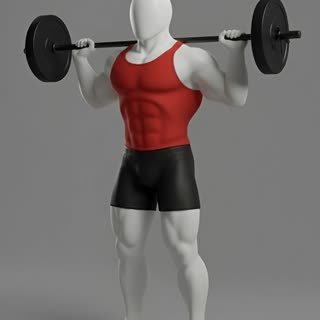 light good morning;
- the hip hinge with kettlebell;
 the leg curl for part of the hamstring work;
- hamstring sliders on the ground;
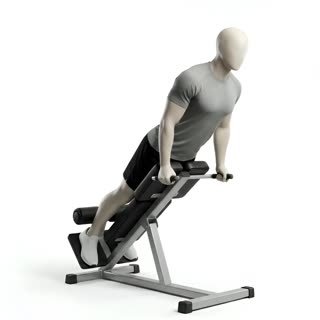 controlled hip extensions.
The best alternative depends on the desired goal. If you want to reproduce the hip hinge, Romanian is often the most logical. If you simply want to recruit the hamstrings, a leg curl or slider can do the job differently.
Technique: how to properly do the straight leg deadlift
The technique is based on a few simple but non-negotiable fundamentals:
- keep your back stable and neutral;
- push hips back;
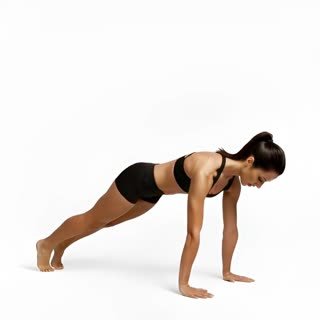 keep the load close to the body;
 avoid going too low if mobility does not allow it;
 go back up by contracting the glutes and the back of the thighs;
- do not transform the movement into lumbar flexion.
ACE also reminds us that the real starting point for a well-taught deadlift is mastery of the hip hinge. Without it, the movement loses its interest and becomes much riskier. :contentReference[oaicite:4]{index=4}
Amplitude: how far to go?
The ideal amplitude depends on hip mobility, flexibility of the hamstrings and control of the spine. It is not necessary to lower the weight to the ground for each repetition. What matters is to keep the tension on the hamstrings and the quality of the placement. A shorter but better controlled amplitude is always better than a long descent with a rounded back.
Stretched Leg Deadlift: for whom?
This exercise is especially suitable for practitioners who have already understood the basics of the hip hinge. It can be used in hypertrophy, strengthening the posterior chain, in athletic preparation or in technical work. It is particularly relevant for athletes who want to strengthen the hamstrings and glutes, improve running or better balance their lower body.
For complete beginners, it may be best to start with a more forgiving variation, such as the light Romanian, kettlebell, or even the deadlift. Then, straight legs can become a useful progression.
Stretched Leg Deadlift GIF, image and visual cues
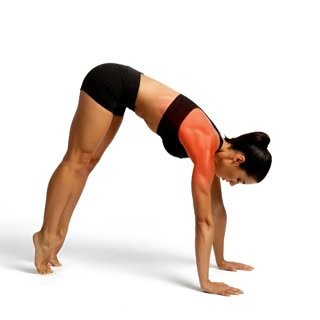
Research like straight leg deadlift gif and straight leg deadlift image show that many practitioners need to visualize the gesture. It makes perfect sense. This exercise is technical, and the image helps to understand the axis of the pelvis, the trajectory of the load and the position of the back.
But a visual alone is not enough. What really matters is understanding the intention of the movement. It is not a question of lowering the load as low as possible. This is about properly loading the posterior chain.
Conclusion: why the straight leg deadlift remains a valuable exercise
When done well, this exercise becomes a formidable tool for strengthening the posterior chain, improving the hip hinge and building a stronger and more balanced lower body. The best version is the one you can achieve with control, consistency and progress.
You might also like