Romanian deadlift
Complete guide to the Romanian deadlift: technique, muscles used, bar or dumbbell version, unilateral, smith machine, straight legs, loads and advice.
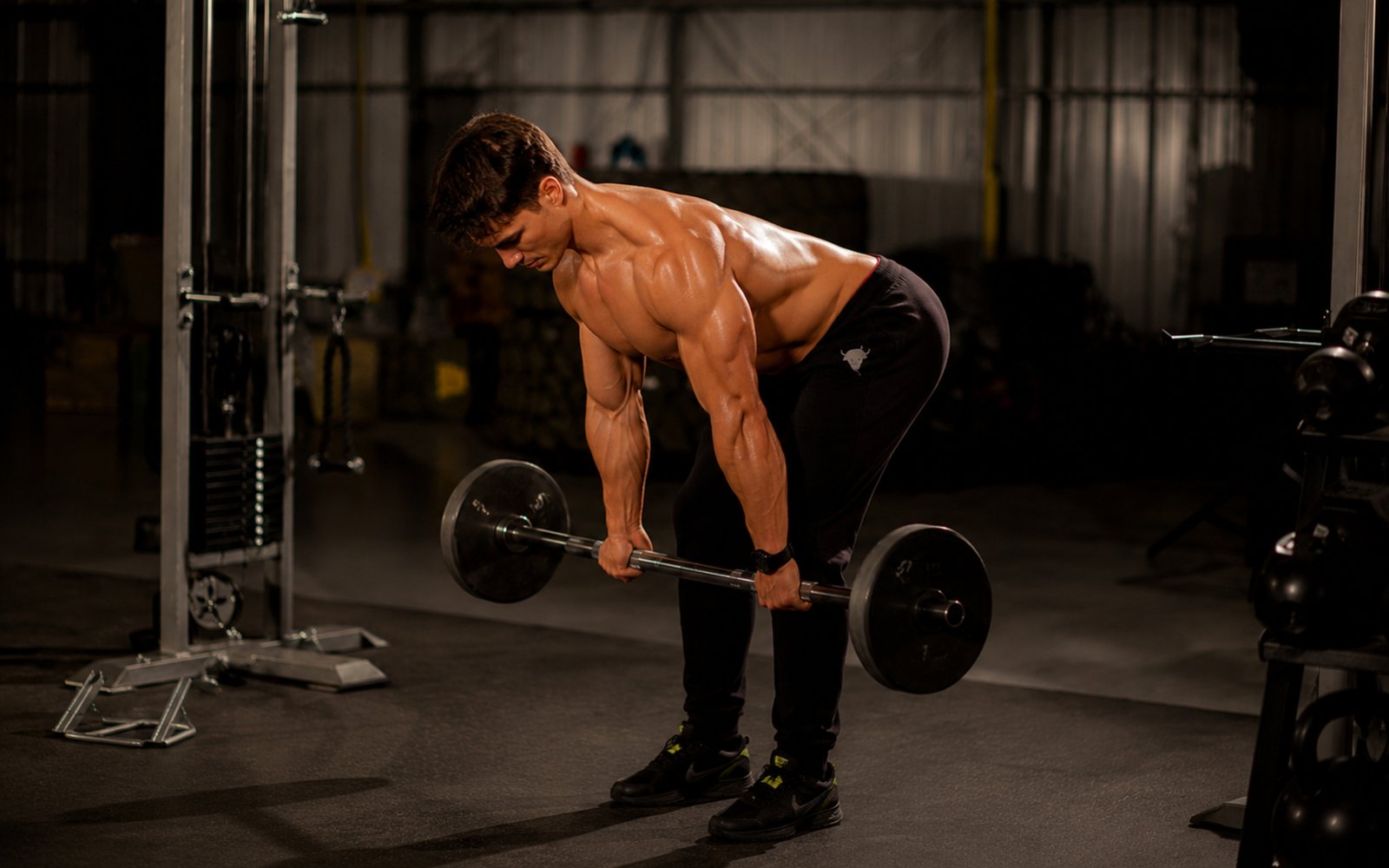
Romanian deadlift: technique, muscles, variations and tips for mastering it
The Romanian deadlift is an essential bodybuilding exercise for developing the posterior chain. It is particularly appreciated for strengthening the hamstrings, glutes, lower back and core stability. Done well, it improves strength, posture, pelvic control and quality of movement on many other exercises.
This movement is based on a hip hinge. The principle is not to squat, but to push the hips backwards while keeping the spine neutral and the load close to the body. It is this detail that makes all the difference between an efficient execution and a poorly controlled version that overloads the lower back.
The Romanian deadlift is aimed at several profiles. It is suitable for the practitioner who wants to gain mass on the back of the legs. It also helps athletes who are looking for functional work to better run, jump, accelerate or stabilize their pelvis. Finally, it can be adapted to different levels thanks to numerous variations.
Romanian deadlift definition
The Romanian deadlift is a variation of the deadlift focused on hip extension. Unlike the classic deadlift, the load does not come off the ground with each repetition. The movement generally begins in a standing position, then we lower the load by controlling the tilt of the hips before going back up by strongly contracting the glutes and hamstrings.
The main objective is not to shoot with your back. It’s about learning to load the posterior chain while maintaining good body organization. This logic makes the movement a reference exercise for athletic strengthening, hypertrophy and the prevention of compensation linked to a lack of hip control.
Technical points to remember
- keep the column neutral from start to finish;
- push hips back;
- keep a slight bend in your knees;
- let the load slide close to the legs;
- come back up by contracting the glutes;
- avoid rounding your lower back at the end of the amplitude.
Romanian deadlift muscles used
The Romanian deadlift works muscles mainly concerns the posterior chain. The hamstrings are heavily involved, because they control the descent and participate in hip extension. The glutes also play a major role, especially when coming back up.
The spinal erectors work in stabilization. The latissimus dorsi helps keep the load close to the body. The forearms and grip are used to hold the bar or dumbbells. The abdominals also participate, because they help maintain the core and protect the spine.
The muscles mainly targeted
- hamstrings;
- gluteus maximus;
- adductors to a certain extent;
- erectors of the spine;
- abdominals and deep core;
- forearm and grip muscles.
Romanian barbell deadlift: why this version remains the benchmark
The Romanian barbell deadlift is often the version most used in the gym. The bar allows you to gradually load and work both sides of the body at the same time. It offers good stability and a clear reading of the trajectory.
The Romanian barbell deadlift is particularly suitable for those who want to progress in strength or hypertrophy. It also makes it possible to better standardize the technique, because the load follows a more regular line than with dumbbells if the placement is clean.
In a classic progression context, the bilateral barbell Romanian deadlift remains a very solid choice. It facilitates progressive overload, tempo control and symmetrical work. This is often the starting point when you want to build good foundations.
When to choose the bar
- to increase the load gradually;
- to work both legs simultaneously;
- to better monitor your performance;
- to strengthen the hip hinge technique;
- to develop the glutes and hamstrings in the medium and long term.
Dumbbell Romanian deadlift: an excellent alternative
The Romanian dumbbell deadlift is a very interesting variation, especially for improving motor control and freedom of movement. Dumbbells allow a more natural trajectory. They may also be more comfortable for people who have difficulty keeping the bar glued to the body.
The Romanian rdl deadlift with dumbbells is often used in physical preparation, technical refresher training and in programs that seek a better feeling of the hamstrings. This version often requires better control of each side, especially if you lack coordination or mobility.
The Romanian deadlift with light dumbbells is particularly useful for learning the movement. It helps you feel the movement of the hips without creating too much stray tension. For a beginner, starting light allows you to establish good benchmarks before looking for more load.
The light Romanian deadlift is not a useless version. On the contrary, it can be very effective when the objective is to work on amplitude, tempo, muscular connection and technical quality.
When to choose dumbbells
- to get started safely;
- to improve muscle sensation;
- to benefit from a freer trajectory;
- to correct certain asymmetries;
- to work at home with little equipment.
Romanian deadlift dumbbells or barbell: how to choose
The debate Romanian dumbbell or barbell deadlift often comes up, because both options are relevant. The bar is generally better for loading heavy and building a very readable progression. Dumbbells are often more comfortable and more technically accessible.
When you ask yourself Romanian deadlift with barbell or dumbbells, you have to look at your objective. For work focused on strength and overload, the bar retains the advantage. For more technical, more educational or more mobile work, dumbbells are often excellent.
So the real answer is not to choose just one option forever. In many programs, alternating between the two formats allows you to progress more intelligently. One is for charging. The other is used to refine.
Romanian deadlift weight: what load to use
The question of Romanian weight deadlift depends on the level, technique and goal. Too heavy a load often leads to rounding the back or losing the logic of the hip hinge. A load that is too light, on the other hand, is not always enough to create a real muscular stimulus if the tempo is too fast.
The Romanian deadlift with weights must remain perfectly controlled. It is better to choose a load that you can lower slowly, raise again neatly and hold without breaking your posture. Progression then comes with regularity.
Simple guidelines for choosing your weight
- start light if the technique is not stable;
- keep 1 to 3 repetitions margin on most sets;
- increase only if posture remains clean;
- favor amplitude and control before raw load;
- adapt the weight to the planned number of repetitions.
Romanian bodyweight deadlift: is it useful?
The bodyweight Romanian deadlift can definitely be of interest, especially in terms of motor learning. Without equipment, we can already work on the hip hinge, the stability of the trunk and the perception of the stretch of the hamstrings.
This version is well suited for warming up, light rehabilitation, technical work or people who are completely new to the sport. It will not replace a loaded version forever if the objective is to gain mass or strength, but it can constitute a useful and reassuring base.
Unilateral Romanian deadlift and single-leg Romanian deadlift
The unilateral Romanian deadlift is a very interesting variation for working on balance, pelvic stability and coordination. By loading only one side or working only one leg, we increase the demands on the stabilizing muscles and on postural control.
The one-legged Romanian deadlift strengthens the hamstrings and glutes, but it also provides real neuromuscular control work. This version is widely used in physical preparation, particularly to improve hip stability and the quality of support.
The advantages of the unilateral version
- better control of the pelvis;
- balance work;
- correction of asymmetries;
- strong engagement of the stabilizing glutes;
- interesting transfer for running, jumping and changes of support.
Romanian deadlift with straight legs: watch out for confusion
The Romanian deadlift with straight legs is often cited, but you have to stay precise. In practice, the Romanian deadlift is performed with a slight bend in the knees. This flexion remains moderate, but it is significant. It protects movement, facilitates hip tilt and allows better distribution of tension.
When we compare Romanian deadlift vs straight legs, we are talking about two close but distinct logics. The straight leg version further emphasizes the hamstring stretch and may become less forgiving if mobility or lumbar control is limited. Romanian, for its part, often remains more balanced and easier to standardize.
Main differences between Romanian and straight legs
- Romanian: slight bending of the knees;
- legs straight: knees more locked;
- Romanian: better mastery for most practitioners;
- legs stretched: amplitude sometimes more aggressive on the hamstrings;
- Romanian: more versatile version for strength, mass and technique.
Romanian machine deadlift: useful or not?
The Romanian machine deadlift exists in some gyms, but it does not exactly replace free work. Machines can be useful for guiding movement, limiting certain stability constraints and better isolating effort. On the other hand, they often reduce the demand for overall coordination.
The machine can help a practitioner who is just starting out, who is returning from an injury or who wants to add volume without putting too much strain on the core. But to develop real mastery of the gesture, the free versions often have a more functional advantage.
Romanian deadlift smith machine and guided bar
The smith machine Romanian deadlift is a common option in the gym. The smith machine secures the vertical trajectory and reassures certain practitioners. It can make the movement easier to perform when you still lack confidence with a free bar.
The Romanian Bar Guided Deadlift follows the same logic. This variation can be interesting for feeling the hamstrings and glutes with less demand on lateral stabilization. On the other hand, you have to position yourself carefully, because the fixed trajectory may not be perfectly suited to all body types.
The Smith Machine is therefore neither an error nor a superior version. It's a tool. Used well, it can complete a program. Used incorrectly, it can force an unnatural trajectory.
Senior Romanian deadlift: what adaptations to plan
The Romanian senior deadlift can be of real interest, provided it is well adapted. The movement helps maintain hip strength, core control, posture and the ability to bend or pick up an everyday load. These are valuable qualities for aging well.
Among seniors, the priority must remain safety, fluidity of movement and the choice of a very progressive load. You can start without weight, with light dumbbells, or with a reduced amplitude. The objective is not to reproduce a competitive version, but to maintain efficient and stable mechanics.
Coping tips for seniors
- start with a short amplitude;
- use light dumbbells if necessary;
- keep a slow and controlled speed;
- work in front of a mirror at the beginning;
- stop before any loss of posture;
- favor regularity rather than load.
Common mistakes on the Romanian deadlift
The Romanian deadlift seems simple, but several mistakes often recur. The most common is to transform the movement into a partial squat. In this case, the knees move forward too much, the hips move back less and the exercise loses its logic.
Another mistake is going too low despite losing back neutrality. The right criterion is not absolute depth. The right criterion is the ability to keep a stable spine while feeling real work on the back of the thighs.
Mistakes to avoid
- round your lower back;
- going too low without control;
- let the load move away from the body;
- totally lock your knees;
- pull with your back instead of pushing your hips;
- loading too quickly without mastering the technique.
How to integrate the Romanian deadlift into a program
The Romanian deadlift can be placed in a lower body session, a posterior chain session or a full body program. It works well at the start of the session when the technique requires freshness. It can also come after a main movement if the objective is more hypertrophy oriented.
For the majority of practitioners, 3 to 4 sets of 6 to 12 repetitions constitute a solid base. Heavy versions lend themselves well to shorter work. Light versions, dumbbells or unilateral can be used for slightly longer sets with more control.
Examples of use
- as a main posterior chain exercise;
- as a second movement after a squat;
- in unilateral version at the end of the session;
- in light technical work during warm-up;
- alternating barbell and dumbbells according to the cycles.
Romanian deadlift: what to remember
The Romanian deadlift is one of the best exercises for strengthening the hamstrings, glutes and the entire posterior chain. It comes in several useful formats. The Dumbbell Romanian Deadlift helps a lot with control and learning. The Romanian barbell deadlift facilitates weight-bearing progression.
The Romanian dumbbell or barbell deadlift is not just about strict opposition. Both versions have their interest. Guided variations can also be relevant in certain contexts, just like the smith machine Romanian deadlift or the guided bar Romanian deadlift.
If we want to make lasting progress, we must respect the logic of the movement. This means hip hinge, neutral back, load close to the body, slight knee flexion and total control of amplitude. From there, the Romanian deadlift becomes an extremely profitable exercise, both for muscle gain and for performance and quality of movement.