A well-chosen leg exercise can improve circulation, reduce the feeling of heaviness, and strengthen the entire lower body. The secret is intelligent progression: first comfort and mobility, then strength, then endurance.
An exercise for heavy legs does not have the same objective as a bodybuilding workout: here, we mainly aim for venous return, calf muscle pump, and tissue relaxation. Then, we can reinforce to prevent the problem from returning.
In this guide, you will also find an exercise for swollen legs suitable for days when you feel water retention or circulatory fatigue. And if you're looking to sculpt, you'll have a complete thigh/glute section, with and without hardware.
Heavy legs: understand and act without exhausting yourself
The feeling of heavy legs often occurs when venous return is less effective: heat, standing, sedentary lifestyle, travel, hormonal cycles, fatigue. In the majority of cases, moving gently and often is more effective than an occasional intense session.
A sport for heavy legs must be regular and moderate impact. Active walking, cycling, swimming and aquagym are often well tolerated, because they activate the muscle pump without repeated shocks.
A useful movement for heavy legs can be very simple: alternate ankle flexion/extension, stand on tiptoe, or take short walks. These are “pump” gestures that restart circulation.
Exercise to relieve heavy legs: the express routine (5 minutes)
A good exercise to relieve heavy legs is short, easy, and repeatable. The goal is to create flow, not “burn.”
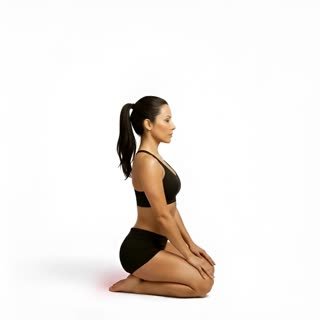 Ankle pump: 40 repetitions, seated or standing, leisurely pace.
- Climbs on spikes: 2 x 12 to 20, slow ascent, controlled descent.
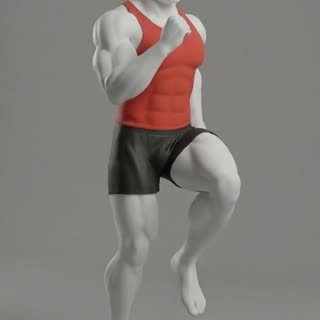 Walk in place: 60 seconds, knees soft.
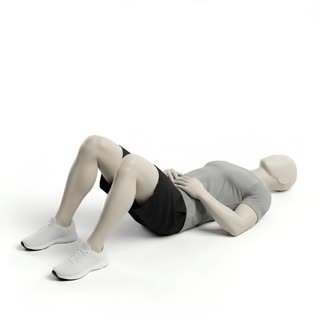
 Leg raises: 60 to 90 seconds, legs on a cushion or against a wall.
If you're looking for a best sport for heavy legs, think "gentle endurance activity" rather than sprinting or plyometrics. The best choice is one that you can do 3 to 5 times a week without excessive fatigue.
Exercise to avoid heavy legs: habits that count
An exercise to avoid heavy legs is often linked to frequency: 2 minutes every 2 hours is sometimes better than a long session at the end of the day. This is especially true if you sit or stand for a long time.
- Micro-breaks: 1 to 2 minutes of walking every 90 to 120 minutes.
 Breathing: 5 slow breathing cycles to relax the diaphragm (which influences venous return).
- Ankles: flexions/extensions during a call or meeting.
If you suffer a lot, the exercises to relieve painful heavy legs should remain gentle and progressive. If the pain is unusual, unilateral, with redness or significant swelling, you should seek medical advice quickly.
Restless legs: move to soothe the nervous system
“Restless” legs are often linked to nervous restlessness, fatigue, lack of recovery, sometimes deficiencies or stress. The idea is not to have a hard session, but to calm and oxygenate.
A restless leg exercise emphasizes rhythmic movements, gentle mobility and light stretching. The goal is to reduce the urge to move “compulsively” in the evening.
If you are looking for what sport for restless legs, gentle endurance during the day (walking, light cycling, swimming) is often useful. Avoid very late sessions that are too stimulating.
A simple restless legs exercise before bed can be an 8-minute routine: breathing, ankle mobility, gentle stretching of the calf and hamstrings.
An effective restless leg sport is often one that improves sleep without overloading: active walking in the afternoon, gentle yoga, or light cycling. Weekly consistency is more important than intensity.
A calming restless leg movement is “swinging”: standing, transfer of weight right/left, then heels-toes, for 60 to 90 seconds. This gives an outlet to the need to move, without further arousal.
Thighs and glutes: firm, strengthen, refine (without unnecessary repetition)
An leg and glute exercise should involve the hip. When the glutes work well, the thighs do less “all the work”, and the silhouette is toned more harmoniously.
An exercise for thighs and glutes can be very accessible: controlled squat, short lunge, gluteal bridge, step-up. The right exercise is the one that you feel in your glutes without knee pain.
Exercise to strengthen legs and buttocks: the effective trio
An exercise to strengthen legs and glutes must combine useful amplitude, control and progression. Here is a simple trio to do 2 to 3 times a week.
 Squat: 3 x 6 to 12, slow tempo, knees aligned.
 Glute bridge: 3 x 8 to 15, pause 1 second at the top.
 Step-up: 2 to 3 x 6 to 10 per leg, low step at the start.
A very useful exercise to strengthen the thigh and glutes with elastic is the squat with a band above the knees, pushing slightly outwards. This recruits the middle glutes well.
For sport to strengthen thighs and glutes, cycling uphill, walking uphill, rollerblading, or hiking are often effective, provided you gradually increase the duration.
The exercises to strengthen the thighs and glutes benefit from variation: a “strength” session (heavier), and an “endurance” session (more repetitions, less heavy). This avoids routine and improves progress.
Refine and firm: tone + endurance + regularity
The exercises to refine your thighs and glutes often combine strengthening and gentle cardio. The goal is to build useful muscle and increase overall expenditure without exhausting the lower body.
The best exercises for thighs and glutes are those that you can do for 8 to 12 weeks. In practice: squats, lunges, step-ups, hip thrust, deadlift with straight legs (if technique OK).
The exercises to firm the thighs and glutes become more effective if you control the tempo: slow descent (2 to 3 seconds), dynamic rise, brief pause. The muscle works more, without necessarily increasing the load.
A very interesting sport to strengthen the thighs and buttocks is brisk hill walking (inclined treadmill if necessary). It’s simple, progressive, and often very well tolerated by the joints.
With dumbbells and weights: building strong legs
A dumbbell leg exercise allows you to progress more quickly, because the load increases muscle stimulation. The important thing is technique: neutral back, stable support, knees in line.
A classic weighted leg exercise is the goblet squat (dumbbell held against the chest). It is very educational: it helps to keep the torso straight and to feel the thighs/buttocks.
An effective dumbbell thigh exercise is the split squat (static lunge), because it strengthens leg by leg and corrects imbalances. Start light and build up gradually.
A leg workout with dumbbells can be kept simple: 4 exercises, 30 to 45 minutes, twice a week. Regular volume is better than a rare “marathon” session.
 Goblet squat: 3 x 6 to 10.
 Static lunge: 3 x 6 to 10 per leg.
 Romanian deadlift (hamstrings/glutes): 3 x 8 to 12.
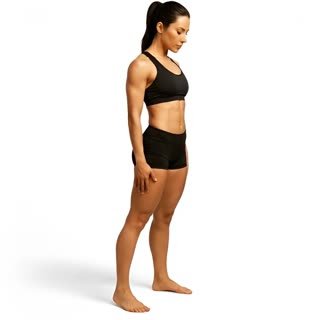 Standing calves: 3 x 12 to 20.
Musculation: thighs and calves, without neglecting mobility
A leg exercise must target strength, but also the quality of the movement. The legs respond very well to progression: a little more load, or a little more repetitions, week after week.
thigh strength exercises often include squats, presses, lunges, hack squats, leg extensions (with caution depending on the knee), and hip hinge variations. The choice depends on your level and your joints.
Calf bodybuilding exercises are often underestimated. However, strong calves improve ankle stability, walking endurance, and circulatory “pump”.
An leg muscle exercise that works for almost everyone is the step-up: it is functional, progressive, and adaptable. In addition, it works on the thighs and glutes without necessarily loading the back.
A very effective thigh muscle exercise is the lunge (front, back, or static), because it strongly recruits quadriceps and glutes. Keep your amplitude controlled if you have sensitive knees.
Without hardware: maximum efficiency, total simplicity
A leg exercise without equipment can be very effective if you play with the tempo, amplitude and volume. The legs do not “need” equipment to burn and strengthen.
A simple calf exercise without equipment: mounted on unilateral spikes near a wall for balance. Do it slowly, it's much more effective than quick repetitions.
An exercise to strengthen the legs without equipment can be based on 3 movements: squat, lunge, glute bridge. Add a unilateral variation to increase intensity without weights.
A formidable thigh exercise without equipment is the wall sit (chair against the wall). It strengthens the quadriceps and improves exercise tolerance, useful for everyday life.
An calf muscle exercise without equipment becomes more difficult by pausing at the top (1 to 2 seconds) and slowly descending. This method increases time under tension.
Thin legs: tone, posture, and well-dosed cardio
An exercise for thin legs mainly targets tone and posture. The figure is often more influenced by regularity, walking, daily activity and light strengthening than by an occasional very heavy session.
An interesting sport for thin legs is brisk walking, dancing, swimming, or cycling at moderate intensity. This improves endurance and helps “deflate” without trauma.
The exercises for thin thighs favor moderate series, a controlled tempo, and overall work (glutes, thighs, core). A more stable body often results in more “shaped” legs.
The best sport for thin legs is the one you do often: 3 to 5 times a week, 20 to 45 minutes. Consistency beats extremes.
Bow legs: pay attention to goals and keywords
A bow leg exercise does not always “change” bone structure, especially if the arch is anatomical. Instead, it can improve functional alignment, stability, and how you load your knees and hips.
An exercise to correct bowed legs often works the glutes (gluteus medius), ankle stability and knee control. Unilateral movements and step-ups are useful if the technique is clean.
The expression bow-legged exercise sometimes circulates on the internet, but in practice, we rather seek to optimize alignment and protect the joints. If your goal is aesthetic, seek professional advice to avoid unnecessary pain.
Action plan: 2 programs depending on your objective
Program A (heavy and swollen legs) – 10 minutes
This program combines movement for heavy legs and circulatory recovery, to be done 1 to 2 times a day if necessary.
- Ankle pump: 40 repetitions.
- Mounted on spikes: 2 x 15.
- Walk in place: 2 x 60 seconds.
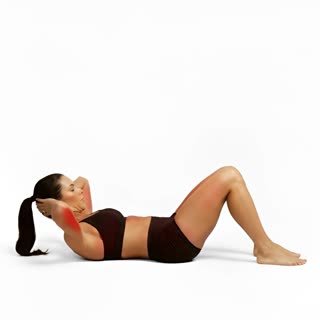 Legs elevated: 90 seconds.
Program B (thighs & glutes) – 25 to 35 minutes
This program targets leg and glute exercise and overall strengthening, 2 to 3 times per week.
- Squat (or goblet squat): 3 x 8 to 12.
- Static lunge: 3 x 6 to 10 per leg.
- Gluteal bridge: 3 x 10 to 15.
- Calves: 3 x 12 to 20.
Conclusion
The best leg exercise is the one that meets your current needs: circulation and comfort for heavy legs, soothing and routine for restless legs, and structured progression to strengthen the thighs and glutes. With a regular approach, you can feel lighter, stronger, and more stable on a daily basis.
You might also like