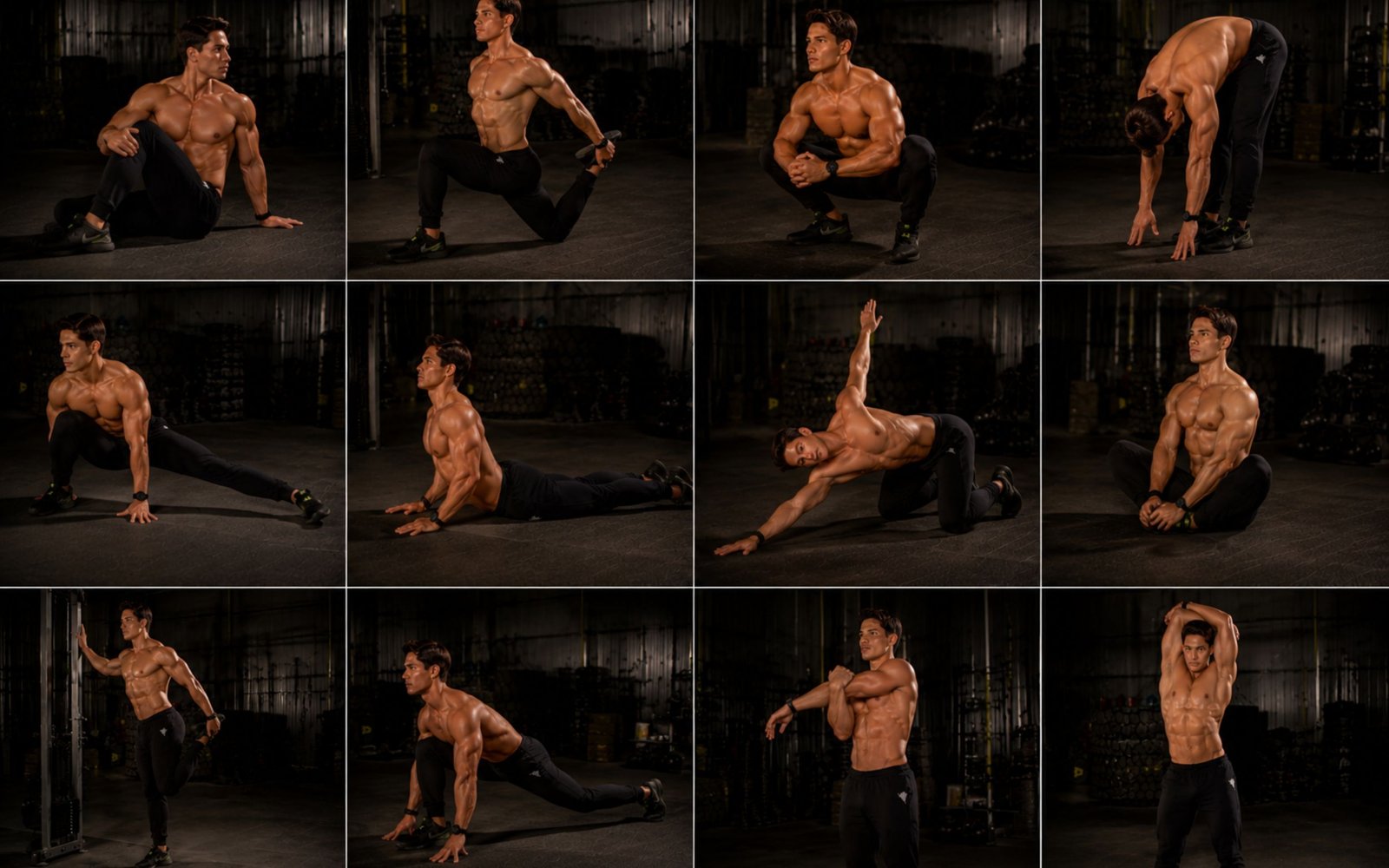
Improving your flexibility and mobility means gaining daily comfort, preventing certain pains and moving with more ease. The right approach is progressive: we heat, we mobilize, then we stretch. With regular practice, you can feel progress within a few weeks.
exercise for flexibility: the objective is not to go “to the maximum”, but to go “just enough” so that the body adapts without tensing up. This logic protects the joints and makes the sessions more pleasant.
Flexibility vs mobility: what's the difference, and why does it change everything?
Flexibility mainly corresponds to the ability of a muscle to lengthen. Mobility also includes active control of the joint: amplitude + stability + coordination.
sport for flexibility can improve range of motion, but if you don't control this range of motion, you may feel “stiff” despite stretching. The key is therefore to combine active mobility and gentle stretching.
sport for mobility: disciplines that mix control and amplitude (yoga, pilates, gentle martial arts, gymnastics, dance, qi gong) often give good results, especially if you practice regularly.
Security rules (quick and effective)
Before starting, warm up for 3 to 5 minutes: walking in place, shoulder rotations, leg swings. Then breathe slowly. Breathing calms the nervous system and facilitates relaxation.
movement for flexibility: favor controlled movements, without jerks. Smooth movement is better than forced stretching.
movement to regain flexibility: go less far, but more often. The body loves short repetitions rather than rare “big sessions”.
“Whole body” routine (10 minutes): the basis for progress
This routine serves as your foundation. Do it 3 times a week, then add specific blocks (back, legs, hips, pelvis) according to your needs.
exercise for body flexibility: start by mobilizing the spine, then the hips, then the legs. This prepares the whole body to open without compensation.
exercises for body flexibility: keep a slow pace, and come out of each position before tiring. The idea is to stay “fresh” to better control.
- Breathing 30 seconds: inhale for 4 seconds, exhale for 6 seconds.
- Cat-cow 60 seconds: gently mobilize your back.
- Low lunge 60 seconds: open the hips without forcing.
- Light forward fold 60 seconds: release the back of the legs.
- Thoracic rotation 60 seconds: upper back mobility.
- Assisted squat 60 seconds: pelvis + hips + ankles.
Flexibility and mobility of the back: moving without tensing
A more mobile back often allows you to breathe better, reduce the feeling of stiffness in the morning, and better tolerate sitting.
exercise for back flexibility: cat-cow is a classic. Do 8 to 12 repetitions, slowly, synchronizing your breathing.
back mobility exercise: add thoracic rotation. On all fours, place one hand behind your head and open your elbow towards the ceiling, without arching.
exercise to gain back flexibility: try the “child” stretch (child pose) for 45 seconds, then come back up, breathe, repeat twice. Repetition calms the back.
Mini-block “back” (6 minutes)
- Cat-cow: 1 minute.
- Thoracic rotation (right/left): 2 minutes.
- Child’s pose: 1 minute.
- Gentle extension on the stomach (sphinx type): 1 minute.
- Lengthened breathing: 1 minute.
Leg flexibility: hamstrings, calves, quadriceps
More flexible legs improve walking, running, posture and the feeling of lightness. Here too, progressiveness is essential.
leg flexibility exercise: do a light forward bend, knees very slightly bent, 30 to 45 seconds. Keep your back long, breathe.
exercises for leg flexibility: combine a stretch of the hamstrings (back of the thigh) and a stretch of the quadriceps (front of the thigh). Muscular balance avoids tension.
Legs block (8 minutes)
- Calf stretch on the wall: 1 minute per side.
- Hamchios on chair (straight back): 1 minute per side.
- Standing quadriceps (hold a chair if necessary): 1 minute per side.
- Controlled leg swing (forward/backward): 30 seconds per side.
Mobility and flexibility of the hips: the key joint
The hips influence the back, the pelvis, walking and even sitting posture. A lot of “back” stiffness actually comes from a lack of mobility in the hips.
exercise for hip flexibility: the low lunge is very effective. Place one knee on the ground, the other leg in front, and gently move your pelvis forward, keeping your chest high.
hip mobility exercise: Do hip circles while standing, hands on hips, 30 seconds in each direction. Stay slow.
exercises for internal hip mobility: lie on your back with your knees bent, then drop one knee inward gently (controlled movement). Alternate 10 times.
exercises to soften the hips: add the gentle version of the “pigeon” posture (on your back if you are stiff). 45 seconds per side, without pain.
Hip block (10 minutes)
- Low lunge: 1 minute per side.
- Regular internal/external rotation: 2 minutes.
- Assisted squat (holding a table): 1 minute.
- Gentle pigeon: 1 minute per side.
- Breathing: 2 minutes.
Pelvis mobility: the link between back and legs
A mobile basin helps to better distribute loads and reduce compensation. This is especially useful if you sit for a long time.
pelvis mobility exercise: lie on your back, knees bent, then tilt the pelvis (retroversion/anteversion) slowly, 10 to 15 times. Look for fluidity, not strength.
Simple little test
If you have difficulty tilting your pelvis without moving your shoulders, start with deep breathing. Often, relaxing the diaphragm helps the pelvis “free itself”.
Finger flexibility: useful, often forgotten
The hands are used every day (telephone, keyboard, DIY). Stiff fingers can interfere with comfort, especially if you lack breaks.
exercise for finger flexibility: open your hand for a maximum of 5 seconds, then gently close for 5 seconds. Do 10 repetitions. Then, stretch each finger gently, without pulling hard.
Rear flexibility: progress without injury
Back flexibility (extension) requires good control of the pelvis, hips and upper back. A lot of pain comes from too much extension concentrated in the lower back.
rear flexibility training: start by strengthening the core and opening the hip flexors. “Clean” extension often starts with freer hips.
exercise for back flexibility: start with the sphinx posture (on the forearms) for 30 seconds, then rise to a light cobra for 10 seconds, come back down. Repeat 3 times.
Progression over 4 weeks (simple)
- Week 1: sphinx + low lunge.
- Week 2: light cobra + thoracic rotation.
- Week 3: assisted bridge (hands on a support) + pelvic mobility.
- Week 4: lower bridge (if all goes well) + recovery.
Qi Gong: a gentle approach for legs and mobility
Qigong is useful for moving without impact, with calm breathing. It is especially useful if you are stiff, stressed, or returning after a break.
qi gong exercises for leg mobility: a simple example is “weight transfer”: feet pelvis width apart, transfer the weight to the right then to the left, slowly, 1 to 2 minutes. Then add slight knee bends.
Which sport should you choose to work on flexibility?
The best sport is the one you can practice for a long time. Flexibility requires a regular dose, not extreme intensity.
sport to work on flexibility: yoga, pilates, dance, gentle gymnastics and internal martial arts (tai chi, qi gong) are often effective. Their repeated movements create a natural progression.
Easy weekly plan (20 to 30 minutes, 3 times/week)
Here is a simple, balanced, and realistic plan. It avoids repetition by alternating areas, while keeping a common base.
- Day A: back + pelvis + breathing.
- Day B: hips + legs + active mobility.
- Day C: full body routine + back flexibility (gentle version).
Common mistakes (and how to avoid them)
First mistake: forcing an amplitude. Slight tension is normal, pain is not. Second mistake: forgetting active mobility. Passive stretching alone sometimes gives a sense of progress, but little control.
exercise to work on flexibility: keep a simple rule: 70% maximum intensity. This allows you to practice often without “burning out”.
exercise to improve flexibility: monitor your progress with a concrete benchmark (hand-to-ground distance, comfort in the lunge, back rotation). The benchmarks motivate and stabilize the practice.
Conclusion: useful flexibility, not performance
Flexibility and mobility are built with consistency: a little, often, done well. Work your back, legs, hips, pelvis, and even your fingers, and your body will return this attention with greater comfort and freedom.
You might also like