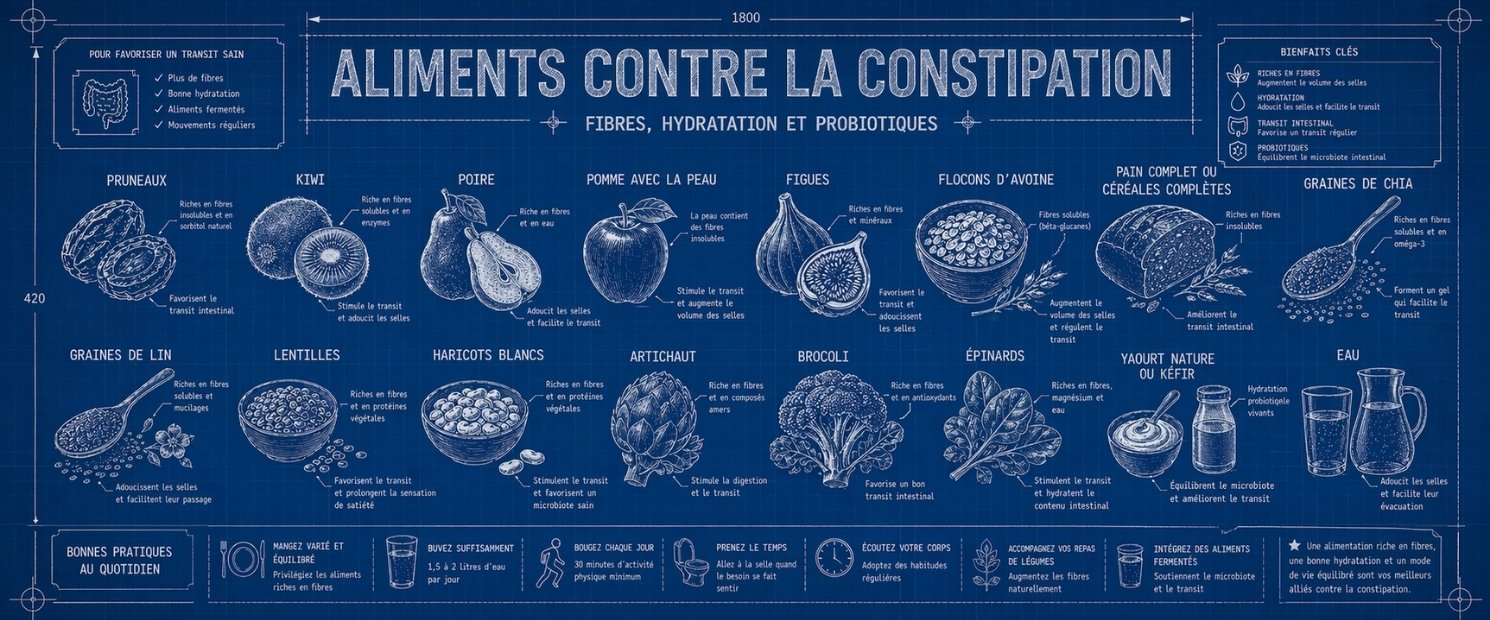
Constipation is common and, in the majority of cases, diet helps a lot. The right reflex is to act gently, regularly, and to adapt the choices to the profile: adult, child, baby or elderly person. The goal is to improve stool consistency, frequency, and digestive comfort, without triggering too much bloating.
Important: if the pain is intense, if there is blood, fever, vomiting, weight loss, or if a very young baby seems bothered, you should seek the advice of a healthcare professional. Support is also useful in cases of constipation that lasts or returns often.
Understand constipation in 30 seconds
We often speak of constipation when stools become rare, hard, difficult to pass, or when evacuation is incomplete. For some people, frequency is not the best indicator: it is mainly the effort, pain, and hardness that count.
On the plate, three levers change the game: fiber, hydration and regularity. Movement (walking, pelvic mobility) and a stress-free toilet routine complement the plan very well.
The 5 food pillars that really work
1) Increase fiber, but gradually
Fiber retains water, increases stool volume and stimulates transit. Climbing too quickly can give you gas and a feeling of a bloated stomach, so you progress in stages.
- Soluble fibers: oats, chia seeds, well-cooked legumes, ripe fruits (pear, prune), cooked carrot.
- Insoluble fibers: wheat bran, wholemeal bread, whole grains, certain raw vegetables (to be measured if sensitive).
2) Drink enough, especially when you add fiber
Without water, fibers can have the opposite effect. Aim for regular intakes during the day: water, herbal teas, broths, and a portion of water via fruits and vegetables.
3) Focus on “transit-friendly” fruits
- Prunes (or prune compote): classic, often effective.
- Pears: rich in fiber and well tolerated by many people.
- Kiwi: practical for breakfast.
- Figs (fresh or dried): very rich, to dose if you get gas easily.
4) Add “good fats” to lubricate gently
A small quantity of lipids sometimes helps with evacuation comfort. The idea is not to eat fat, but to choose better.
- Olive oil (raw or gently cooked), avocado, oilseeds (if well chewed).
- Oily fish (sardines, mackerel) if you like.
5) Think microbiota: yogurts, kefir, fermented foods
In some people, the balance of the microbiota influences regularity. Fermented products can support digestion, especially if introduced gradually.
When there is bloating or gas: adjust without giving up
Foods against constipation and bloating: favor soluble fibers (oats, chia, cooked vegetables, pear compote) rather than suddenly switching to “complete everything”.
Gentle cooking and smaller portions often reduce discomfort. Chewing slowly, avoiding fast meals and breaking up the day can also help.
Foods against constipation and gas: start with easy cooked vegetables (zucchini, carrot, green beans) and save legumes for later, in small doses.
When you increase fiber, allow 3 to 5 days for the body to adapt. The transit likes regularity, not extreme changes.
Simple “24 hour” mini-plan (adult)
- Breakfast: oat porridge + kiwi + yogurt.
- Lunch: quinoa + cooked vegetables + drizzle of olive oil.
- Snack: pear compote or 2–3 prunes + water.
- Dinner: vegetable soup + wholemeal toast + avocado.
Foods against constipation: adult, severe, chronic focus
Foods against constipation: the best results come from a simple trio: fruits rich in fiber, vegetables (often cooked at the beginning) and well-tolerated whole grains.
Add a daily walk and a quiet toilet routine. The body loves regular signals.
Foods against adult constipation: focus on a “starter” breakfast (kiwi + oats + yogurt) and a dinner rich in cooked vegetables to revive without irritating.
If your day is very sedentary, even 10 minutes of walking after meals can support transit.
Foods against severe constipation: go back to basics with easy-to-digest meals (soup, compotes, cooked vegetables) and regular hydration, then increase fiber little by little.
If constipation has been “blocked” for several days with significant pain, it is better to seek medical advice rather than force it with fibers all at once.
Foods against chronic constipation: think “habits” before “boost”. A stable dose of fiber, stable hydration and stable meal times often provide better long-term results.
Monitoring can be useful to check fiber intake, dietary balance and possible triggering factors (stress, medications, lack of activity).
Elderly people: priority hydration, tolerance and texture
Foods against constipation in the elderly: favor easy textures (purées, thick soups, compotes, yogurts) in order to increase fiber without hindering chewing.
The main risk is eating less and drinking less. Making water “easy” (bottle, herbal tea, broth) often changes the situation.
- Pear compote, rehydrated prunes, oat flakes.
- Cooked vegetables (carrot, zucchini) + olive oil.
- Semi-wholemeal bread if wholemeal is irritating.
Children: gentleness, routine and reassuring diet
In children, the objective is twofold: to improve transit and to avoid the blockage linked to the fear of going to the toilet. We focus on simple foods, appropriate portions, and regular habits.
Foods against child constipation: fruits (pear, kiwi), compotes, oats and cooked vegetables are often well accepted and effective.
Keep a positive approach. “Pressure” sometimes increases stress, therefore constipation.
Foods against constipation in children: the ideal is to spread the fiber over the day (breakfast + lunch + snack) rather than putting everything in one meal.
Offer water regularly, especially if the child plays a lot and forgets to drink.
Meals against child constipation: a typical dinner can be vegetable soup + wholemeal (or semi-wholemeal) bread + yogurt, with pear compote if necessary.
Meals too rich in ultra-processed products can slow down transit in some children.
Vegetables against child constipation: start with soft cooked vegetables (zucchini, carrot, green beans) and gradually increase the quantities.
Raw vegetables can be useful, but they are not necessary if they are bloated.
Food to avoid child constipation: on a daily basis, oats (porridge, pancakes), kiwi and pear are easy options to include without conflict at the table.
The important thing is repetition: small regular doses are better than a “big catch-up”.
Practical cases: 2 years and 3 years
Food against constipation for children aged 2 years: at this age, a pear compote, well-cooked vegetables and a small bowl of oats can be enough to revive without irritating.
Many children also begin to be more sensitive to changes in routine. Keep stable schedules.
Foods against constipation in children 3 years old: the cleanliness period can trigger blockages. Prefer “comfort” foods and a quiet toilet routine after the meal.
A stool to elevate the feet sometimes helps posture and evacuation.
Babies and toddlers: safety first, then adapted fibers
In babies, we do not treat everything the same depending on age, diet (breastfeeding, infant formula) and the start of diversification. If in doubt, especially in a very young baby, seek professional advice.
Foods against baby constipation: after diversification, pear or prune purees, and certain cooked vegetables, are often the simplest options.
Go gradually to avoid digestive discomfort.
Foods against baby constipation: the idea is to choose foods rich in fiber and easy to swallow, with a texture appropriate for age.
The baby's transit is sensitive. A small amount is often enough.
Vegetables against baby constipation: cooked carrots, zucchini and sweet potatoes can be well tolerated, especially in a smooth puree at the beginning.
We adjust according to the baby's reactions (gas, discomfort, sleep).
Vegetables against baby constipation: favor cooked and mixed vegetables, and avoid introducing too many new foods on the same day.
A gradual introduction makes monitoring easier and reassures parents.
Food to avoid baby constipation: a small pot of pear compote (no added sugar) or a few spoons of prune puree can be helpful, if age permits.
If the baby is not yet eating solids, we do not try to “force” using the plate.
6 months: first gentle aids
Food against constipation baby 6 months: at the beginning of diversification, a very smooth prune puree or a pear compote can help, in small quantities.
The priority is tolerance. The goal is not to “fill”, but to support transit.
2 years: toddler, transit closer to child
Foods against constipation for babies 2 years old: at this age, the options are similar to those of children: fruits rich in fiber, cooked vegetables, oats, and regular hydration.
We keep the portions appropriate. Too much fiber at once can cause bloating.
Quick checklist: what helps, what slows down
To favor
- Fruits: pear, kiwi, prunes, figs (in small doses).
- Vegetables: mostly cooked at first, then more varied.
- Cereals: oats, semi-whole grain bread, whole grain rice if well tolerated.
- Hydration: regular water, herbal teas, broths.
Limit if you are constipated
- Excess of ultra-processed products and meals very poor in plants.
- Constant snacking that replaces real balanced meals.
- Sudden increase in fiber without drinking more.
Conclusion
A good “anti-constipation” plan is simple: suitable fiber, water, regularity, and gentle progression. The best choice is one that you can do every week, without discomfort. If constipation is very bothersome, harsh, or worrying, medical advice can help make the process safer.
You might also like