Complete Guide to the Leg Press: Incline, Horizontal, Loads, Muscles and Alternatives
Leg press: incline, horizontal, loads, muscles and alternatives
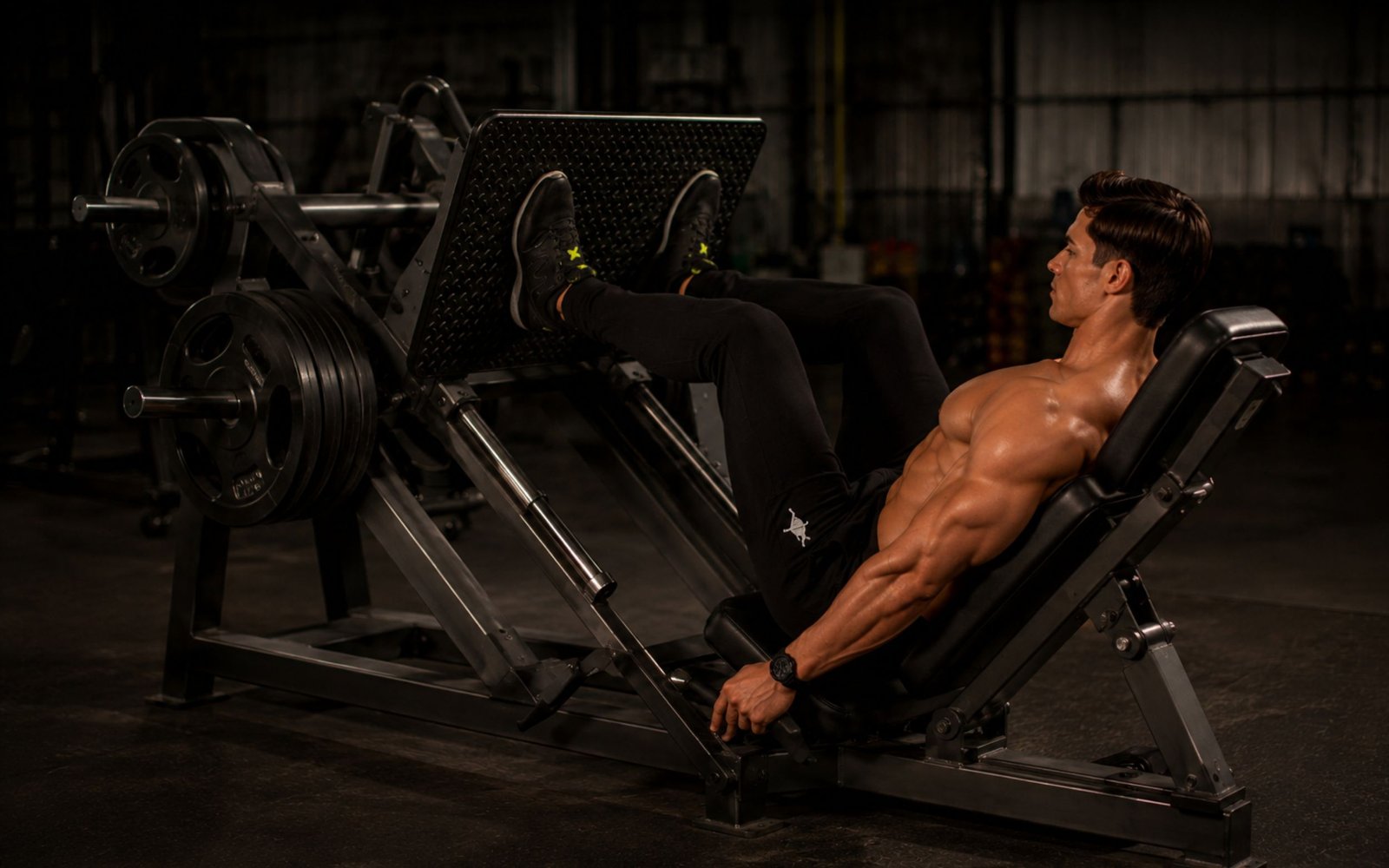
The leg press is an essential bodybuilding machine for developing the legs with complete stability. It allows you to work the quadriceps, the glutes and more broadly the lower chain with a guided trajectory, which reassures many practitioners. Whether you are a beginner, intermediate or experienced, the press offers clear progression in terms of load, movement control and quality of execution.
In this guide, we will compare the inclined version, the horizontal version and other more specific variations. We will also see how to choose the right weight, which muscles are really targeted, and how to interpret the differences in sensation depending on brands like Matrix or Technogym. We'll also cover common searches related to Basic Fit, Fitness Park, occasion, and machine-free alternatives.
Why the leg press is a pillar of leg strength training
The leg press is popular because it allows you to push heavy while maintaining a relatively secure trajectory. It does not replace all free exercises, but it complements a leg program very well. For many practitioners, it is more accessible than a heavy squat, especially when you want to concentrate on muscular sensation and not on balance.
Another important advantage is the ability to modulate effort. You can do a heavy session to work on strength or hypertrophy, then a lighter session in long sets to improve local endurance and control. This flexibility is why the leg press remains popular in almost every gym.
Which muscles are targeted in the leg press?
The main muscle used on a leg press depends on the setting of the machine, the amplitude and the position of the feet. In general, the quadriceps are very active, but the glutes can also take a significant part of the work if the technique is adapted. The buttocks are particularly recruited more when the amplitude is deep (without loss of posture) and the high feet are used on the platform.
Simple benchmarks for better targeting
- Quadriceps: lower foot placement, controlled amplitude, regular tempo.
- Glutes: higher feet, controlled descent, stable pelvis.
- Overall legs: foot width adjusted according to body shape and comfort.
Horizontal or inclined leg press: how to choose according to your goal
The question horizontal or inclined thigh press comes up very often, and the answer depends above all on your objective, your mobility and the equipment available in your gym. Both formats can be excellent. There is no one “best” machine for everyone.
The inclined leg press: the most common reference
The inclined leg press is often the most visible in the gym. It is generally 45 degrees, with a trolley on rails. This is the famous 45 degree leg press that is found in many clubs. It gives a feeling of significant load and often allows you to progress on heavy series with good stability.
We also find search variants like inclined leg press, inclined leg press or inclined leg press. These formulations designate the same family of machines. The real difference is mainly in the angle, the travel of the carriage and the adjustment of the backrest.
The horizontal thigh press: comfortable and educational
The horizontal leg press is often appreciated for its grip. It can be simpler to start with, because the posture seems more intuitive for some practitioners. It is also a good option when you want to work cleanly, without immediately looking for very high loads.
The horizontale version can exist on different systems: free load, guided plates, or internal mechanics. We sometimes find more technical models, such as a horizontal thigh press guided machine with bilateral pulley. This very precise description corresponds to machines where the resistance is guided, sometimes via pulley, with a bilateral movement (both legs push at the same time).
Is there a one-sided leg press?
Yes, some machines allow unilateral work (or more precisely unilateral, leg by leg) in order to correct imbalances. The unilateral leg press is good for improving symmetry, knee control and coordination. However, it requires more technical mastery, especially if the load increases.
Adjust the weight correctly: displayed load, real resistance and empty weight
The word weight is often misinterpreted in the leg press. The load displayed on the machine does not always accurately reflect the resistance felt. Press angle, friction and internal mechanics change the feel. This is why an inclined press and a horizontal press can give very different feelings with a similar weight.
Another important point is the empty, that is to say the empty weight of the cart or machine before adding discs. Some people want to compare their progress between gyms and are looking for precise data on starting weight. This is useful, but it is not enough to judge the quality of a performance. Tempo, amplitude, number of repetitions and posture count as much.
Brands and differences in sensation: Matrix, Technogym, Bodysolid
The Matrix and Technogym machines are very common in the gym, while Bodysolid is often cited in home gym or semi-pro equipment. A vertical type Bodysolid press does not feel like a classic inclined press. In the same way, a Matrix machine and a Technogym machine can have different geometries, therefore a different perceived load.
To track your progress, always note the brand, model, seat adjustment, number of repetitions and feel. It’s more reliable than just comparing kilos between several clubs.
Leg press and gyms: Basic Fit, Fitness Park and search habits
Many exercisers are looking for information specific to their gym, for example basic fit leg press or machine available at Fitness Park. This makes sense, because equipment varies between clubs. A person can train on an incline press in one club and find a horizontal press in another.
Why “Basic Fit” searches are so common
Queries like basic fit leg press, basic fit leg press weight, or basic fit incline leg press show a very concrete intention: knowing which machine is present and how to interpret the load. Variants without emphasis, such as basic fit machine leg press or basic fit horizontal leg press, are also common on mobile.
In all cases, the best practice is to test the machine, check its travel and adjust the seat. The same brand can offer different devices depending on the surface area of the club, the installation date and the brand chosen.
Execution technique: safety, efficiency and targeting quadriceps/glutes
Technique is the most important factor for lasting progress on a leg press. Even with a moderate load, poor posture can limit results and create discomfort. The objective is to push hard, but cleanly, while maintaining a controlled trajectory.
Foot placement and working angle
The placement of the feet greatly influences the sensation. On a high leg press, you will often feel the glutes more. On a lower placement, the quadriceps take a more important role. You should not blindly copy a placement seen on video: each thigh and each hip have their mobility constraints.
Frequent mistakes to avoid
- Go too low to the point of lifting the pelvis off the backrest.
- Suddenly lock your knees at the end of the push.
- Charging too quickly without controlling the amplitude.
- Neglect the tempo and bounce at the bottom of the movement.
Heavy or light version: two complementary uses
A heavy leg press can be used to build strength and muscle mass. A light leg press is very useful for learning the technique, working on congestion and improving the quality of contraction. The ideal is often to alternate formats according to your training cycle.
Used, Le Bon Coin and purchase of a thigh press
If you are looking for a machine for your home, used is an interesting option. Searches like used horizontal thigh press or the bon corner come up very often. Before purchasing, check the condition of the rails, the seat, the safety devices, the welds and the fluidity of the movement. A well-maintained used press can last for many years.
When comparing ads, pay attention to the words used: “inclined”, “inclined”, “horizontal”, “vertical”, “guided”, or even “smith”. Some sellers mix categories. A smith machine is not a leg press, although it can be used for some leg exercises.
Non-machine alternatives: what to do if you don’t have a leg press?
It is possible to work the legs effectively without leg press. If you don't have a machine, you can use squats, lunges, Bulgarian split squats, step-ups or hip thrusts. A search like “leg press without machine” often targets this logic. Even if the movement is not identical, you can reproduce part of the stimulus for the quadriceps and the gluteus.
The smith machine can also be a transitional solution, particularly for guided squats, walking lunges or heel-raised squats. The important thing is to maintain progressive overload, clean technique and consistent planning.
Frequently asked questions about the thigh press (SEO + user intent)
Butt leg press: is it really effective?
Yes, the gluteal leg press can be very effective, especially with good foot placement and controlled amplitude. The thigh press for glutes formulation is one of the most sought after by people who want to strengthen or develop their glutes.
Quadriceps gluteal leg press: what are we really working on?
The correct answer is: both. A request like gluteal quadriceps leg press or gluteal quadriceps leg press reflects biomechanical reality. Depending on the technique, one of the groups may be emphasized more, but both participate in the movement.
Horizontal thigh press weight: why do the numbers vary?
A search for weight horizontal thigh press (or horizontal leg press) shows a desire to compare loads. The figures vary because the machines do not have the same internal resistance or the same geometry. You must therefore compare your performance on the same machine, not between different machines.
Conclusion: which press to choose and how to progress intelligently
The best leg press is the one that you are technically proficient in and can use regularly. A inclined version in 45 degrees will be perfect for many practitioners. A horizontal version will be very suitable for learning, progressing cleanly and limiting certain compensations. A vertical machine may also be relevant depending on your preferences and your equipment.
Above all, remember this: your progress depends less on the raw number on the stack or disks than on consistency, technique and follow-up. Note the model (e.g. Matrix or Technogym), setting, weight, repetitions and quality of execution. It is this rigorous approach that transforms the press into a real progression tool for the thighs, the legs and the entire lower body.