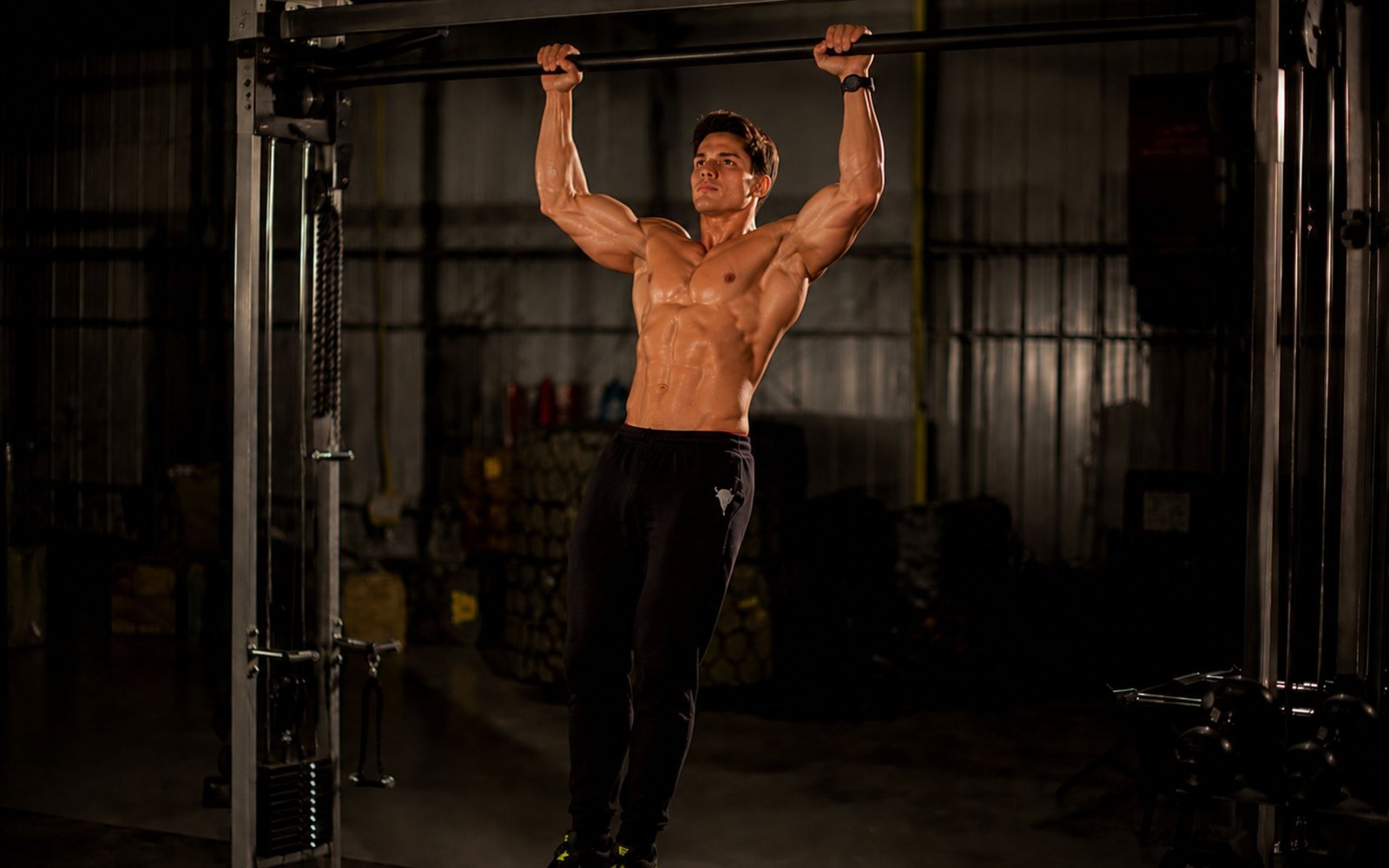
Pronation Traction: a basic exercise for the back and upper body
The pronation traction is one of the best-known bodyweight exercises in bodybuilding. It consists of hanging from a bar, palms facing forward, then hoisting your body until your chin or upper chest is brought closer to the bar. This overhand grip is what many simply call the pull-up, as opposed to the supinated chin-up
If this exercise is so popular, it is no coincidence. It helps develop back strength, improve shoulder stability, work on core strength and build a more athletic upper body. There are also many variations, which explains the diversity of requests around muscle pronation traction, pronation or supination traction, wide pronation traction, tight pronation traction or even weighted pronation traction.
To use this exercise properly, you need to understand three things. First, which muscles are actually working. Next, what the grip width changes. Finally, how to compare pronation to supination and neutral grip. It is this reading that allows you to adapt the traction to your objective.
Traction Pronation Muscle: which muscle groups really work?
The search for muscle pronation traction or muscle pronation traction used comes up constantly, because many want to know if the exercise mainly targets the back, arms or shoulders. In practice, the pronation pull first recruits the latissimus dorsi, then a significant part of the upper back, the muscles around the shoulder blade, the forearms and the elbow flexors. Abdominal sheathing also helps stabilize the body and limit swaying
Formulations such as traction pronation grip of the requested muscle or traction of pronation grip of the extended muscle requested refer to this same expectation. The dominant muscle overall remains the latissimus dorsi, but it never works alone. The trapezius, rhomboids, arm muscles, forearms and core complete the movement.
Pronation traction of requested muscle: simple reading
When we want a clear answer on the pronation traction of the muscle used, we can summarize as follows:
- latissimus dorsi;
- teres major and upper back muscles;
- biceps and brachialis, even if supination often puts them more forward;
- forearm and grip strength;
- abdominals and core.
The fact that pronation crosses the bones of the forearm more and places the shoulder in a different position from supination explains why many practitioners feel less of the biceps and more of the back in this variation.
Pronation or Supination Traction: what's the difference?
The comparison pronation or supination traction is probably the most important for practitioners. On the one hand, pronation corresponds to palms facing forward. On the other hand, supination corresponds to the palms facing towards you. This difference in grip changes the sensation, the involvement of the arms and sometimes the perceived difficulty.
Research such as pronation traction or supination easier, pronation traction or supination strength training, pronation traction supination difference, pronation traction vs supination and neutral pronation supination traction clearly show that the subject is not only theoretical. Practitioners want to know what to choose in their program.
Easier pronation or supination traction
In practice, many find supination easier. The main reason is that the chin-up often puts more strain on the biceps, and this extra help makes the climb easier for many people. Pronation is often more technically and muscularly demanding for beginners.
This does not mean that pronation is “better” in all cases. This simply means that it is often more difficult to master at first. If your goal is the back, pronation remains a very solid foundation. If your goal is to get your first reps easier, supination can sometimes serve as a bridge.
Pronation vs supination traction: which one to choose?
The right choice depends above all on your objective. Pronation is often favored for back, width and overall pulling strength. Supination can be useful to further involve the biceps and facilitate learning. In fact, the two complement each other very well. Alternating between the two variants often allows you to progress more intelligently in the long term.
Pronation or Neutral Traction: what does the grip change?
The research pronation or neutral traction, pronation vs neutral traction, neutral grip traction vs pronation and neutral or pronation grip traction show that a third option is of great interest to practitioners: the neutral grip, with the palms facing each other.
The neutral grip is often considered a very comfortable compromise. It is generally better tolerated by wrists and certain sensitive shoulders. For many practitioners, it also allows a good sensation in the latissimus dorsi without imposing the same constraint as wide pronation.
The choice between neutral and pronation therefore depends a lot on your morphology, your joint comfort and your objective. The neutral grip does not cancel out the benefit of pronation. She enriches it. This is also why we find related research such as vertical pull with neutral grip or pronation and horizontal pull with neutral grip or pronation, which translate the same logic into machine or pulley exercises.
Wide Pronation Traction: what effects and what limits?
The wide overhand pull is a very popular variation. Many spontaneously associate it with more work on the back and a more marked impression of width. The searches for wide grip pronation traction, wide grip pronation traction, wide grip pronation traction and wide grip pronation traction muscle used all point in this direction.
With a wider grip, the amplitude is often reduced a little and the sensation shifts slightly. Many practitioners feel their upper back and external latissimus dorsi more. On the other hand, this variation can be more demanding on the shoulders and less tolerant if mobility is not good.
A common mistake is to believe that “broader” automatically means “better”. In reality, the grip width must remain consistent with your body shape. An excessively wide grip can reduce the quality of movement, increase compensation and make the trajectory less clean.
Tight Pronation Traction: an often underestimated variation
The tight overhand traction or close overhand traction represents the other end of the spectrum. Research pronation traction tight or wide grip clearly shows that many hesitate between these two formats.
The tight grip modifies the trajectory, sometimes allows a slightly more natural amplitude and can be better tolerated by certain practitioners. It does not eliminate back work. It just changes the way you feel about it. For some, she puts her arms a little more in the loop. For others, it facilitates a smoother climb.
There is therefore no single best universal width. Above all, there is a width adapted to your structure, your comfort and your current objective.
Tight or Wide Grip Pronation Traction: how to decide?
The question tight or wide grip pronation traction comes up all the time because it seems simple, but it depends on several factors. If you are mainly looking to progress with a complete, clean and sustainable movement, a moderate grip, slightly wider than shoulder width, often works very well. If you are looking for a more specific variation or a different feeling, you can then play with the width.
The wide grip can accentuate certain back sensations. The tight grip may be more comfortable or smoother. The best choice is therefore not always theoretical. It is often the one that allows you to shoot cleanly, without pain and with real scapular control.
Strict Pronation Traction: why this concept is important
The strict pronation traction deserves a separate paragraph. A strict pull is a pull performed without parasitic momentum, without kipping, without excessive swinging, with a controlled ascent and a clean descent. This quality of execution changes everything.
Many practitioners want to go too fast. They seek to go up to the chin at all costs, at the cost of a disorganized movement. In reality, a few strict repetitions are often worth a lot more than a long rough set. Strict traction builds real strength, real back, and real progression.
Weighted Pronation Traction: for whom and when?
The weighted pronation pull-up or the weighted pronation pull-ups if possible mainly concerns practitioners already capable of performing bodyweight-specific repetitions. Ballast becomes interesting when the classic variation is no longer enough to create a real stimulus of strength or hypertrophy.
Research such as weighted or assisted pronation tractions clearly shows the tipping point. Until you master your strict pull-ups, assistance is often more useful than ballast. Once the base is built, ballast becomes an excellent tool for progress.
However, you must remain cautious. Weighted doesn't mean heavy too quickly. The quality of the trajectory, shoulder control and trunk stability must remain priorities.
Australian Pronation Muscle Traction: excellent progression
The Australian pronation muscle traction or the Australian pronation or supination traction represent a very good learning stage. The Australian pull-up, also called reverse row, is done with the body tilted under a bar. It works on the back, arms and core, while being more accessible than classic vertical traction.
This variation allows you to learn to pull with the shoulder blades, to strengthen the pulling chain and to build the bases necessary to then progress towards the strict pronation pull. For a beginner, it is often one of the best tools for progression.
Traction Pronation Muscle Requested: what the grip width really changes
When we talk about pronation traction of the requested muscle, we must also remember that the grip width does not completely reverse recruitment. Wide grip, medium grip or tight grip, the latissimus dorsi remains central. The upper back, forearms, scapular muscles and core also remain very involved.
What changes above all is the comfort, the amplitude, the perception of movement and the ease of maintaining good technique. This is why it is more useful to talk about accent or feeling than “totally different muscle”.
Pronation vs Supination vs Neutral Traction: the best approach in practice
If we summarize the comparison pronation vs supination traction and pronation vs neutral traction, we can say this:
- pronation is often more demanding and very interesting for the back;
- supination is often easier and more favorable with the help of the biceps;
- neutral is often more comfortable and very versatile.
The best strategy is not always to choose one outlet forever. The best strategy is often to use them intelligently according to your objectives, your level and your joint comfort.
How to progress on the overhand pull
To progress in pronation traction, you must develop three qualities. First, the pulling force of the back. Next, grip strength. Finally, control of the trunk and shoulder blades. The most useful exercises for progress are often assisted pull-ups, Australian pull-ups, hangs, pull-downs and eccentric work.
We must also avoid two frequent mistakes: neglecting technique and wanting to skip steps. Sustainable progress is based on clean repetitions, appropriate volume and regular work.
Conclusion: pronation traction remains a safe value for vertical traction
When done well, the overhand pull builds a strong back, better posture and real pulling capacity. The most important thing is not just to get on the bar. The most important thing is to climb cleanly, progress intelligently and choose the variation that allows you to last.
You might also like