Three sessions a week is the most realistic rhythm for the vast majority of people who train. You have a job, a family, a packed calendar. A 3-day-a-week workout plan fits into that reality. And it's more than enough to build muscle, strength and confidence. What matters is organising those three appointments properly. Improvised training wears you out a lot and moves you forward very little. This guide shows you how to spread out the work, which movements to prioritise and how to adapt everything to your level.
Why three sessions a week are enough to make progress
Muscle isn't built during the effort. It's built during the rest that follows. Each session creates fatigue, then the body repairs the fibres and makes them slightly stronger. That cycle takes between 24 and 72 hours depending on the muscle group involved. With three strength training sessions spread across seven days, you always leave at least one rest day between two workouts. It's the best way to progress without piling up central nervous system fatigue.
The research is fairly clear on one point: hitting a muscle twice a week gives better results than once. Three well-built sessions are exactly what it takes to reach that optimal frequency. Some lifters train five or six days a week without moving any faster. They're simply short on recovery. Consistency over twelve months always counts for more than the number of weekly slots.
A rhythm that fits your schedule
Three one-hour slots means three hours of work a week. Most calendars absorb that without pain. Monday, Wednesday, Friday is still the easiest split to stick to. Tuesday, Thursday, Saturday works just as well. The key is never to train two days in a row at the start. A schedule you actually respect beats a perfect plan abandoned after three weeks.
Full body or split: the two possible structures
With three workouts, two logics compete. Either you train the whole body every time, or you carve the body into zones. Both approaches work very well. The choice depends on your experience, your goal and the time you can give each session.
The full body plan, the place to start
A full body plan works every muscle each time you walk into the gym. Legs, back, chest, shoulders, arms: everything gets covered. You pick five to seven compound exercises, in 3 to 4 sets of 8 to 12 reps. Every muscle therefore gets stimulated three times. For a beginner, this format is unbeatable. Technique settles in fast, because you repeat the same movements often. This kind of full body training also forgives the unexpected: if you skip Wednesday, Friday makes up the difference.
The 3-day split
The split routine divides training by zone. The classic three-day version follows the push, pull, legs logic. The first session targets chest, shoulders and triceps. The second handles back and biceps. The third goes after the lower body. You'll only train a muscle group once a week, but with high volume and heavy intensity. This is where isolation exercises earn their place, to bring up a specific weak point. The format suits you better after about six months of training. It demands discipline: miss a session and you leave an entire muscle group unstimulated for two weeks.
Half body, the middle ground
Third option: alternate upper and lower body. Session A for the upper body, session B for the lower, session C for the upper again. The following week, you flip the order. Each zone gets stimulated roughly one and a half times a week. This split lets you vary your training angles while keeping sessions short. Plenty of coaches suggest it to intermediates who find full body sessions too long to get through.
A typical week in the gym, session by session
Here's a concrete full body example, designed for the gym. Count on 60 minutes, warm-up included. Rest 90 seconds between heavy sets, 60 seconds on everything else.
Session A
 Barbell squat: 4 sets of 8 reps
 Bench press: 4 sets of 8
 Barbell row: 4 sets of 10
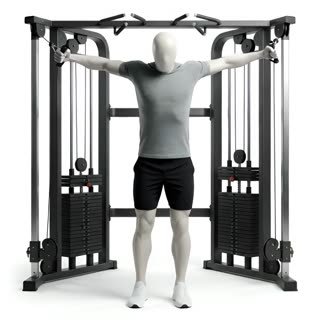 Lateral raises: 3 sets of 15
 Front plank: 3 x 45 seconds
Session B
 Romanian deadlift: 4 sets of 8
 Pull-ups or lat pulldown: 4 sets of 8
 Overhead press: 3 sets of 10
 Walking lunges: 3 sets of 12 per leg
 Biceps curls: 3 sets of 12
Session C
 Leg press: 4 sets of 12
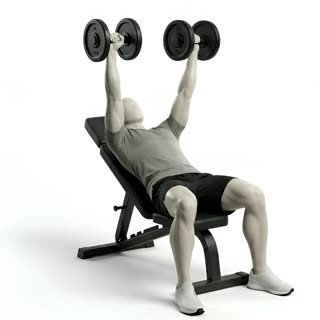 Incline dumbbell press: 4 sets of 10
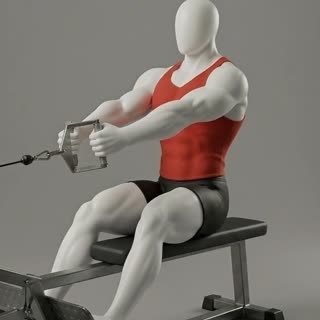 Seated cable row: 4 sets of 10
 Cable triceps pushdowns: 3 sets of 12
 Standing calf raises: 4 sets of 15
This skeleton takes two minutes to write out on a sheet of paper. Plenty of lifters go looking for a 3-day-a-week workout plan pdf to print and slide into their gym bag. The instinct is a good one, because logging your loads is still the best indicator of progress. A notebook or an app does the same job. What matters is being able to gradually add kilos or reps from one week to the next.
Adapting the plan to your goal
The same skeleton can serve very different goals. It's the loads, the number of sets and your nutrition that tip the result one way or the other.
Building muscle mass
To build size, stay between 6 and 12 reps per set. Aim for 12 to 18 weekly sets per muscle group, spread across your three workouts. Eat enough: without a slight calorie surplus and enough protein, muscle mass won't come. Our advice on nutrition for athletes is a useful companion to this part. Sleep seven to eight hours: that's when the body does most of its work.
Women and men: the same foundations
A 3-day-a-week workout plan for women rests on exactly the same physiological principles as a men's plan. Squats, rows, presses, planks: the exercises don't change. Only the priorities shift sometimes, with more volume on glutes and hamstrings. A 3-day-a-week workout plan for men often leans on the upper body, but neglecting legs remains a classic mistake. Progress itself follows the same rules for everyone.
Starting at home, with no equipment
No gym nearby? Full body training transfers to home very well. Push-ups, bodyweight squats, lunges, inverted rows under a table, planks and hip thrusts are enough for the first few months. Add resistance bands to keep the difficulty up once the sets start feeling easy. As soon as you pass 20 clean reps on a movement, you need to add load or slow the tempo down.
The mistakes that stall your progress
The first mistake is switching plans every couple of weeks. A program shows what it's worth after eight to twelve weeks. The second: always lifting the same loads. Without progressive overload, the body has no reason to adapt. The third is a rushed warm-up, which throws the door wide open to shoulder and lower back injuries.
Don't forget rest between sets either. Cutting your breaks short reduces the load you can lift, and therefore the real stimulus. Finally, be wary of excessive volume. Training for a long time isn't the same as training effectively. Three dense sessions beat five soft ones. If you have doubts about your technique, having a professional look over your plan through a personal trainer is the best investment you can make early on.
Frequently asked questions
Which plan should you follow when training three times a week?
It all depends on how long you've been training. Under a year: go full body, no hesitation. Between one and three years: half body or a push-pull-legs split will give you more variety. Beyond that, the best choice is the one you can stick with. Choosing the right plan means first choosing the one that fits your actual schedule, not your favourite athlete's.
Where can you find a free, reliable plan?
A free 3-day-a-week workout plan can be found all over the internet, including in this article. The hard part isn't finding one, it's adapting it to your build and to any aches you're carrying. A coach adjusts the loads, corrects your positions and breaks through plateaus. That's often what separates six months of stagnation from six months of real gains.
Should you change your program regularly?
Keep the same framework for two to three months. Then change one variable at a time: the reps, the rest periods or the exercise selection. That way you keep your reference points while restarting the adaptation. Three sessions a week, held for a year, transform a body far more reliably than six months of scattered enthusiasm.