What is the dumbbell upright row?
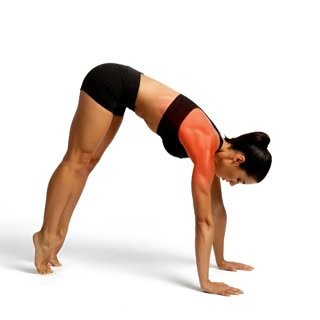
Pompes pikeÉpaules
The dumbbell upright row is a shoulder exercise you see everywhere in the gym. You hold two dumbbells in front of your thighs, arms straight. Then you pull them up along your torso, all the way to your chin. Your elbows travel up and out to the sides. Some people write upright row dumbbell, others call it the dumbbell chin row. The movement is exactly the same.
Which muscles does it work?
The deltoids carry most of the load. The middle head fires hard from the very first inch. The rear deltoid joins in at the top of the pull. The upper traps are heavily involved too. The biceps and forearms stabilize the weights. That broad recruitment makes this movement a good partner to lateral raises.
An exercise that helps your back too
Plenty of people are looking for a dumbbell upright row for back that actually delivers. The upper back does take a real share of this movement. The rhomboids pull the shoulder blades together on every rep. To build more thickness, pair it with a dumbbell row. The two exercises complement each other perfectly.
Step-by-step technique
The starting position
Set your feet hip-width apart. Keep your torso upright and your core braced. Your hands grip the dumbbells with an overhand grip. Arms stay long, without locking the joints. Breathe in just before you start.
The pull, elbows leading
Pull with your elbows, never with your hands. The dumbbells travel very close to your body. Stop the pull at chin height. A slight rotation of the wrists outward gives the shoulder room. Hold a short pause at the top.
The lowering phase, under control
Control the descent for two to three seconds. Keep your spine neutral from start to finish. Your pelvis doesn't tip. Return to the starting position without letting your shoulders go slack. Breathe out, then go again.
The mistakes that wreck your shoulders
- Pulling above your chin: the internal rotation compresses the joint.
- Going too heavy: your torso leans back and your lower back takes over.
 Letting your elbows sit below your hands: deltoid recruitment collapses.
 Gripping too narrow: move your hands slightly apart to open up the shoulder.
Three variations worth trying
- Wide grip: more deltoid, less strain on the joint.
 Seated on an upright bench: your torso can't cheat anymore.
- One arm at a time: ideal for fixing an imbalance.
How to fit it into your program
Three sets of twelve reps is plenty. Put this exercise after your presses, at the end of the session. A moderate load protects your shoulders over the long run. If pain shows up, switch to another variation right away. A personal trainer on Koatcher can adapt the movement to your build and your goals.