Walking into a gym without a plan is the fastest way to spin your wheels. The barbells are there, the machines are there, but where do you actually start? A good gym workout plan answers three simple questions: what to do, how often, and for how long. This guide hands you ready-made sessions, whether you're on your first week or several years in. You'll find the numbers that actually matter: sets, loads, rest times and how to progress. Nothing mystical here, just principles that have held up on gym floors for decades. From there, it's on you to fit them to your body and your schedule.
Your gym workout plan starts with a clear goal
Before you pick a single exercise, ask yourself one question. What are you actually after? Building muscle, getting stronger and losing fat don't call for the same sessions. A vague goal gets you a vague plan. A specific one sets everything else: the load, the volume and the pace.
Muscle, strength or fat loss
For muscle growth, you'll generally work in the 8 to 12 rep range, pushing each set close to failure. For pure strength, drop to 3 to 6 reps with heavy loads and longer rest periods. For fat loss, the training itself barely changes. What moves the needle is your food intake and your daily activity. Lifting is what protects the muscle you already have while you're cutting.
Be honest about your level and your calendar

PompesPectoraux
The best plan is the one you'll still be following in six months. Look at your week before you promise yourself five sessions. Three slots you genuinely have beat five you've invented. Write down your starting point too: how many push-ups you can string together, how the basic lifts feel, any old injuries. That baseline is what you'll measure progress against a few months from now.
How many sessions a week does it take?
Frequency is your first lever. A muscle group you hit once every ten days improves painfully slowly. Hit it twice in seven days and it responds far better.
Two to three sessions a week
This is the ideal way to start. With two or three gym visits, you can train your whole body each time. Every muscle gets worked several times a week with zero planning effort. Budget 45 to 60 minutes per session, warm-up included. This format also keeps soreness down, since the volume per muscle stays modest each time. One session a week still does something for general fitness, but it won't build much muscle.
Four sessions or more: moving to a split
Once the movements feel natural and your sessions start dragging, it's time for a split. The idea is to spread the work across several themed sessions. Upper body one day, lower body the next, or a finer breakdown by muscle group. That lets you add sets per muscle without stretching every gym visit into a marathon.
Sets, rest and overload: the fundamentals
Three variables drive any training plan: volume, intensity and recovery. Getting those right matters far more than collecting trendy exercises.
Picking your sets and reps
For most lifters, 10 to 20 sets per muscle per week is a solid range. Spread them over two days rather than cramming them into one. On any given lift, 3 to 4 sets of 8 to 12 reps is a reliable starting point. Leave a rep or two in the tank: there's no need to grind to failure every time.
Rest between sets

Développé couchéPectoraux · barre
How long you rest depends on the lift. On a heavy squat or bench press, take two to three minutes. On an isolation move like a curl, 60 to 90 seconds is plenty. Rest too little and your performance falls off mid-session, costing you load. Rest too long and you cool down and drag the workout out for nothing. A timer settles the question in two seconds.
Progressive overload, the engine of it all
This is the single most important principle in lifting. Your body adapts to whatever you ask of it. If the demand never goes up, it has no reason to change. Progressive overload simply means making the work slightly harder week after week: adding weight to the bar, getting an extra rep, adding a set, or cleaning up your form. Add reps first, then load. Write your numbers down every session. Without a logbook, you have no idea whether you're actually improving.
Free gym workout plans: three you can copy today
Here are three templates you can use tomorrow. They rely on the standard kit in any gym: barbells, dumbbells, cables and a few machines. Warm up for five to ten minutes before each session, then do a light set on your first exercise.
Beginner full body: 3 sessions a week
Every session follows the same layout, with loads creeping up over time.
 Squat or leg press: 3 sets of 10
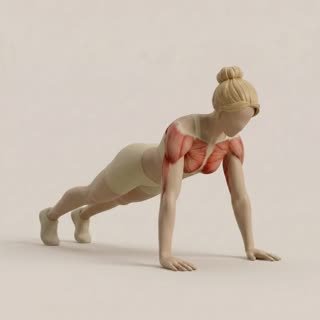 Dumbbell bench press: 3 sets of 10
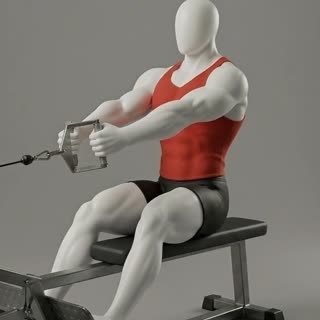 Seated cable row: 3 sets of 12
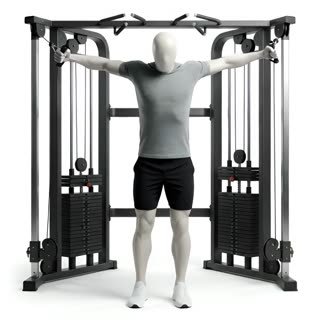 Lateral raises: 3 sets of 15
 Biceps curls then triceps extensions: 2 sets of 12 each
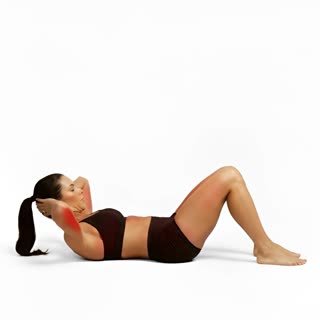 Plank: 3 rounds of 40 seconds
Upper/lower: one upper body day, one lower body day
A four-session format, ideal once you have a few months of consistent training behind you.
 Upper body: bench press, pull-ups or lat pulldown, overhead press, cable rows, dumbbell curls, triceps extensions.
 Lower body: squat, Romanian deadlift, walking lunges, leg curl, standing calf raises, plank.
Alternate the two across the week, for example Monday, Tuesday, Thursday and Friday.
4-day split: chest and triceps, back and biceps
 Day 1, chest and triceps: bench press, incline press, cable fly, dips, rope pushdowns.
 Day 2, back and biceps: deadlift, pull-ups, barbell row, cable rows, incline curls.
- Day 3, legs: squat, leg press, leg extension, leg curl, calf raises.
- Day 4, shoulders and abs: overhead press, lateral raises, rear delt fly, hanging leg raises, plank.
Gym workout plans for men: what really needs fixing
The classic mistake fits in one sentence: too much upper body, not enough lower. Plenty of guys stack chest and arm sessions, then skip leg day. The result is a lopsided physique and progress that flatlines. Yet the big lower-body lifts deliver the most stimulus, and they strengthen your trunk on top of that. Squats, deadlifts and lunges deserve as much attention as the bench press. Don't neglect your back either: it balances the shoulders and improves posture.
Workouts for women and beginners: the same rules apply
A woman's muscle doesn't work any differently from a man's. The principles are identical: progressive loading, full range of motion, enough recovery. Anyone who's been training a while will tell you the same. If you want to build up glutes and quads, just add volume to your lower body without dropping the upper. And no, lifting heavy won't make you "bulky" — muscle comes on far more slowly than that. If you're starting out, spend your first few weeks on technique. Light loads, controlled tempo, full range. You'll progress much faster afterwards.
Compound and isolation exercises: getting the balance right
Lifts fall into two families. Compound movements involve several joints and a lot of muscle mass. They're the core of the session and belong at the start, while you're fresh. Isolation exercises target a single muscle: curls, leg extensions, lateral raises. They come at the end, to add volume on a weak point. Roughly two thirds compound to one third isolation works well in most cases. And don't skip core work: a solid trunk makes every other lift safer.
Recovery is part of the plan: rest, sleep and food
You don't build muscle in the gym, you build it between sessions. Rest belongs in your plan just as much as your sets do. Recovery is when the fibres repair and thicken. Take at least one full day off each week, more if fatigue is piling up. Sleep is your number one recovery tool: seven to nine hours, consistently. On the food side, aim for around 1.6 g of protein per kilo of bodyweight, carbs around your training, and steady hydration. If your numbers have been stuck for two or three weeks, cut your volume for a few days before you overhaul anything.
App, PDF or coach: what kind of support do you need?
A tracking app genuinely earns its place: it logs your loads and flags when to add weight. A PDF plan has the advantage of being clear and free, but it can't adapt to you. A coach corrects your technique, adjusts your volume and keeps you going over the long haul. That's the most effective option when you're starting out, when you've stalled, or when you're coming back from an injury. On Koatcher, you can compare personal trainers near you and have a plan built around your situation. Our training programmes are a useful complement to that support.
Common questions about gym training
How long should a session last?
Between 45 and 75 minutes of actual work. Past that, quality drops and motivation fades. A tight session beats a two-hour workout spread out between conversations.
Can you train every day?
Yes, as long as you rotate muscle groups. A well-built split lets you come in six times a week without overloading anything. For most people, three to four sessions is plenty.
Should you change your plan often?
No. Stick with the same layout for eight to twelve weeks, long enough to add weight to the bar. Switching every month makes it impossible to measure anything.
How long before you see results?
The first strength gains show up within three to four weeks. Visible changes in your physique usually take two to three months of consistent training. Take a photo once a month rather than studying the mirror every morning. Consistency always beats the occasional hard session.