Four training sessions a week is often the sweet spot. Enough volume to build muscle, enough rest days to absorb the workload. A 4-day workout split lets you hit every muscle group twice without living at the gym. The catch is structuring it properly. Here's a clear method you can start on Monday.
Why four sessions is the right rhythm
Training research is fairly clear on one point: a muscle grows better when it's stimulated twice in the same week. At three sessions, that gets hard to pull off. At five or six, recovery turns into the real bottleneck. Four days a week gives you the best trade-off between frequency, volume and rest.
That leaves three free days, which you place around work and family life. The most comfortable layout? Monday, Tuesday, Thursday, Friday. The body handles this format well over the long run. On average, a lifter sticks with this kind of training program for several months straight, which counts for far more than a perfect plan abandoned after three weeks.
Upper/lower or split: which setup to choose
Upper/lower, the safe bet
The principle fits in one sentence. Each session works two broad areas: upper body, then lower body. Across four sessions, each half gets trained twice. This upper/lower format suits beginners and intermediate lifters alike. It spreads the work out, keeps sessions from dragging on and leaves plenty of room for the big compound lifts: squat, bench press, row, deadlift.
Push, pull, legs across four days
The other classic: split the plan by movement pattern. You group the pushing (chest, shoulders, triceps), the pulling (back, biceps) and legs. The push, pull, legs template naturally fits three sessions. On four, you add one more, usually a second push day or an extra legs day. Expect to need a bit more experience for this split: exercise selection has to stay consistent from week to week.
Where full body fits in
A full body version exists too, but it's demanding. Training everything four times a week forces you to cut volume per session and manage intensity carefully. Save it for advanced lifters or short comeback blocks. For the vast majority of people, upper/lower or a split is the easier plan to stick with.
A sample training program, session by session
Here's a concrete framework to adapt to your level. Plan on 60 to 75 minutes per session, 90 seconds to 2 minutes of rest on the heavy lifts and 60 seconds on isolation exercises.
Session 1: upper body, push focus
 Bench press: 4 sets of 6 to 8 reps
 Overhead press: 4 x 8
 Incline dumbbell press or dips: 3 x 10
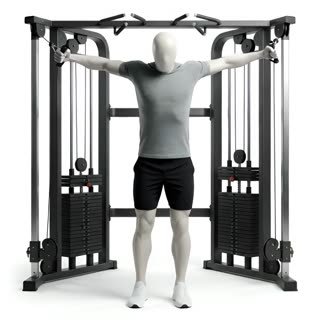 Lateral raises: 3 x 15
- Cable triceps pushdowns: 3 x 12
Session 2: lower body
 Squat: 4 x 6 to 8
 Romanian deadlift: 3 x 8
 Leg press: 3 x 12
 Lying leg curl: 3 x 12
 Standing calf raises: 4 x 15
Quads, hamstrings, glutes and calves all get covered. Avoid stacking two heavy leg sessions on back-to-back days: nervous system recovery wouldn't keep up and technique would suffer for it.
Session 3: upper body, pull focus
 Pull-ups or lat pulldown: 4 x 8
 Barbell row: 4 x 8
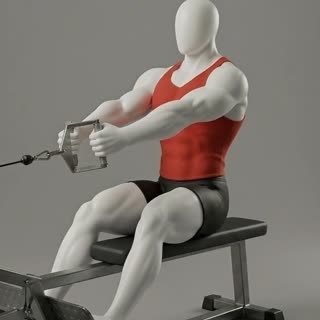 Seated cable row: 3 x 12
 Dumbbell rear delt flyes: 3 x 15
 Barbell curl: 3 x 10
Session 4: lower body and weak points
 Walking lunges: 3 x 12 per leg
 Hip thrust: 4 x 10
 Leg extension: 3 x 15
- Planks: 3 x 45 seconds
- One or two targeted isolation moves
Treat this fourth session as your adjustment slot: it's where lagging muscle groups get their work. Take the time to identify those weak points before loading up the plan. Arms, rear delts, calves or posterior chain, depending on the case.
Adapting the program to your goal
The structure barely moves. It's the variables that change. For bulking, aim for 6 to 10 reps on the heavy lifts, long rest periods and steady load progression. Food does the rest: a slight calorie surplus and protein spread across the day. Supplements come after that, never before.
When cutting, keep the same loads. It's the calorie deficit that burns the fat, not sets of twenty reps. Shorten the rest periods a little, add cardio on non-lifting days. Keeping intensity high protects muscle mass while the weight comes down. Here again, upper/lower does the job perfectly well.
Men, women: two genuinely different plans?
Physiologically, muscle responds to the same stimuli whatever your sex. The basic lifts don't change. What does vary is priorities and training history. Plenty of women give more volume to glutes and hamstrings, plenty of men add it on the upper body. Redistribute the sets, don't rewrite the plan. The framework above still holds, with a simple change in exercise order.
Recovery, sleep and progression
No plan builds anything without rest. Put at least one full recovery day after two sessions in a row. Bedtime counts as much as your last set: seven to nine hours of sleep clearly speeds up muscle repair. You can train at this rhythm for years, as long as you respect those off days.
To make steady progress, log your loads at every session. Add 2.5 kg or one rep as soon as the last set goes up cleanly. That progressive overload is the engine of muscle growth. No need to hit failure on every lift: one genuinely hard set per exercise is plenty.
Printable sheet or personal coaching
Plenty of lifters go looking for a 4 day workout split pdf to print out and drop in their gym bag. It's handy, and a free pdf does the job perfectly well to get started: it locks in the exercises and sets, and lets you log your loads session after session. Its limit shows up a few months in. A fixed document can't see your technique, knows nothing about your injury history and adjusts nothing when progress stalls.
That's where a coach changes things. They adapt the volume, fix your positioning and change the plan based on your actual results. Find certified coaches near you on Koatcher, or browse our strength training guides topic by topic.
Frequently asked questions
How long before you see results?
The first markers come fast: more strength within the first month, a visibly denser physique after eight to twelve weeks. Body composition always moves slower than performance.
Can you do the four sessions back to back?
You can, but it's rarely optimal. The last two sessions almost always suffer from accumulated fatigue. Go with Monday, Tuesday, Thursday, Friday instead.
Does this plan work for a beginner?
Yes, with fewer sets at the start. Beginners progress on less volume. Moving up to intermediate then happens naturally, by adding a set or an exercise every couple of months.
Machines or free weights?
Both work. Free weights recruit more stabilizers, machines make heavy sets safer at the end of a session. The best program mixes the two intelligently.