Back pain: what's actually going on in your spine
Stiffness when you wake up, an ache that shows up after leg day, a jolt that locks your lower back as you reach for your gym bag. Almost everyone knows the feeling. Ordinary lower back pain affects close to eight people in ten at some point in their life. The reassuring part: in the vast majority of cases, nothing serious is behind it. And movement remains your best tool for getting rid of it.
Vertebrae, discs and muscles work as one system
Your spine stacks 33 vertebrae. Between them, the discs absorb every step, every jump, every load you carry. All around, dozens of muscles hold the structure steady. When one link gets tired, the others pick up the slack. The lower back, already under heavy demand, ends up absorbing all that tension. That's where the pain usually settles in.
The awkward movement is rarely the whole story
It's tempting to blame that one awkward movement on Monday morning. In reality, back pain builds up over weeks. Too little physical activity, broken sleep, constant stress and sleepy abdominals all leave the area vulnerable. The harmless-looking movement simply exposes the ground that was already prepared. That's why a routine you actually keep up changes far more than a one-off massage.
Sitting: the quiet enemy of your lower back
Eight hours in a chair, then an hour in the car: your pelvis tips backwards and the natural curve of your spine flattens out. The stabilising muscles switch off and the discs take constant pressure. Stand up every 45 minutes, even for 30 seconds. Set your screen at eye level and keep your feet flat on the floor. None of this replaces exercise, but it prevents plenty of injuries.
Exercises that ease back pain day to day
These four movements work at home, with no equipment, on a mat or a folded towel. Always move towards a stretching sensation, never towards sharp pain. Breathe slowly through each hold: the muscles let go on the exhale.
Knees to chest, lying on your back
Lie on your back with your legs straight. Bring one knee towards your chest and hold it with both hands, keeping the other leg flat on the floor. You should feel a gentle stretch in the glute and the lower back, with no pulling. Count to 30, then switch sides. Do this twice per leg, morning and evening if the discomfort is strong.
Cat-cow on all fours
Get on all fours, hands under your shoulders and knees under your hips. Arch your back as you breathe in, then round it as you breathe out, chin tucked towards your chest. The pelvis leads the whole movement. This back-and-forth mobilises every level of the spine and moves fluid through the discs. Repeat 10 to 15 times, very slowly, without pushing into the end range.
The glute bridge to wake up the back chain
Still on the floor, bend your knees and place your feet flat, hip-width apart. Push through your heels to lift your hips until shoulders, pelvis and knees line up. Hold at the top for two seconds with your glutes squeezed. Then lower down one vertebra at a time. Three sets of 12 is enough to strengthen the muscles that support the lower back.
The lower back twist, one side then the other
On your back, arms out in a T, bring your bent knees towards your chest. Let them drop gently to the left, with your head turned to the right. Both shoulders need to stay in contact with the floor: that's what creates the stretch. Dropping to one side opens up the lower back and releases the obliques. Hold for 20 seconds, come back to the middle, then repeat on the other side.
Strengthening the deep muscles to prevent lower back pain
Stretching gives relief in the moment. Strengthening protects you over time. The deep muscles — transverse abdominis, multifidus, pelvic floor — form a natural corset around your vertebrae. The stronger that belt, the less your discs have to absorb when you exert yourself. Two exercises are enough to get started.
The front plank, beginner version
Set up on your forearms and knees, body in a straight line from head to hips. Draw your navel in slightly and keep your back flat, without arching or rounding. Hold for 20 seconds, rest, repeat three times. The day it starts to feel easy, come up onto your toes. This one works the abdominal corset above all, and that's what locks the spine down under load.
The bird dog, to coordinate arm and leg
Back on all fours. Extend your left arm forward and your right leg back at the same time. Your pelvis shouldn't drift to the side: picture a glass of water balanced on your lower back. Hold for five seconds, come back, then alternate. Ten reps per side is plenty. It's one of the most effective movements for stabilising the trunk without stressing the joints.
Movements to avoid when your lower back is sensitive
Some movements keep the pain going instead of calming it down. As long as the area stays irritated, leave them alone.
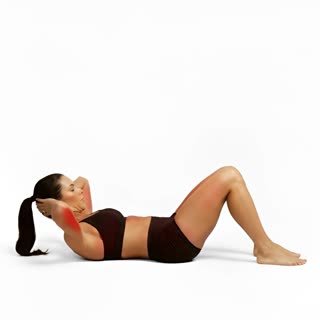 Standard crunches: they compress the discs and barely recruit the muscles you need.
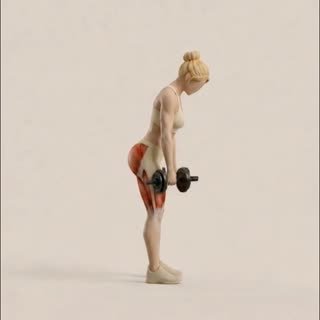 Heavy deadlifts without technique: only come back to these with someone watching your form.
 Fast, jerky twists, especially with a weight in your hands.
- Toe touches with straight legs, which pull on structures that are already under tension.
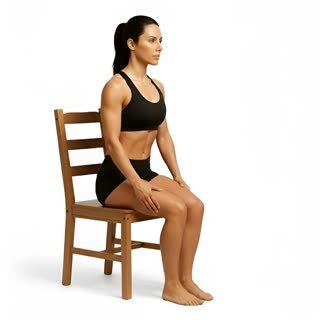 Complete bed rest: past two days, it increases stiffness and slows recovery down.
Avoiding these movements doesn't mean sitting still. Walking, swimming, easy cycling: your back needs gentle, steady activity.
A 10-minute daily routine
Consistency matters more than intensity. Ten minutes every day beats an hour on Sunday. Here's a simple sequence to run through first thing in the morning, or in the evening in front of a show.

Pont fessierJambes
- Minutes 1 to 2: cat-cow on all fours, slow breathing.
- Minutes 3 to 4: knees to chest, 30 seconds per leg.
- Minutes 5 to 6: lower back twist, 20 seconds each side.
- Minutes 7 to 8: glute bridge, three sets of 12.
- Minutes 9 to 10: plank, then bird dog, alternating.
Jot down how you feel in a notebook. If the discomfort backs off week after week, keep going exactly as you are. If it plateaus after a month, get your technique and your habits assessed by a professional rather than adding reps.
Exercise ball, pool, physio: other routes to relief
An exercise ball turns stability work into something closer to play. Sitting on it with a tall back, you mobilise the pelvis gently while the stabilisers work non-stop. The pool takes nearly 90% of your body weight off you: backstroke and walking in water let you move without any compression.
A physiotherapist is the person to see as soon as things get more complicated. Get checked without delay if you have a fever, loss of strength in a leg, bladder problems or pain that wakes you at night. Those signals call for medical advice, not a training programme.
Your questions about back pain and exercise
Which exercises genuinely ease lower back pain?
The most effective ones combine mobility and strength. Cat-cow and the lower back twist release tension within minutes. The glute bridge and the plank build protection for the long run. The classic mistake is doing nothing but stretches: they relieve the pain in the moment but don't stop it coming back. Always mix both families of movement into the same session.
How do you calm a flare-up that's just started?
In the first 48 hours, go for heat, which relaxes the muscles that have tightened up, and keep some minimal activity going: a few steps down the hallway every hour. Then come back to gentle mobility work on all fours, never reaching for maximum range. The rule is simple: any movement that keeps the pain elevated for more than two hours after the session was too ambitious. Reduce the range and start again the next day.
Working with a personal trainer
A back that hurts needs a programme built for it, not a generic video. A trainer watches your posture, corrects how you load your body and matches the work to the level you're actually at. It's also the safest way to get back into strength training after a painful episode. On Koatcher, you can find a personal trainer near you, compare specialisms and talk to them before you book. Got a question about your own situation? Get in touch with our team and they'll point you towards the right profile for your health and your goals.