A wide, thick back changes the way you look. It holds your posture, protects your spine and underpins almost every lift you do. Yet plenty of lifters spend their time on chest work and let the posterior chain slide. Here is what you need to build a proper session: the movements that matter, how much volume to do, what loads to aim for and the mistakes to steer clear of.
If you could only train one muscle group, make it the back. It covers the largest area of your upper body. Building it means more strength on every pull, and relief from the lower-back aches that come with sitting all day.
Back anatomy: what you are actually training
Before picking exercises, understand which muscles do the work. The back is not one single block. It is made of several layers, and each one responds to a specific pulling angle. Hence the rule: vertical and horizontal pulls always go together.
The lats, the engine behind back width
The latissimus dorsi runs from the pelvis up to the humerus. It is what creates the V shape. It works hardest when the arm travels from overhead down toward the torso, as in a lat pulldown. The more it develops, the more obvious your width becomes, from the front as much as from behind.
Teres major and mid traps
Just above it, the teres major acts like the lat's little brother. Same action, shorter range. The mid traps and rhomboids pull the shoulder blades together. They are the ones that build thickness, the depth you see from the side. A back that only gains width looks flat: the two qualities are built together.
The lower back and the lumbar region
The spinal erectors run along the spine. They stabilise the torso the moment you lift anything heavy. A strong lower back protects the discs and improves every movement, from squats to barbell rows. Never skip it. Two sets of back extensions at the end of a session are enough to look after this often fragile area.
The best back exercises
Plenty of people search for a session on Google and walk away with a list of fifteen movements. That is too many. Six well-chosen exercises cover every angle; the rest is just variation. Here is the shortlist.
Pull-ups
First thing to reach for: the pull-up bar. The pull-up is still the king of bodyweight movements. A wide grip targets width. An underhand grip brings in more biceps and lower lat. Three to four sets to open the session lay a solid foundation.
Can't get your chin over the bar yet? Use a resistance band or an assisted machine. The work is the same, the load is simply lighter. Expect a few weeks before your first full rep.
The lat pulldown
The lat pulldown copies the pull-up with a load you can set. Sit down, lock your thighs in, then pull the bar toward your upper chest. Lean back slightly and let your elbows travel down toward your hips. Close, wide and neutral grips do not hit the same fibres: rotate them over the weeks.
The barbell row
The barbell row builds thickness like nothing else. Torso bent to 45 degrees, flat back, pull toward your navel with your elbows close to your body. It is heavy, so put it early, while your strength is intact. Three to four sets of six to ten reps deliver excellent results.
The seated cable row
Sitting facing the machine, handle in hand, you pull toward your stomach without swinging your torso. This movement complements the barbell row perfectly: the tension stays constant from start to finish. It is also a good option when your lower back is sensitive, since sitting limits the strain on the lumbar area.
The deadlift
The deadlift is not just a leg exercise. It works the erectors, the traps and the whole posterior chain. Put it first, while you are fresh. Two to three sets of five heavy reps are plenty. Beyond that, technique falls apart and the risk climbs. Keep the bar against your shins the whole way up.
The pull-over
The pull-over is done lying on a bench, arms straight, with a dumbbell or on a high cable. The movement isolates the lats without bringing in the biceps. It is the ideal finisher: two sets of fifteen reps at the end of a session create a pump that is hard to get any other way.
Back workout program: three sessions to match your level
A back session only makes sense if it matches your experience. Beginners progress on very little volume. Advanced lifters need load and frequency. Pick the one that fits you and stick with it for six to eight weeks before changing anything.
Beginner back workout
 Lat pulldown: 3 × 12
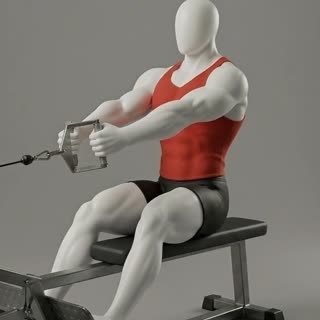 Seated cable row: 3 × 12
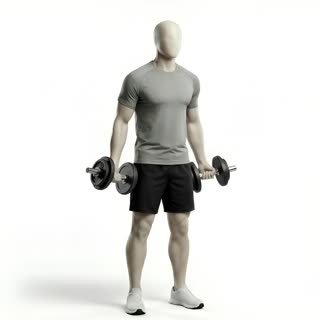 One-arm dumbbell row: 3 × 10 per side
 Back extensions on the bench: 2 × 15
Two minutes of rest between sets. The goal of the first month is not performance, it is control of the movement.
Intermediate program: width and thickness
 Wide-grip pull-ups: 4 × max
 Barbell row: 4 × 8
- Close-grip lat pulldown: 3 × 10
- Seated cable row: 3 × 12
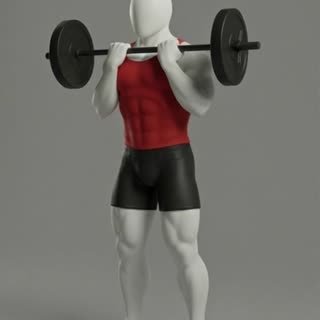 Straight-arm pull-over: 2 × 15
Add 2.5 kg as soon as you go past the top of the rep range on every set.
Advanced program: heavy loads and volume
- Deadlift: 4 × 5 heavy
- Weighted pull-ups: 4 × 6
- Overhand barbell row: 4 × 8
- Neutral-grip lat pulldown: 3 × 12
- T-bar row: 3 × 10
 Cable pull-over: 3 × 15
Back training for men and women: any difference?
Fundamentally, none. Muscles work the same way and respond to the same stimulus. A woman trains on the same exercises as a man. Only the starting load differs, depending on initial strength.
In practice, women often start lower on pull-ups, simply because they have done less upper-body training before. Progress there is spectacular: a few months of consistent pulldown work is usually enough to unlock that first full bodyweight pull-up.
Pairing back with biceps or shoulders
The back never works alone. The biceps come in on every pull, which explains why back-and-biceps is such a popular pairing. Follow with two arm exercises: barbell curl and hammer curl, three sets each. The biceps are already warm, and they grow fast.
The other classic combination pairs back and shoulders. It works well if you target the rear delt, which shares the same pulling angles. What you should avoid is a heavy overhead press right after a deadlift: your recovery will not keep up.
Back workouts at home, with no equipment
No gym? The back is still one of the easiest groups to train at home. All you need is a pull-up bar that fits in a doorway, or even a sturdy table.
- Pull-ups, or inverted rows under a table: 4 × max
- Rows with a loaded backpack: 4 × 12
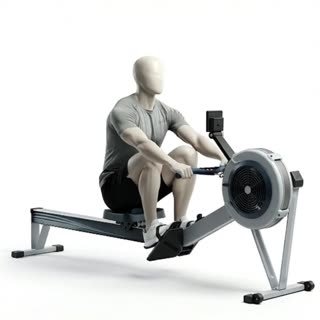 Supermans on the floor: 3 × 20 seconds for the lower back
- Band rows: 3 × 15
With no load, you need more reps to compensate. Slow the lowering phase down: four seconds of negative is worth an extra kilo on the bar.
The mistakes holding your progress back
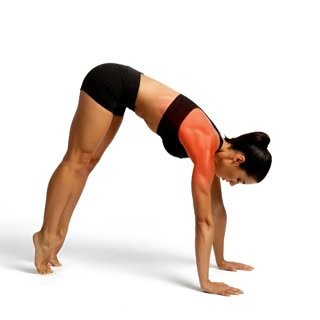 Pulling with your arms. Think about driving your elbows back, not bending at the hands. The movement starts at the shoulder blades.
 Going too heavy. A row where your torso rises on every rep is not building anything.
 Neglecting the lower back. Weak erectors cap every load you lift, legs included.
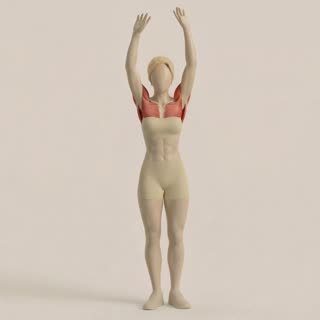 Training a single angle. Vertical and horizontal pulls complement each other; they never replace each other.
 Running out of patience. A thick back is built over years, not over one eight-week block.
Frequently asked questions
How many back sessions per week?
Twice a week, 72 hours apart: that is the best compromise for most lifters. One session is enough when you are maintaining. Three becomes useful for the experienced athlete spreading volume out.
Do you need a back workout program in PDF?
A printed sheet helps you log loads and reps session after session. But the format matters far less than the tracking. A notebook or an app does the same job, as long as you actually fill it in.
How long before you see results?
Strength climbs within the first three weeks, purely through neural adaptation. Visible changes in width and thickness take three to six months of regular training, with enough protein.
Back and chest on the same day, good idea?
Yes, as long as you alternate the movements in supersets. That setup shortens the session and keeps a good pump going. It suits people who do not have much time in the week.
Working with a coach
The barbell row and the deadlift are technical lifts. A position that is slightly off for months ends up costing your lower back. An outside eye fixes in minutes what videos cannot show you. On Koatcher, you will find personal trainers near you who can adjust your program to your build and your goals. You can also browse our other guides to strength training exercises and build a complete routine, session after session.