The cable curl is the most effective isolation exercise for building thicker arms. With dumbbells, the load almost disappears at the top of the movement. On a cable, the pull never stops. Tension stays constant from the first inch to the last. The result: a better pump, more control and less strain on the elbow joint.
Cable biceps curl: which muscles actually work?
Three muscles share the load. The biceps brachii works hardest with a supinated grip, palms facing up. The brachialis, which sits underneath the biceps, is involved whatever the angle of your hands. The brachioradialis finishes the job along the side of the forearm. The cable has one clear advantage: it removes the dead spot. Your strength is challenged through the whole range, including the very end of the curl.
Low cable curl: the standard technique
The low cable curl is the version you see most in the gym. Here's how to do it cleanly, without losing tension.
The starting position
Set the pulley as low as it goes and attach a straight bar. Stand facing the machine, one step back from the upright. Feet shoulder-width apart. Take the bar with both hands, palms facing up, hands shoulder-width apart. Keep your back straight, abs braced and elbows tight to your sides. This starting position shouldn't move again for the rest of the set.
Performing the movement
Raise the bar by simply bending your elbows. Your arms stay against your torso and your elbows stay still. Curl all the way up to a full contraction, then hold for a second. Lower slowly, over about three seconds. You'll have to fight the cable the whole way back down. Your torso stays upright: it never helps the weight up.
High cable curl and cable crossover curl
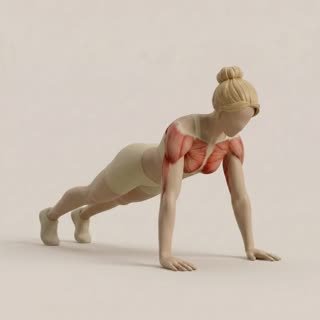
PompesPectoraux
The high cable curl is done with your arms out to the sides, at shoulder height. Stand in the middle of a cable crossover station, set both arms to the high position and take a handle in each hand. Palms toward your ears, pull upward without letting your elbows drift forward. Peak tension hits when the biceps is already shortened, which gives an immediate pump. The one-arm version fixes an imbalance between sides.
Cable curl with the rope or the bar?
The attachment changes which muscles do the work. Pick the one that serves today's goal.
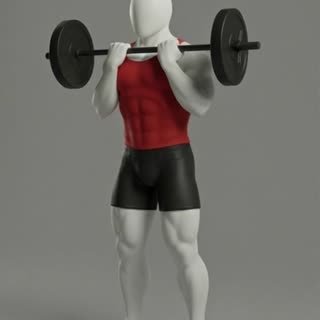 Straight bar: strict supination and direct work on the biceps brachii. The cable bar curl is still the safe bet.
- Rope: free wrists and a more open finish. The rope cable curl asks more of the brachialis.
 Single handle: one arm at a time, useful if one side lags behind.
- EZ bar: takes the pressure off your wrist when a straight grip bothers you.
The low cable rope curl also works very well at the end of a session, on longer sets.
Drag curls, stretch curls and Bayesian curls on the cable
All three variations are done straight off the low pulley.
 Cable drag curl: the elbows travel back, the bar grazes your torso and stays as close to the body as possible.
- Cable Bayesian curl: back to the machine, arms slightly behind you. The biceps starts in a stretched position.
- Cable stretch curl: same idea, torso leaning forward a little, elbows fixed.
What about the cable leg curl?
The cable leg curl has nothing to do with arms: it targets the hamstrings. Attach an ankle strap, turn to face the machine and bring your heel toward your glute. The low cable leg curl is a solid stand-in when the dedicated machine is taken.
Load, sets and reps
Biceps respond better to volume than to heavy weight. Three to four sets of 10 to 15 reps is plenty. Add weight only when your technique is still clean on the last set. Twice a week is a good rhythm. Too much weight pushes your shoulders forward and gets your torso swinging, and the biceps ends up doing far less.
The mistakes that ruin your sets
 Letting your elbows drift forward on the way up: the shoulder takes over.
 Standing too far from the upright, or too close, which ruins the pulling angle.
- Dropping the weight on the way down: half the benefit goes with it.
 Gripping the bar white-knuckle tight, which tires the forearm before the biceps.
- Rattling off reps without a full range of motion, out of pure habit.
Common questions
Cable or dumbbells for biceps?
They complement each other. The cable guarantees constant tension and a real pump. Dumbbells allow heavier loads and natural one-arm work.
How long before you see results?
Count on eight to twelve weeks of consistent training, with enough protein and decent sleep.
Is it worth working with a coach?
An outside eye fixes in one session what you'd otherwise repeat for months. On Koatcher, you can find a strength coach near you, in the gym or online, to lock down your technique and build a program that fits.