The chair stand test is about as simple as a physical test gets. You need a stable seat and a stopwatch, nothing else. In under a minute it gives you a reliable picture of how strong your legs are. Coaches, physios and doctors use it every day to shape a training plan.
What is the chair stand test?
The idea fits in one sentence. Sit down, stand up, as many times as you can. The movement recruits the quads, the glutes and the calves. It also goes by the name chair rise, or the stand-up test.
In the research literature you will see it written as the sit to stand test, sometimes chair sit and stand. The name matters little: the goal stays the same. Assess lower-body strength quickly, in a way you can repeat.
Why this test tells you about overall fitness
Your legs carry everything above them. Their power drops fast from 50 onwards when training slips. So the test lets you assess overall fitness without expensive equipment. Someone who struggles to get out of a chair also sees their risk of falling climb.
The 30-second chair stand test: the exact protocol
The most widely used version lasts thirty seconds. Here is how to run it, step by step.
 Put a straight-backed chair against a wall so it cannot slide.
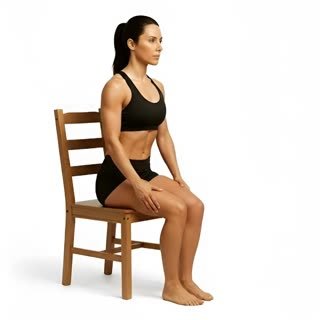
 Sit in the middle of the seat, feet flat on the floor.
 Cross your arms over your chest, hands on your shoulders.
- On the signal, stand up fully, then sit back down.
- Count every complete stand over 30 seconds.
The last rep counts if you are standing when the timer goes off. Hands must never push off the thighs. That one detail is worth two or three stands.
The five-repetition chair stand test
Another version exists: the five-rep chair stand. This time you measure how long it takes to stand up five times in a row. A healthy adult stays under 12 seconds. Past 15 seconds, it is worth digging further.
Chair stand test results: men, women and age
Results are always read against sex and age. Here are average benchmarks for the 30-second version.
- 60 to 64 years: around 14 stands for men, 12 for women.
- 70 to 74 years: around 12 stands for men, 10 for women.
- 80 to 84 years: around 11 stands for men, 9 for women.
A score below the average for your age bracket deserves attention. It is not a diagnosis. It is a signal, and it says to start strengthening the lower body without waiting.
Sarcopenia: when the chair stand test raises a flag
Sarcopenia is the gradual loss of muscle over the years. It mainly affects older people, but it starts far earlier. This test is one of the recommended screening tools.
A patient who goes past 15 seconds on five stands enters the watch zone. The doctor then cross-checks that result against handgrip strength. Together, the two measures paint a clear picture of muscle condition and bone health.
The wall sit: the other chair test
This variation has nothing to do with standing up. Back against the wall, thighs horizontal, you hold the position as long as you can. It measures quad endurance rather than power. Two minutes is already a strong score. A trained athlete sometimes holds past three minutes.
Our tips for running the assessment
We recommend standardising every detail. A stable protocol is what makes one session comparable to the next.
 Use the same chair every time, no armrests, about 43 cm high.
 Do two practice stands before starting the clock.
- Write down the date and the score in a tracking file.
- Repeat the assessment every eight to twelve weeks.
From there, a personal trainer can build the right progression. Bodyweight squats, lunges, step-ups: there is no shortage of options. To go further, see our leg strengthening exercises or find a personal trainer near you.
Chair stand test: frequently asked questions
At what age should you start doing this test?
From 40, an annual check makes sense. After 65, twice a year is the safer call. An athlete can also fold it into a start-of-season assessment.
Is the chair stand test safe?
It is very safe for the vast majority of people. If you have knee pain, dizziness or a known health condition, get medical advice first.
Can you improve quickly?
Yes. Two sessions a week are often enough to gain three or four stands in two months. Consistency comes before intensity, always.