Losing fat while keeping your muscle: that's the whole point of a good cutting workout program. On paper it sounds simple. In practice, plenty of lifters go about it the wrong way. They slash calories, pile on cardio sessions, and watch their muscle melt away right alongside the fat.
An effective cut rests on three things: a sensible calorie deficit, resistance training that stays heavy, and a high protein intake. Everything else is fine-tuning. This guide lays out eight full weeks, with concrete numbers, the nutrition side, and the adjustments to expect depending on your profile.
What does cutting actually mean?
Cutting means reducing body fat while holding onto the muscle you've already built. It's a transformation phase, not just a diet. The goal isn't a lower number on the scale — it's bringing out the muscle definition underneath.
Cutting, weight loss and fat loss: three different things
These terms get used interchangeably. They shouldn't be. Weight loss covers everything the body sheds: water, glycogen, fat, and sometimes muscle. Fat loss concerns adipose tissue and nothing else.
That's where the whole difference lies. Nothing is judged by the number you see in the morning, but by what's left once the fat is gone. Two people can both drop five kilos: one keeps their shoulders and back, the other just looks like a shrunken version of themselves.
Why muscle has to be your top priority
Muscle tissue is expensive for the body to maintain. The moment energy intake drops, it becomes an easy target. If you give it no reason to stay — meaning load and protein — it goes. And every kilo of muscle lost lowers your resting metabolism and makes the rest of the job harder.
Your metabolism always adapts
After a few weeks of restriction, the body responds. Energy expenditure falls, hunger climbs, and your spontaneous daily movement drops without you noticing. This has nothing to do with willpower: it's a normal biological response. It's also why a cut that runs too long or too aggressively always stalls out eventually.
Before you start: laying solid foundations
Assess your starting point
Measure instead of guessing. Weigh yourself fasted three mornings in a row, take front and side photos, measure your waist. Those three markers beat a body-fat scale checked every single day.
Above 20% body fat for men or 30% for women, expect a long road: think several months, not a few weeks. At the other end, a lifter who's already lean has two or three kilos to lose, and their deficit needs to stay tiny to avoid breaking anything.
Working out your calorie expenditure and your deficit
Start by estimating your daily calorie expenditure. A quick method is enough: multiply your body weight in kilos by 30 to 35 depending on your activity level. A fairly active 80 kg man lands around 2,600 kcal per day.
Then take off 15 to 20%, roughly 300 to 500 kcal. That deficit produces a loss of 0.5 to 0.8% of body weight per week. Go beyond it and the risk of eating into muscle rises fast. The promises of five kilos in ten days mostly have you losing water.
- Moderate deficit: 300 to 500 kcal below maintenance.
- Rate of loss: 400 to 700 g per week for an 80 kg man.
- Realistic duration: 8 to 12 weeks, then a gradual return upward.
- Warning sign: no strength progress at all for two weeks.
The eight-week training program
The guiding principle fits in one sentence: during a cut, your training barely changes. Your food is what creates the deficit. Your sessions exist to send one clear signal to your muscle fibres: hold on to what you've got.
The structure here alternates upper and lower body across four sessions per week. Every muscle group gets hit twice a week, the best compromise for holding size in a deficit.
How the week breaks down
- Monday: upper body, push focus.
- Tuesday: legs, quad focus.
- Thursday: upper body, pull focus.
- Friday: legs, hamstring and glute focus.
- Wednesday, Saturday, Sunday: walking, mobility or full rest.
Upper body session A
Always open with the heaviest movement, while your nervous system is fresh. Isolation work comes afterwards, once fatigue no longer puts your technique at risk.
 Barbell bench press: 4 × 6-8.
 Bent-over barbell row: 4 × 8.
 Standing overhead press: 3 × 8-10.
 Neutral-grip lat pulldown: 3 × 10.
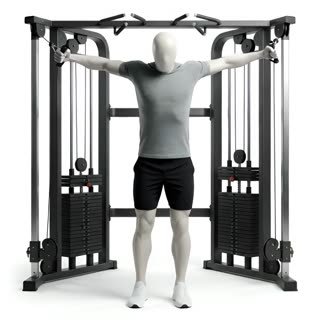 Lateral raises: 3 × 12-15.
 Biceps/triceps superset: 3 × 12.
Lower body session A
 Barbell squat: 4 × 6-8.
 Leg press: 3 × 10.
 Dumbbell walking lunges: 3 sets of 10 steps per leg.
 Leg extension: 3 × 15.
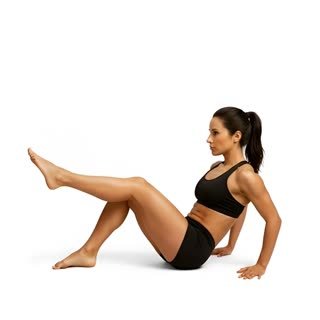 Standing calf raises: 4 × 12.
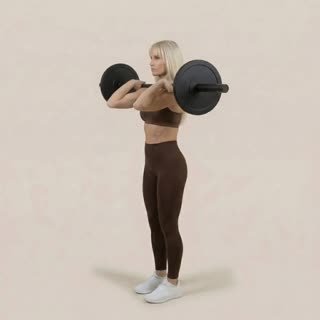 Front and side planks: 3 × 40 seconds.
B sessions: same patterns, different angles
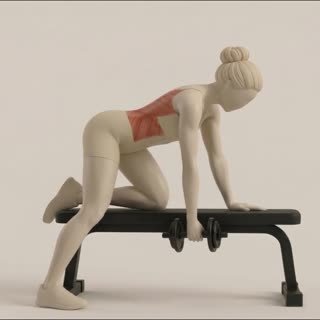
The upper body B session flips the priorities: weighted pull-ups, incline dumbbell press, one-arm rows, rear delt flyes, then arms. For legs, lean on stiff-leg deadlifts, hip thrusts, leg curls and hack squats. Switching angles limits joint wear over a two-month cycle.
Loads, sets and reps: what must not change
The classic mistake is dropping the weight and going up to 20 reps "to get toned". That shortcut doesn't exist. Muscle is held onto with mechanical tension, which means heavy loads. Stay between 6 and 12 reps on the main lifts.
Total volume, on the other hand, can move. If recovery deteriorates as the weeks go by, drop a set from your accessory work rather than lowering the intensity. That way you keep the signal that matters most while cutting into accumulated fatigue.
Take 2 to 3 minutes of rest on compound movements. In a deficit, recovery between efforts is already worse: there's no point shortening it artificially.
The three-session version for packed schedules
Not everyone can train four times a week. A three-day full body format works perfectly well, as long as you keep two heavy movements per session. Run a push, a pull and a leg movement, then two accessories. Short, dense, effective.
Where does cardio fit in?
Cardio isn't mandatory for cutting. It's still a handy tool when your food intake gets hard to reduce any further. Its job: raise calorie expenditure without touching your plate.
Steady state or intervals?
Low intensity — brisk walking, easy cycling, relaxed rowing — has one major advantage: it barely fatigues you. You can do a lot of it without wrecking your legs for the next day. Intervals give you more return per minute but eat into recovery.
Make walking your daily base, around 8,000 to 10,000 steps, and add one or two harder sessions. That compromise raises expenditure without draining the resources your lifting needs.
How many cardio sessions per week?
Start with the bare minimum: two 25-minute sessions are plenty early on. That leaves you room to manoeuvre for the weeks when fat loss slows. Only add another session if the scale hasn't budged for ten to fourteen days.
Place those sessions well away from your leg training, ideally on rest days or after lifting. HIIT the day before a heavy squat session is the surest way to ruin that workout.
The nutrition side: where it's all decided
No amount of training makes up for sloppy eating. Your food plan carries 80% of the result. Here's how to build it without overengineering anything.
Protein first
Aim for 1.8 to 2.2 g of protein per kilo of body weight. It's the number one lever for holding onto muscle in a deficit. An 80 kg man will eat around 160 g a day, spread across four servings.
Eggs, chicken breast, white fish, lean meat, skyr, firm tofu, legumes: vary your sources. A solid protein intake also improves satiety, which makes the deficit far more bearable over time.
Carbs around your training
Cutting carbs doesn't melt fat by magic. What they do is fuel the intensity you need in the gym. Concentrate them before and after your session: rice, sweet potato, oats, fruit. The rest of the day can stay lighter.
Be wary of very low-carb diets. They empty your glycogen stores, leave you feeling weak and tank your performance. You then lose muscle because you can no longer lift heavy enough.
Fats: don't crush them
Dropping below 0.8 g of fat per kilo disrupts your hormones and your mood. Olive oil, avocado, nuts, oily fish: keep a daily share of them. These foods are calorie-dense, so measure them rather than cutting them out.
Spacing your meals and managing hunger
- Three meals and a snack are enough for most people.
 Add volume with vegetables on every plate.
 Drink 2 to 3 litres of water a day: water retention drops when hydration is right.
- Sleep 7 to 8 hours: too little sleep raises hunger and slows fat loss.
Supplements: useful, never decisive
Whey helps out when a proper meal isn't possible. Creatine can carry on with no issue — it actually helps you hold onto strength. A multivitamin and vitamin D make sense if your diet is getting restricted. The rest — fat burners, CLA, patches — is mostly marketing.
Adapting the program to your profile
Cutting program for men
In men, fat settles first on the abdomen and lower back. That's also the last place it leaves. A 500 kcal deficit, four lifting sessions and 10,000 daily steps make a solid framework. Plenty of people hunt for the perfect PDF: the document matters far less than staying consistent for twelve weeks.
Cutting program for women
The logic is identical, only the numbers change. Calorie needs are lower, so the deficit has to be finer: 250 to 350 kcal is enough. Emphasising legs and glutes makes sense, as does keeping an eye on iron intake. Here too, a free plan found online is only worth anything if it fits your level.
If you're a beginner
A beginner can lose fat and gain muscle at the same time for a few months. In that case, don't dig a deficit: eat at maintenance, train seriously and let your body do the work. A personal trainer will spare you the trial and error of the early days.
Cutting and bulking: which comes first?
The question keeps coming back. It all depends on your current body fat. Above 18 to 20% for men, cut first: you'll improve your insulin sensitivity and the bulk that follows will be cleaner.
Below 12%, do the opposite. There's nothing to cut, and dragging out the restriction will only damage your performance. Alternate six-month building phases with short eight-week cycles instead. Over the long run, that back-and-forth gives far better results than a permanent diet.
The mistakes that ruin a cut
- Cutting too hard. A 1,000 kcal deficit speeds up weight loss but sacrifices muscle.
- Dropping the weight. Long sets with an empty bar don't "tone" anything.
 Stacking cardio. Six sessions a week drain you and block recovery.
- Weighing yourself daily and panicking. Track the seven-day average, not the daily swings.
 Neglecting protein. It's the single most important nutritional variable of the whole period.
- Never stopping. A cut has a beginning and an end. Plan the exit from day one.
There's nothing mysterious about it, really. Keep the weight on the bar, take a few calories away, and let time do the rest.
Common questions about cutting programs
How long should a cut last?
Count on eight to twelve weeks for a first cycle. Past four months of continuous restriction, fatigue piles up and results plateau. Two blocks separated by a maintenance phase beat a six-month marathon.
Can you build muscle during a cut?
Yes, but in specific cases: beginners, people coming back after a break, or lifters with a lot of fat to lose. An experienced, already-lean athlete should aim to maintain, which is a great result in itself.
Do you need a cutting program PDF?
A PDF won't do the work for you. It locks in a plan that should be changing every two or three weeks based on your measurements. Log your sessions in a notebook or an app instead, and adjust from real data.
Why has my weight loss stopped?
Three causes come up almost every time: your portions have crept up without you noticing, your daily activity has dropped, or you aren't sleeping enough. Track everything accurately for a week before removing any more calories.
Is fasted cardio more effective?
Over twenty-four hours, the difference is negligible. Do it fasted if that sits better with you, otherwise eat first. What counts is your weekly total expenditure, not the time of day you train.
Do you need a coach to cut?
Not necessarily, but having support saves time. A professional adjusts your calorie intake, corrects your technique and stops you sabotaging your own progress by overdoing it. On Koatcher, you can compare profiles and pick a coach who specialises in fat loss.