The dumbbell bench press: a foundational lift
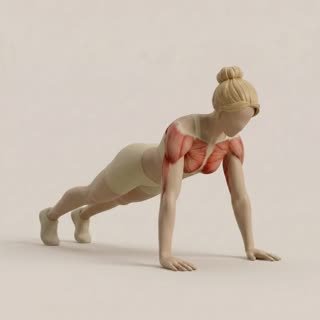
PompesPectoraux
The dumbbell bench press is one of the best movements for building your upper body. Each arm carries its own load, the stabilising muscles have to work, and the imbalances a barbell hides finally come out into the open. A solid base, usable from your very first sessions, that stays with you for years.
The muscles this movement works
The pectoralis major does most of the work. The front delt and the triceps come along for the ride, while the forearms and the back keep everything steady. On a flat bench the effort spreads across the whole chest; tilting the bench up shifts the tension higher, declining it moves it to the lower part of the chest. The abs are involved too, holding a quiet brace.
How to do the dumbbell bench press properly on a bench
Lie back, feet on the floor, shoulder blades pulled together. The dumbbells start with your arms extended, wrists stacked over your shoulders. Lower slowly until your elbows reach chest level: that full range of motion is the real advantage of dumbbells. The next step is to press the dumbbells toward the ceiling, with no jerking; at the top, the dumbbells come closer together without ever clanging. Breathe in on the way down, out as you push. A strength coach can fix these details in a single session.
The dumbbell floor press, without a bench
No bench at home? The floor does the job perfectly well. Your elbows touch the mat and cap the descent, which spares sensitive shoulders. The range is shorter, the push more direct, the triceps more involved. It's also the right option for taking the loads up safely, with no spotter. Keep your back flat and your knees bent so you don't arch.
Incline, neutral grip and other variations
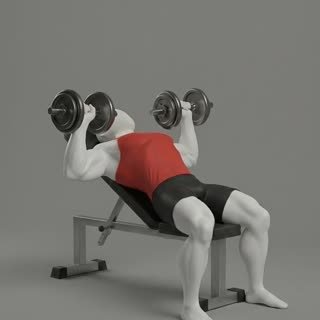
Développé couché haltères inclinéPectoraux · halteres
The incline dumbbell bench press, with the bench set to 30°, targets the clavicular head. The neutral grip, palms facing each other, is easier on the shoulder and recruits the triceps better; the close grip follows the same logic. Unilateral work, one arm after the other, closes a visible gap between your right and left side. Rotate these versions across your training cycles: the classic dumbbell bench press stays your benchmark.
What weight to use to keep progressing
A beginner usually starts with 8 to 12 kg per hand. Once the learning phase is behind you, a 40 kg dumbbell bench press — 20 kg in each hand — becomes a realistic goal within a year or two. Pick a load that leaves two reps in reserve at the end of the set: that's the best indicator, far more reliable than a number copied from the person on the next bench. Try adding one kilo every three weeks rather than five in one go.
Your most common questions
Dumbbells or barbell?
The barbell allows heavier loads and precise loading; dumbbells give you range and symmetry. The best choice is to alternate between the two across the year.
And compared to the machine?
The machine is reassuring when you're coming back from a break or finishing a session with isolation work, because the path is guided from start to finish. Dumbbells, on the other hand, build control and carry over better to athletic movement.
Are push-ups enough?

PompesPectoraux
Push-ups build a bodyweight foundation, but progress plateaus fast. Make them your priority for the first few months, then move to dumbbells to keep adding load. Need a plan built for you? Find a personal trainer near you.