Want a wider back without spending hours at the barbell? The high row machine deserves a look. This high-pulling machine now shows up everywhere, from the local gym to professional strength training facilities. This guide covers what it works, how to set it up, and what separates a decent model from a genuinely high-end one. A coach can then adapt all of it to your level and your goals.
How does the high row machine work?
The idea is simple. You sit down, chest against a pad, and grab two handles set high above you. The movement pulls down and back. So it sits halfway between a vertical pulldown and a standard row. That particular angle is where the name comes from: high row.
Most recent models have independent arms. Each side then works on its own, which fixes imbalances between right and left. This design, known as iso-lateral, is popular with experienced lifters. Converging movements bring the handles closer together at the end of the range, the way your elbows would move naturally. You feel the difference immediately: the contraction is sharper.
Which muscles does the high row work?
The lats do most of the job
The latissimus dorsi, also called the lats, takes the bulk of the work. The angled path targets mainly its upper portion, the part that gives that wide-back look from the front. The teres major and the mid traps follow close behind.
The muscles that come along for the ride
The biceps, forearms and rear delts also contribute to the movement. The rhomboids fire as soon as you squeeze your shoulder blades together. And your core stabilises the body through the whole set. Several muscle groups can progress on a single exercise, which makes it an efficient choice when time is short.
Correct technique, step by step
Setting the seat and the supports
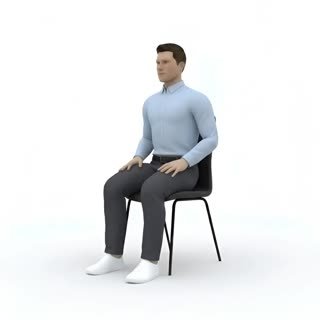
The seat setting determines everything else. Once seated, your shoulders should sit slightly below the handles. Too low and you lose range. Too high and your lower back compensates. Foot supports are adjustable on plenty of equipment too. Give this step thirty seconds: that's what an optimal position costs.
Pulling without cheating
- Breathe in, then pull your elbows down and back.
 Keep your chest against the pad, without arching your back.
 Hold for one second at the end of the contraction.
- Come back slowly, controlling the load over three seconds.
- Never drop the weight all at once, for your own safety.
The mistakes that come up most often
Going too heavy is mistake number one. The torso peels off the pad, the hips lift, and the back stops working. Another classic trap: pulling with the arms alone. Think "elbows", never "hands". A moderate load with perfect execution will always beat a machine covered in plates you can't control.
High row machine or lat pulldown: which one?
The pulldown, done on a high cable, pulls straight down. The high pulley puts the resistance above your head and gives the lats a bigger stretch. The high row machine adds a horizontal component. It recruits more fibres through the middle of the back.
The two exercises aren't rivals at all. Plenty of programmes pair them in the same session. If you lack thickness, the high row is ideal. If you're after pure width, keep the vertical pulldown. A personal trainer will know how to balance the two around your build and your injury history.
What sets a high-end machine apart
Plate loaded or weight stack
Two families share the gym floor. The plate loaded high row takes discs, like free weights. The feel is rawer and the resistance builds gradually. A pin-selected stack, on the other hand, lets you change the weight in two seconds. For heavy use, a plate loaded model usually holds up better over the years.
Dimensions, upholstery and finish
The dimensions matter more than people think, especially in a gym where every square metre costs money. A deep machine needs enough clearance behind it. Look at the frame specs too: tube gauge, bearings, quality of the upholstery. The stability of a heavy frame completely changes the comfort you feel. On premium ranges, high-density foam holds up for years without sagging, and the user's performance benefits directly.
Where can you train on this kind of machine?
In France, nearly every big chain has an inclined high row. Basic Fit and Fitness Park fit one in most of their clubs. Planet Fitness too, often in a guided version. Performance-focused gyms tend to go with Technogym or Panatta, two manufacturers known for their heavy-duty range and their unilateral versions. Before you sign up, try out the weight machine you're interested in at the gym you have in mind.
Alternatives when the machine is taken
Nothing free? Several exercises produce much the same stimulus.
 The bent-over barbell row, very close in terms of recruitment.
 The single-arm dumbbell row, for balanced work on each side.
 The lat pulldown with a neutral grip.
 Ring or TRX rows, using your bodyweight.
These variations can stand in for the high row for a few weeks without any problem. Have a look at our beginner back programme to organise them sensibly.
Frequently asked questions
Is the high row suitable for beginners?
Yes, and that's one of its biggest strengths. The path is guided, so there's little room for technical error. Start light for two sessions, long enough to learn to train while squeezing your shoulder blades.
How many sets and reps?
Three to four sets of 8 to 12 reps suits most lifters. For strength endurance, go up to 15 reps with a lighter load.
Should you use lifting straps?
Only if your forearms give out before your back does. On heavy sets, straps let you get those last useful reps. For the rest of your volume, let your hands do the work.