Why the incline curl stretches the biceps like nothing else
Sitting back on an incline bench, your arms hang naturally behind your torso. That single position puts the long head of the biceps under stretch from the very first second. The incline curl therefore covers a range of motion the standing curl never reaches. You get more tension, better feel, and that biceps peak finally starts to show.
There's another benefit: cheating becomes very hard. You can't swing your back or drive with your hips. The elbows stay put, only the forearms move. That's why many coaches program this movement at the end of a session, exactly when fatigue makes you want to compensate.
Set up the bench before you pick up the dumbbells
Finding the right angle
A backrest set between 45 and 60 degrees works for most people. The lower you go, the harder the stretch bites, and the more the shoulder gets involved. Feeling something in the front of the joint? Bring the backrest up one notch. The incline bench curl should stay comfortable, otherwise the load ends up on the wrong structures.
Positioning your body
Keep your head, shoulder blades and lower back against the pad. Feet stay planted on the floor. Then let your arms hang down alongside the bench, palms facing forward. This starting position, in full supination, sets up the whole set.
Nailing the incline dumbbell curl, set after set
The movement, step by step
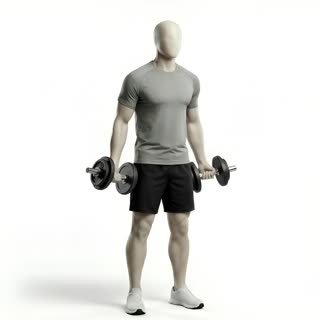 Curl the dumbbell up by bending the elbow, without letting the arm drift forward.
 Squeeze the biceps hard at the top, for about a second.
 Lower slowly, going all the way into the stretch.
- Pause at the bottom before starting the next rep.
The lowering counts as much as the lift. Plenty of lifters drop the dumbbell through this phase and lose half the benefit. Give yourself a solid three seconds to get back to the bottom position.
The mistakes that ruin the exercise
Three faults come up again and again: pushing the elbow forward to help the weight up, peeling the shoulders off the pad, cutting the end of the rep short. Film a set from the side and the verdict is usually immediate. Then fix one thing at a time, with a lighter load.
Loads and reps
The incline biceps curl doesn't call for heavy weight. Moderate dumbbells for 8 to 12 reps are plenty. Three to four sets per session, once or twice a week, already give excellent results. Needless to say, technique always beats the number on the dumbbell.
Cable, machine or dumbbells: which one?
The incline curl on a low cable keeps tension constant from bottom to top. The incline curl machine, found in most gyms, guides the path and reassures beginners. Dumbbells, for their part, fix imbalances between the right and left arm. Rotate through all three versions across your training cycles and your other biceps exercises.
Your questions about the incline curl and the preacher curl
Incline curl or preacher curl?
The two exercises don't do the same job. The preacher bench puts the arm in front of the body and shortens the long head: it emphasizes the top contraction and the brachialis. The incline bench does the opposite and exploits the maximum stretch. The best option is to combine them in the same session, one after the other. A personal trainer will fine-tune that order based on your build and your weak points.