IT band syndrome, the injury that stops runners in their tracks
A sharp pain on the outside of the knee that turns up at the same kilometre every time, forces you to walk, then fades almost as soon as you stop. In the vast majority of cases, that scenario describes IT band syndrome, also known as iliotibial band syndrome. It is the most common injury among runners, on the road and on trails alike, and every year it derails dozens of marathon and half-marathon build-ups. The good news: it responds well to treatment, as long as you understand where the problem actually comes from.
Anatomy: the iliotibial band in two lines
The iliotibial band is a long sheet of fibrous tissue, very strong and barely elastic. It starts on the pelvis, runs down the outside of the thigh and anchors just below the knee, on the tibia. At the top, two structures pull on it: the gluteus maximus and the tensor fasciae latae. That tensor is a small muscle, but it works hard on every single foot strike, especially when the pelvis lacks stability.
Why it is nicknamed windscreen wiper syndrome
While you run, the knee bends and straightens over and over. At around 30 degrees of flexion, the IT band passes right over the lateral femoral condyle. That back-and-forth looks like a wiper blade sweeping across a windscreen, hence the nickname used in French. Repeated thousands of times, the friction compresses and irritates the blood-rich tissue sitting between the iliotibial band and the condyle. The irritation settles in, and knee pain eventually shows up.
Symptoms: a very localised pain on the outside of the knee
The picture is almost always the same, which makes this injury fairly easy to identify. The pain sits on the outer side of the knee, over an area about the size of a coin. It is sharp, sometimes burning, and runners point straight to it without hesitating.
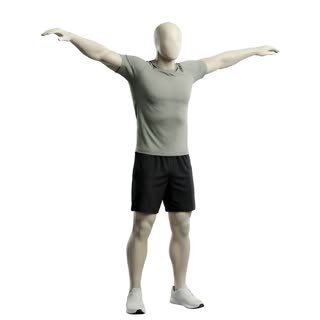 It comes on after a steady stretch of running, often between 10 and 30 minutes in.
 It gets worse downhill and on cambered ground.
- It settles quickly when you walk, then returns as soon as you start running again.
- Some runners also feel discomfort at the hip, along the tensor fasciae latae.
- The knee does not swell, or barely, and it never locks.
What causes IT band syndrome
Contrary to popular belief, the band itself is almost never the culprit. It takes the hit. The real causes lie upstream, in the way you train and the way you move.
Training load that ramps up too fast
This is the number one factor, by a long way. Weekly volume up 30 %, a first block of hill reps, a two-day trail camp, a new intensity: the tissue has no time to adapt. The injury appears without any trauma at all.
Weak glutes and an unstable stride
When the gluteus medius fails to hold the pelvis level, the knee drops inwards on every foot strike. That excessive internal rotation tightens the band and crushes the area of conflict. This is why treatment goes through the hip as much as through the knee itself.
Terrain, gear and repeated movements
Always running the same direction on a track, stacking up technical descents, riding with a saddle set too high or badly positioned cleats: several habits keep the friction going. Worn-out shoes, with no cushioning or support left, play their part too.
IT band syndrome tests: making the diagnosis
Diagnosis is above all clinical. A health professional usually needs no imaging to decide, because the history and palpation are enough.
The Noble test and the Renne test
The first is done lying down. The practitioner presses on the femoral condyle while slowly straightening the knee: the pain wakes up at around 30 degrees. The second is done standing on one leg, gradually bending the knee. A positive result on both almost always confirms iliotibial band syndrome. Ultrasound or MRI are kept for cases that drag on, when a further medical opinion becomes necessary.
Osteopath or physiotherapist: who should you see?
The two approaches complement each other more than they compete. An osteopath works on overall tension, the pelvis and hip mobility, which often brings quick relief. A physiotherapist builds the strengthening programme and manages the return to running over time: they are the one who fixes the root of the problem. If the diagnosis is unclear or the pain persists, a sports physician remains the go-to for any patient.
IT band syndrome recovery time
This is the question that comes up most often, and the answer depends mainly on when you stop. Discomfort dealt with from the very first runs settles in two to three weeks. Pain ignored for a month takes more like six to eight weeks. Long-standing cases, kept alive by coming back too early, can take three to four months to clear completely. It is never a serious injury, but it is a patient one, and it punishes impatience.
IT band syndrome treatment: what to do at the first signs of pain
The priority is to stop the movement that irritates, not to stop all activity. This is relative rest: you drop running and downhills, and keep moving in other ways.
- Ice the outside of the knee for 15 minutes, two or three times a day in the first few days.
- Cut running volume to zero for 7 to 14 days depending on how bad the pain is.
 Work on the tissue with massage, shockwave therapy or dry needling at the physio.
- Avoid self-medicating with anti-inflammatories over long stretches without medical advice.
IT band syndrome stretches: loosening the tensor fasciae latae
The band itself barely stretches: it is too stiff. Releasing what pulls on it, though, makes a real difference. Hold each position for 30 to 45 seconds, three times per side, never pushing into pain.
- Standing, painful leg crossed behind the other, hip pushed out to the side: you should feel the stretch along the outside of the thigh.
- Lying on your back, knee drawn up then pulled across towards the opposite shoulder to open up the glute.
- Kneeling lunge to free the psoas, often tight in runners.
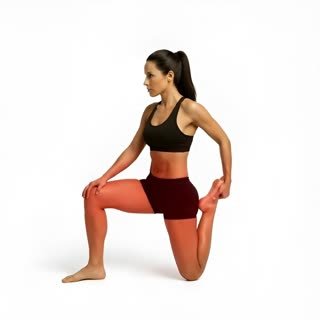 Foam roller on the gluteus maximus and the quadriceps, avoiding rolling directly over the condyle.
IT band syndrome exercises: the strength work that changes everything
This is the decisive part of the treatment, the part that keeps it from coming back. The goal is simple: give the hip back its strength and control so the knee stops collapsing inwards. Three sessions a week are enough, in sets of 12 to 15 reps.
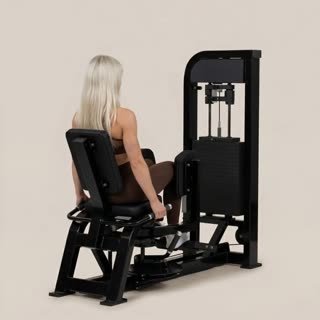 Side-lying hip abduction, leg straight, without letting the pelvis roll back.
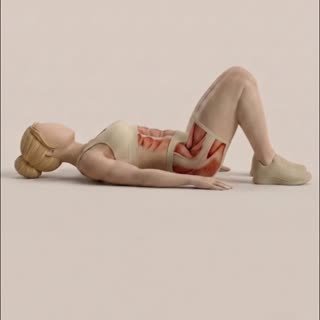 Clamshells with a band above the knees, to target the external rotators.
- Single-leg glute bridge, then a single-leg hold pressing against a wall.
 Lateral band walks with the band around the ankles, 10 metres out and back.
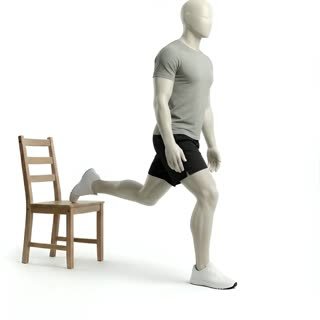 Bulgarian split squats and controlled step-downs, keeping the knee in line with the foot.
One-to-one guidance speeds things up considerably. On Koatcher, you can find a running coach who will adapt this programme to your race calendar.
IT band syndrome knee braces, strapping and tape
Choosing a knee brace
A brace does not cure anything, but it reassures and limits micro-movements while you build back up. Go for a soft patellar model with an adjustable side strap rather than a rigid splint, which weakens the muscles. Entry-level models sold at Decathlon do the job perfectly well for occasional use. Wear it on your first runs back, then gradually leave it behind.
Strapping and tape
Strapping uses rigid or elastic strips laid from the outside of the thigh down to the tibia, with the tissue slack and the knee slightly bent. The idea is to take tension off the condyle without blocking flexion. Kinesiology tape such as Flytex goes on the same way, with moderate tension of around 50 %. Ask your physio to show you the first time: a rough job is worth nothing.
Which shoes and what drop for an irritated knee
Gear does not create the injury, but it can keep it going. A pair that has passed 800 kilometres has very little cushioning left. For this particular syndrome, go for shoes with good rearfoot support and soft cushioning rather than very minimalist models. As for drop, a mid-range figure of 6 to 10 mm suits most runners with this problem: it limits the load on the outer chain. Above all, do not change your drop and your running form while the knee still hurts, because that double novelty overloads tissue that is already irritated.
Running with IT band syndrome and getting back to training
What sport to do while injured
Carrying on running through gritted teeth lengthens recovery, without exception. Better to keep your fitness up some other way. Swimming, aqua jogging, the elliptical and the rowing machine are generally fine. Cycling is more of a grey area: it works if you stay flat, in light resistance, with the saddle a few millimetres lower. And walking on the flat has to be pain-free before you consider anything else.
The return-to-running protocol, week by week
The golden rule is to come back on flat ground, short and slow. An example of a cautious progression:
- Week 1: alternate 2 minutes of running and 2 minutes of walking, 20 minutes in total, every other day.
- Week 2: blocks of 5 to 8 minutes, still on flat, soft ground.
- Week 3: 25 to 30 minutes continuous if no pain showed up the day before.
- Week 4: bring hills back gradually, and downhills last.
At the first hint of that signal on the side of the knee, drop back a level. Going back to hard training too soon remains the number one cause of relapse.
How to stop it coming back
Prevention rests on three simple habits. First, increase volume by less than 10 % a week and slot in an easy week every three weeks. Second, keep two glute strengthening sessions a week all year round, injured or not. Third, vary your terrain and change direction on the track. A programme matched to your level, guided by a personal trainer, is still the best investment for getting through a marathon plan without interruption.
Frequently asked questions about IT band syndrome
How do you treat IT band syndrome?
By combining relative rest, ice, hands-on work and above all hip strengthening over six to eight weeks. Surgery is very rare.
What sport can you do when affected?
Swimming, aqua jogging, the elliptical and the rowing machine first. Cycling is possible on the flat, with an adjusted position.
What should you do as soon as the pain appears?
Stop the run straight away, ice it, and do not start again until you have gone 48 hours without discomfort when walking.
How do you avoid this injury?
Build volume slowly, strengthen your glutes all year round and replace your shoes regularly.
How do you tape the knee?
With the knee slightly bent, run a strip from the outside of the thigh to just below the knee, with moderate tension and no tourniquet effect.
Which stretch works best?
The standing stretch with one leg crossed behind the other, combined with gluteus maximus work, targets the tensor fasciae latae best.