
Corde à sauterCardio
Two metres of cable and a pair of trainers: you're holding the best-value cardio tool there is. A jump rope costs under €20, fits in a bag and gets your heart rate up in thirty seconds. Here's what it works, what it burns and how to start.
The muscles you work and what rope training does for you
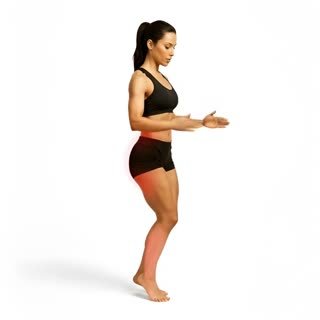
Jumping isn't just a leg job. On every rep, calves, quads, hamstrings and glutes absorb the landing then fire back, while the core locks in to keep the hips stable. The shoulders, forearms and wrists drive the rotation.
The benefits go well beyond muscle. Skipping also builds your wind, your coordination and the quality of your footwork — three things boxers have trained this way forever. The repeated impacts stimulate bone density and general conditioning.
Calories burned: what 10 minutes of skipping is worth
Count on 10 to 13 calories per minute for a 70 kg person, up to 15 in fast intervals. Ten minutes of rope is worth roughly 25 minutes of easy jogging. Over a full hour you clear 700 calories — a theoretical number, since almost nobody lasts an hour straight.
Weight loss: the real before and after of one month
The rope doesn't melt fat on its own: it digs a calorie deficit, and it's that deficit, food included, that makes you lose weight. After one month of skipping four times a week, the credible before-and-afters, for women and men alike, land around 1 to 3 kg lost, with sharper calves and breathlessness that shows up far later.
Which jump rope to pick as a beginner
Search for one and four families come up, and they don't cover the same use.
 PVC or coated cable: the all-rounder, forgiving on technique, perfect for a first buy.
 Speed rope: thin, very fast cable, built for double unders and cross-training.
 Weighted rope: slows the rotation down and asks more of the upper body.
- Beaded rope: plastic segments, a sharp click on the floor, a freestyle favourite.
At Decathlon or Intersport, the whole thing plays out between €5 and €25. Product pages say jump rope or skipping rope depending on which side of the Atlantic wrote them: it's the same object. Good handles, mounted on ball bearings, matter more than the cable itself.
Cordless and ropeless models
A cordless jump rope swaps the cable for two weights attached to the handles. The movement stays identical, minus the whip on the floor: ideal under a low ceiling or while travelling. These options, including the ropeless rope sold at Decathlon, can unblock beginners who struggle with the coordination. Their limit: nothing punishes a missed jump, so technique improves more slowly.
Sizing your rope in thirty seconds
Stand on the middle of the cable and pull both handles straight up along your body. For a beginner, they should reach armpit height. Anyone comfortable will drop to chest height: the shorter the rope, the faster it turns and the less it forgives. You adjust it by loosening a screw inside the handle, then cutting the excess — measure twice, cut once.
Beginner workout: 15 minutes, properly split
Jump on the balls of your feet, knees soft, elbows close to your ribs, only two or three centimetres off the floor. The wrists turn the rope, not the arms. Here's a session built for the first month, on a forgiving surface and in cushioned shoes.
- 3 minutes of warm-up: high knees, ankle circles, jumps without the rope.
 8 rounds of 30 seconds of skipping, followed by 30 seconds of brisk walking.
- 2 minutes of continuous skipping at a comfortable pace.
 2 minutes of calf and hamstring stretches.
Three sessions a week is plenty at the start: calves need 48 hours to absorb the impacts.
Your most common questions
How long should a session last?
Ten to fifteen working minutes for a beginner, twenty to thirty for someone experienced. Splitting it into intervals always beats grinding through at all costs.
Can you skip every day?
Two days in a row at most, then rest. The Achilles tendons and shins are the first to complain.
Is it worth working with a coach?
An outside eye fixes in one session what takes months to feel on your own. Koatcher's personal trainers build a progression around the rope, alongside a HIIT or Tabata protocol.