Training remotely is no longer a fallback. An online personal trainer now works with clients over video calls, recorded clips and messages, holding them to the same standard as in a gym. They fix a posture, adjust a load, push back when motivation drops. For a lot of people it has become the simplest way to train regularly without building their week around a club's opening hours. Here's what the format really covers, how to pick the right person, what serious support costs, and how you train for the job if you want to do it yourself.
What online personal training actually involves
Online coaching works on a simple principle: your trainer designs a plan, you do the work at home or in a gym, and they check it. This has nothing to do with an app handing out the same exercises to everyone. A real professional starts with a full assessment: medical history, injuries, actual level, equipment on hand, time available each week. Out of that conversation comes a training program written for you alone. Blocks usually run four to six weeks, then change as you progress. That flexibility is why so many people switch to online coaching after abandoning three gym memberships.
How your sessions will run
It depends on the format. With hybrid coaching, one or two coaching sessions a week happen live over video call: the coach watches you move and corrects you on the spot. The rest of the time you work on your own and send a video of the technical lifts. Other trainers prefer asynchronous work: you film, they annotate, you try again the next day. Everything goes through an app, a shared sheet or a plain message thread. What matters is how often the feedback comes, never the channel it comes through.
- The initial assessment: goals, constraints, availability and current condition.
- The program: sets, loads, rest periods and exercises picked for you.
- The follow-up: video corrections, weekly adjustments, answers to your questions.
- The nutrition side: practical guidelines, never a medical diet.
- The progress review: measurements, photos and how you feel, every one to two months.
At home, on video or in group classes
Pull upDos · traction
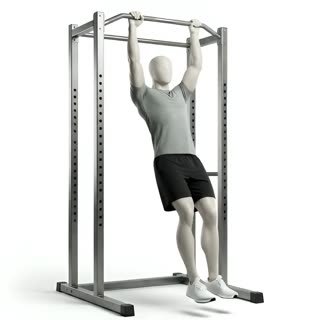
Training at home suits people short on time. A mat, two dumbbells, a pull-up bar: most plans work around that minimum. Others prefer group classes streamed live, cheaper and more motivating, where you sweat alongside other people in front of your screen. Mixed formats exist too: one-to-one on Monday, group on Thursday. Pick whatever fits best with your daily routine, your budget and the way you like to train.
Finding the personal trainer who fits you
The market is crowded. To find the right personal trainer, ignore follower counts and look at three things: their qualifications, their specialty and the way they communicate. Someone brilliant at conditioning rugby players isn't necessarily the right choice for an easy return to training after pregnancy. Always ask for a first conversation, usually free on platforms like Koatcher. A few minutes is enough to tell whether you click.
Check the qualifications before you sign
In France, coaching physical activity for money requires a professional card. You get it through a BPJEPS, a CQP, a STAPS degree or an equivalent qualification listed on the national register. Ask for the card number: checking it takes a few clicks and costs nothing. Professional liability insurance should be in the contract too. The best coaches put all of this up front, along with their extra certifications: weightlifting, mobility, pelvic floor, strength and conditioning, and so on. Be wary of anyone vague on this point.
Coaching built around women
Plenty of women want a female coach, and that request is entirely reasonable. The menstrual cycle changes available energy, recovery and sometimes technique. Proper support accounts for the pelvic floor after childbirth, bone density at menopause, or simply how you feel about your body in front of a gym's mirrors. Platforms let you filter by gender and specialty. This doesn't mean a man can't coach a woman well: it means the subject has to be raised openly, never skirted.
Losing weight, building muscle or preparing for a race
Your goals shape everything else. Wanting to lose weight means working on output, sleep and eating habits, with a moderate deficit you can hold for months. Getting back in shape after years without training calls for the opposite: light cardio, core work, mobility, very gradual loading. Preparing for a half marathon follows yet another logic, built on blocks, a peak and then a taper. Say clearly where you want to get to, and an honest coach will tell you whether the timeline is realistic.
What an online personal trainer costs, format by format
Price depends on how intensive the support is, not on how long a session lasts. A written plan on its own, renewed monthly, goes for around €40 to €70. Full support with corrections and unlimited messaging runs €100 to €150 a month. Live one-to-one sessions cost €30 to €60 each, usually less in a pack of ten. For comparison, a trainer who travels to your home rarely charges under €60 an hour. Going remote cuts the bill by a third to a half.
- Program only: €40 to €70 a month.
- Program plus weekly follow-up: €80 to €150 a month.
- Live one-to-one session: €30 to €60.
- Group class: €10 to €20 a session.
What the free offers are worth
A free online personal trainer does exist, but rarely in the form of a real human following your progress. It usually means free content: video channels, generic plans, limited app versions, a trial session. That's a fine starting point for getting back into regular workouts without spending anything. The limit shows up fast: nobody tells you your back is rounding, nobody changes the volume when you stall. Test your motivation that way for a few weeks, then pay the day you actually want to progress.
Becoming an online personal trainer
It's an appealing job, and the web has removed the geography problem. A trainer based in Bordeaux now works with clients in Geneva or Montreal. Access is still regulated, though, and success rests as much on teaching ability as on running a small business. Joining the platform lets you skip none of these steps.
Training and the CQP
The fastest route is the CQP ALS or fitness instructor qualification: a few hundred hours, open from eighteen, enough to run classes and coach with limited autonomy. A BPJEPS opens more doors, a STAPS degree more still. An online personal trainer course is a useful addition on top: marketing, sports nutrition, community building. Offers labelled "free training" exist, but none of them issue the professional card. Those modules are there to sharpen your skills, never to earn you the right to practise.
Starting out and finding your first clients
Legal status comes first: micro-entreprise in most cases, registration with the DRAJES, professional card, insurance. Then the tools: a clear page, a reliable payment method, a calendar that shows your real availability. First clients come through word of mouth, social media and matching platforms, which bring you traffic in exchange for a commission. Post useful content rather than biceps photos: a well-filmed movement breakdown convinces more people than a before-and-after. Expect six to twelve months before you have a stable client base.
Your questions about remote coaching
These five questions come up in almost every conversation. Here's enough to answer them straight.
How do you start if you've never been coached remotely?
Write your needs down in three lines: what you're aiming for, how much time you can give it, what equipment you have. Then book a discovery call with two or three professionals. Pick the one who asks the most questions, not the one who promises the most. The first week is a run-in: you test loads, settle the time slots, adjust. Avoid any long commitment before that trial run.
Which profile should you pick out of all the offers?
Look at the specialty before the reputation. A trainer who works every day with beginners trying to get back in shape will help you more than a fitness celebrity. Read reviews looking for concrete details: response time, quality of corrections, ability to adapt the plan when life gets in the way. Some offer a trial month with no automatic renewal, and that's the best filter there is.
What budget should you plan for each month?
For serious one-to-one support, count on €80 to €150 a month. Group formats drop below €40. A plan on its own, with no back-and-forth, costs less but demands real self-discipline. Be wary of €20 offers promising tailored coaching: at that price, the human being has left the building.
How much does a remote coach earn?
Income depends directly on the client list. A self-employed coach working with fifteen people at €100 brings in €1,500 gross a month, before costs and tools. Established trainers, who also sell off-the-shelf programs and run groups, often clear €3,000. The early days stay lean: many top up with gym hours during the first year.
Can you work without a qualification?
Not for money, no. The law requires a registered certification and a professional card to coach other people, including from behind a screen. Selling anonymous plans with no follow-up remains a grey area that inspections narrow every year. Taking the CQP or the BPJEPS protects your clients as much as your business.