A staple of strength training, the plank can be done anywhere, with no equipment, in a few minutes. Done properly, it protects your back, tones your midsection and makes your whole body more stable. Here's what the exercise really involves, the variations worth knowing, and a progressive 4-week program to get started without hurting yourself.
What is core training?
The plank is a static exercise: you hold a fixed position for several seconds, without moving. The core muscles work in an isometric contraction, meaning they contract without changing length. This kind of effort targets the transverse abdominis, the deepest abdominal muscle, along with the lower back, the glutes and the shoulders.
The best-known version is the standard plank: the body forms a straight line from shoulders to heels, resting on the forearms and the balls of the feet.
What is the plank good for? The benefits
A strong core acts like a natural corset around the spine. Practiced regularly, this exercise improves posture and remains one of the best defenses against back pain.
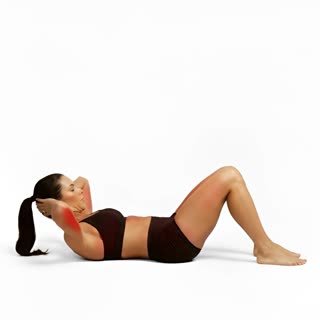 Stability and balance: the deep muscles involved stabilize the pelvis in everything you do day to day.
- Athletic performance: a solid midsection transfers force better between the upper and lower body, whether you run or lift.
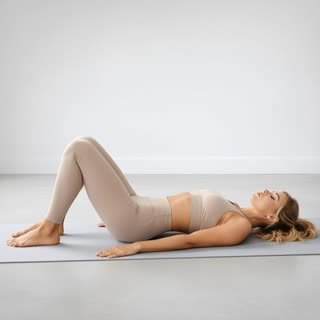 Posture: planking strengthens the muscles that hold your back straight, sitting or standing.
- Prevention: a stable core lowers the risk of lower-back pain and joint injuries.
How to do a plank: the standard version
The standard plank is done on the floor, ideally on a mat:
- Set your elbows under your shoulders, weight on your forearms.
- Lift your hips so that shoulders, hips and ankles line up.
 Squeeze your abs and glutes, eyes down toward the floor.
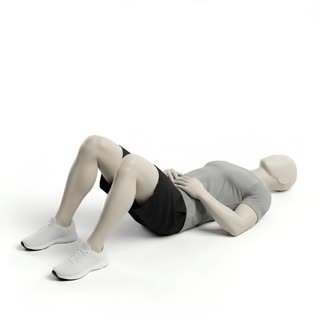 Hold for 20 to 30 seconds, breathing normally.
A few mistakes can turn a good exercise into a source of injury: hips sagging, back arching, head lifted. If your alignment breaks down, cut the hold time rather than cheat. Quality always beats duration.
Plank variations you shouldn't skip
The side plank

Planche latéraleAbdominaux / Core
Of all core exercises, the side plank is the most effective for the obliques, the muscles that define your waist. Resting on one forearm with your feet stacked, keep your hips high and hold for 20 seconds on each side.
The dynamic plank
Here the static hold turns into movement: from the plank position, lift one arm, tap the opposite shoulder, or move from forearms to hands. The dynamic plank raises the difficulty and adds real balance and coordination work.
The reverse plank
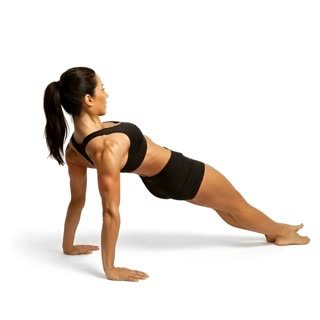
Planche inverséeAbdominaux / Core
The reverse plank, often called the back plank, targets the posterior chain. Lying on your back, resting on your heels and forearms, lift your hips and hold the alignment. An ideal way to balance the work between the front and the back of your body.
A progressive 4-week plank program
This plan calls for three plank sessions a week, every other day: recovery is part of the training.
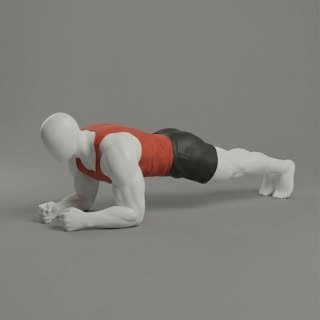
Plank classiqueAbdominaux / Core
- Week 1: 3 × 20 seconds of standard plank, 45 seconds of rest between sets.
- Week 2: 3 × 30 seconds of plank, then 2 × 15 seconds of side plank per side.
- Week 3: 3 × 40 seconds of plank, 2 × 20 seconds of side plank, 2 × 20 seconds of reverse plank.
- Week 4: 3 × 45 seconds varying the points of support, plus one set of dynamic plank with 10 slow reps.
A simple timer app is enough to track your holds. For a plan matched to your current fitness level, working with a personal trainer is still the best option.
How long should you plank each day?
No need to chase records. Two to five minutes a day, split into short sets, is plenty to make progress. Several holds of 20 to 45 seconds beat one very long effort, which wrecks your form. With 2 minutes of planking a day, the first results show up after three to four weeks: a firmer midsection, straighter posture, a stronger back.
Does planking give you a flat stomach?
Planking tones the transverse abdominis, which acts like a natural belt and visually slims the waist. It burns very few calories, though. To lose belly fat, pair your planks with a suitable diet and regular cardio: that combination is what produces a visible before-and-after, not the plank on its own.
Crunches or planks: which should you choose?
They don't do the same job. Crunches and leg raises shape the rectus abdominis, the visible muscle behind the famous six-pack: an aesthetic goal above all. The plank builds deep stability in the core. So the answer isn't crunches or planks, but both, since they complement each other in a balanced program.
Nail overlays and ducted AC: don't mix them up

PlancheAbdominaux / Core
The French word for planking, "gainage", also covers completely different things. Gainage on natural nails is a manicure technique: a thin layer of gel reinforces the nail without extending it, with a spectacular before-and-after on brittle nails. Climatisation gainable, meanwhile, is ducted air conditioning hidden away in the roof space. And the English for gainage is simply "plank" or "core training". Nothing to do with your exercise mat!