Push-ups, the most complete bodyweight exercise

PompesPectoraux
Push-ups need no machine, no dumbbell, no membership. A stable floor, two hands, and you are working. This pressing movement builds the upper body while keeping the whole midsection under tension. Here is a clear look at the muscles involved, the right technique, the variations worth knowing and a program to reach fifty reps.
Which muscles do push-ups work
The prime movers
Three groups push the body back up: the chest, the triceps and the front delts. Hand width changes how the work is shared. Hands wide, the chest takes most of it. Hands close, the triceps take over. That one setting turns a single exercise into two different stimuli.
The core, the forgotten link
Underneath, the abs, lower back and glutes work isometrically to stop the hips from dropping. This is where a lot of people stall: it is not the arms giving out, it is the body line. Regular core work often unlocks more reps than another strength session.
How to do push-ups properly
Place your hands on the floor, slightly wider than your shoulders. Squeeze your glutes and pull your ribs down: head, hips and heels form one straight line. Lower with your elbows at about 45 degrees to your torso, until your chest brushes the floor. Then push back up smoothly, breathing out. One rep takes two to three seconds.
The mistakes that cost the most
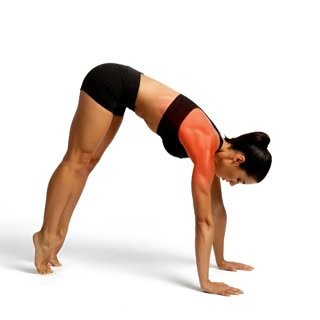 Elbows flared out to 90 degrees, which irritates the shoulder over time.
 Hips sagging toward the floor or piking up toward the ceiling.
- Half reps: you lose half the benefit.
- Rushing, so momentum replaces muscular tension.
Push-up variations worth knowing
Incline push-ups to get started
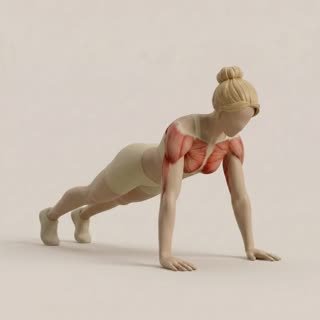
PompesPectoraux
Hands on a bench, a table or a wall: the higher the surface, the easier the rep. A sturdy chair is the simplest option at home. This version beats knee push-ups, because it keeps the full-body line intact.
Diamond push-ups for the triceps
Index fingers and thumbs meet under your chest to form a diamond. Elbows stay close to the torso. These are demanding: bring them in once fifteen standard reps feel clean.
Decline push-ups to add load
With your feet up on a chair, the upper chest and shoulders take more of the load. Raise the height in steps of about twenty centimetres. Archer push-ups then carry the progression toward the one-arm push-up.
Program to go from 0 to 50 push-ups
Weeks 1 to 4: build the base
Three sessions a week, with a rest day in between. Five sets of incline push-ups, stopping two reps short of failure. Lower the surface as soon as you pass twelve reps per set.
Weeks 5 to 12: build the volume
Move to the floor and work in short but frequent sets: six sets of four beats one set of ten followed by nothing. Add one rep per set each week. Test your max every three weeks.
Recovery, sleep and hydration
Muscle is built at rest, not during the effort. Seven to eight hours of sleep and enough water make a real difference, especially in hot weather. Chest stretches and a bit of wrist mobility round out the routine.
Frequently asked questions
How many push-ups a day to make progress?
None. Muscle needs to recover: three sessions a week is enough to progress without getting hurt.
Can push-ups replace the bench press?
For a beginner, they can replace it for a long time. Past a certain level, free weights allow finer progression. A personal trainer can help you pick the right moment to switch.