Resistance bands have taken over gyms and living rooms alike. They weigh a few grams, cost less than a month of gym membership, and fit in any bag. Yet a well-built resistance band workout plan will build real strength and power, almost as much as dumbbells. You just need to know what to do, in what order, and for how long.
Why resistance band training works so well
A resistance band doesn't behave like a barbell. Its load comes from tension. The further the band stretches, the higher the resistance climbs. That's progressive resistance: the effort builds as the movement goes on.
With free weights, the load stays the same from the start of the rep to the end. Bands do something else. The resistance never lets up, not even on the way back down. The muscle stays under load from the first centimetre to the last. That's why so many strength coaches have worked this kit into their sessions.
A real win for your joints
Bands start you off gently. At the beginning of the movement the tension is light, which spares the shoulders, elbows and knees. The load then builds all the way to full contraction. Athletes coming back from injury often find genuine muscle work this way, without hammering their joints.
The kit is also extremely versatile. One band replaces a whole rack. You can train standing, seated, lying down, anchored to a door or a post. That freedom explains why more and more people skip the gym for several months a year.
Choosing your bands and your kit
Before you start a resistance band training programme, you need the right gear. Three families dominate the market.
- The power band: a large, thick loop, ideal for assisted pull-ups, deadlifts and pressing.
- The mini band: a small loop that targets the glutes, hips and lower body.
- The tube band with handles: a tube with a door anchor, perfect for reproducing cable movements.
The band kits sold by Decathlon, SmartWorkout and the specialist brands bundle four or five tension levels, roughly 5 to 60 kg. It's the best starting investment. You raise the difficulty by switching colour, or by doubling up two bands on the same exercise.
Add a pull-up bar and a mat. They cost little and widen the exercise library considerably. Learning to use bands properly takes two sessions, no more.
A full body plan, three times a week
Here's a simple framework, with a rest day between each session. Allow 45 minutes, warm-up included. It's the format I recommend to anyone starting strength training at home.
Upper body: back, chest, shoulders and arms
 Seated row, band anchored at chest height: 4 sets of 12 reps.
 Band bench press, band running behind your back: 4 x 12.
 Standing fly, torso leaning slightly forward: 3 x 15.
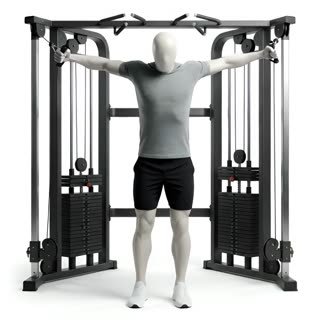 Lateral raises, light tension: 3 x 15.
 Biceps curl then triceps extension: 3 x 15 each.
Lower body and posterior chain
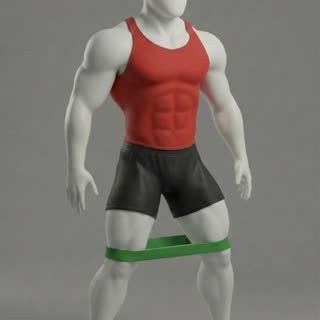 Band squat, band under your feet: 4 x 15.
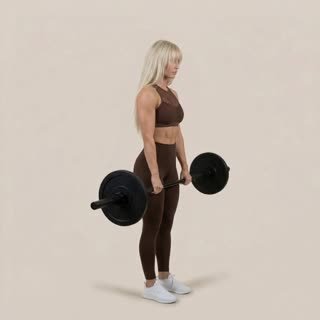 Stiff-leg deadlift: 4 x 12.
 Walking lunges with a mini band: 3 x 10 per leg.
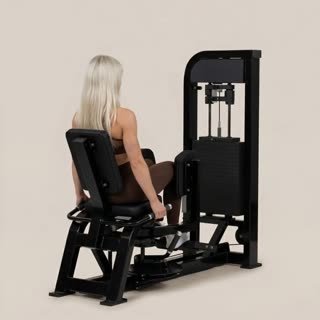 Floor hip abduction: 3 x 20.
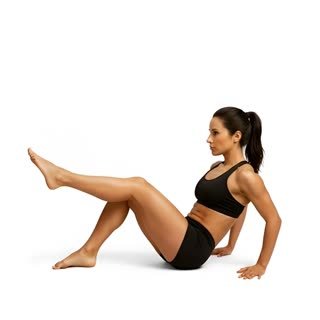 Standing calf raises: 3 x 20.
Core and abs
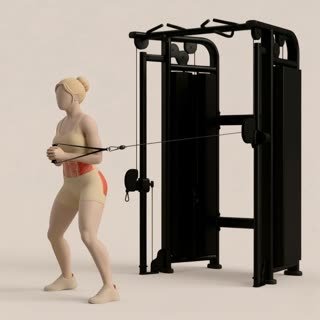 Pallof press, arms extended, facing the anchor: 3 x 12 per side.
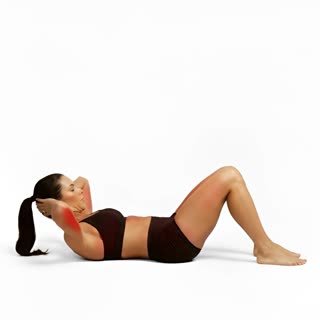 Kneeling crunch, band fixed high: 3 x 15.
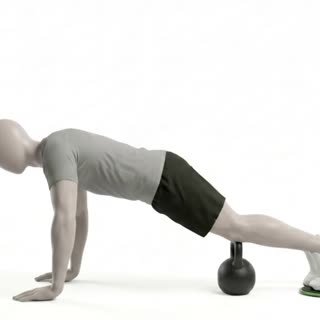 Dynamic plank with a band around the ankles: 3 x 40 seconds.
To progress, don't count kilos. Count reps and execution quality. When you clear the target number easily, move up to the next band. That holds whether you're building muscle or simply getting back in shape.
Moving your plan on over four weeks
A fixed programme stops working after about a month. So structure your cycle instead of repeating the same sets forever.
Weeks 1 and 2: technique, moderate tension, slow tempo. Week 3: move up one resistance level and cut rest to 45 seconds. Week 4: lighter volume, useful for recovery. The next cycle starts again with longer sets or a heavier band.
One last thing that matters: recovery. Two short nights are enough to wreck a good training week. Sleep, eat enough protein and keep one full rest day. That's what will actually improve your performance, far more than one extra band bought on impulse.
You'll find plenty of free resistance band workout plan PDF templates to download. They do the job in a pinch. One warning though: a generic document knows nothing about your build, your old injuries or your goals. It's a starting point, not gospel.
Varying your band exercises without losing focus
A good exercise library fits on one page. No need to collect a hundred. Pick two movements per muscle group and keep them for six to eight weeks.
To build power, add explosive variations: banded jump squats, banded push-ups, fast rows to the chest. These train speed, something bodyweight alone develops poorly.
The anchor point changes everything too. The same band fixed low, at mid-height or high recruits different fibres. It's an easy way to work a specific angle without buying new kit.
Working with a personal trainer
Most mistakes come from badly anchored or badly aligned exercises. A band that slips, a back that rounds, a range of motion cut short: these details hold your results back. A coach fixes them in a single session.
On Koatcher, you compare profiles, read reviews and book coaching online or at home. The trainer builds a plan around you, adjusts the load and tracks your progress week after week. Whether you're a woman easing back into sport or an experienced athlete, that follow-up is often the difference between three motivated weeks and a lasting change.
Resistance band training: common questions
Can you build muscle with bands alone?
Yes, as long as you train close to failure and increase the tension regularly. Muscle gain depends mostly on training volume and on what you eat, not on the type of kit.
How long before you see results?
Allow six to eight weeks to feel a gain in strength, twelve to see it in the mirror. Consistency counts for more than the intensity of any single session.
Do men and women need different programmes?
No. Needs vary with your goal, your level and your availability, not your sex. The only thing that sometimes changes is how volume is split between upper and lower body.
Which band should you start with?
A medium resistance, around 15 kg, suits most beginners. A kit is still the better option: it covers every muscle group, from calves to shoulders.