
SquatJambes
The squat is the king of lower-body exercises. People do it everywhere, in the gym and at home, loaded or not. But it only pays off if you do it right. Here's the technique, the right depth, the variations worth knowing and a clear progression.
Which muscles does the squat actually work?
The squat is a compound movement. It hits the quads and glutes first. The hamstrings and adductors chip in too. The calves stabilize the ankle, and the abs keep the torso braced.
That wide recruitment explains its popularity. A single movement builds leg strength, hip mobility and back support. If you spend your days sitting, you'll notice the difference fast: getting out of a chair, climbing stairs, carrying groceries.
How to squat properly, step by step
Setting up
Stand with your feet apart at shoulder width. Turn your toes out slightly, around thirty degrees. Keep your eyes level and your chest open. Extend your arms in front of you as a counterweight. This starting position determines everything that follows.
Lowering under control
Push your hips back first. Then let the knees bend. Spread the weight across the whole foot, heel included. The knees track in line with your toes and never cave inward. Take two to three seconds on the way down.
Driving back up
To come back up, push hard into the floor with both legs. Hips and shoulders rise together. Breathe out through the effort and squeeze your glutes at the top, without arching. If your hips shoot up faster than your chest, the load is too heavy.
The most common mistakes are easy to spot:
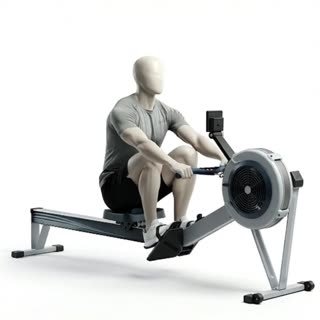 heels lifting off the floor;
- back rounding at the bottom;
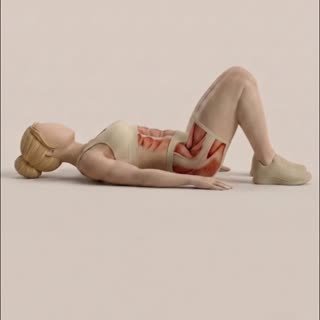 knees drifting toward each other;
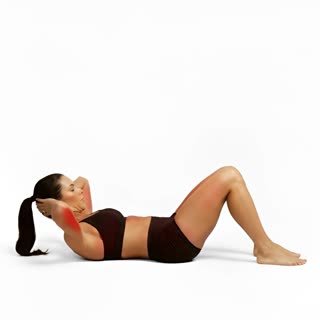 dropping too fast, with no control;
- adding heavy loads far too early.
How deep should you squat?
The usual benchmark is thighs parallel to the floor. At that depth, the glutes and quads are already working hard. Going lower increases the range of motion and the glute involvement, as long as you keep your back neutral.
Not everyone gets down to the same point. Ankle mobility, femur length and your torso-to-leg ratio all change the picture. One specific case comes up often: if your heels lift, raise them an inch or so. A box set behind you also gives you a reliable marker for learning depth.
The main squat variations
The goblet squat, the best way to learn

Goblet squatJambes · halteres
The goblet squat is done with a dumbbell or a kettlebell held against your chest. That position straightens the torso on its own. It's the best entry point for a beginner, and a great warm-up for everyone else.
The sumo squat

FenteJambes
Here the feet go well outside shoulder width, toes turned out hard. The sumo squat loads the adductors and the inner thighs. It often suits people with limited ankle mobility, since the torso stays more upright.
The Bulgarian squat and the split squat
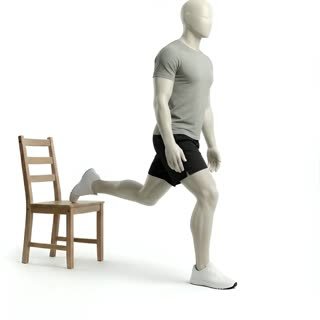
Split squat bulgareJambes
The split squat is a lunge position: one foot forward, the other behind you on the floor. The Bulgarian squat, also called the Bulgarian split squat, puts the rear foot on a bench. The front leg then takes almost all the load. This version fixes left-right imbalances, and it torches your quads without any heavy equipment.
The front squat and the barbell squat
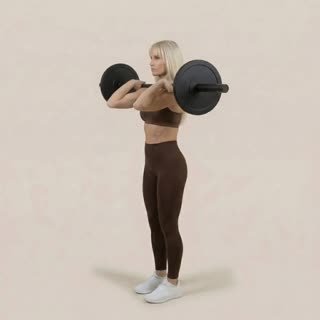
Front squatJambes · barre
The barbell squat comes in two bar positions. High bar on the traps is the classic back squat. Bar racked on the collarbones is the front squat: the torso stays upright and the quads take more of the work. This version demands wrist and shoulder mobility.
The hack squat machine
The hack squat guides the movement along an angled rail. Your back is supported, so the exercise mainly targets the thighs. It complements free-weight work well, but it doesn't replace it: there's almost no core bracing involved.
Squats with dumbbells, a barbell or a resistance band?
The dumbbell squat is the simplest compromise at home. Two weights at your sides, or one dumbbell held goblet-style, will take you a long way. Free weights also force you to stabilize, which no machine asks of you.
FenteJambes
How much weight for squats? Pick a load that leaves you two reps in reserve at the end of the set. If your form breaks down before the last rep, drop a notch. The banded squat works on another logic: resistance builds as you stand up. That's useful for strengthening the top of the movement and for training while you travel, with no access to a gym.
A progression, from bodyweight to the single-leg squat
Start with bodyweight, three sets of ten to fifteen reps. Then add a dumbbell for goblet squats. Move to the barbell once your depth is consistent. Single-leg work comes after that, with the Bulgarian split squat.
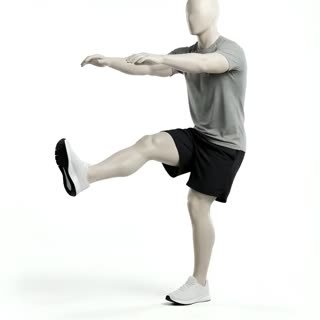
Pistol squatJambes
The full single-leg squat, the famous pistol squat, closes the list. It takes strength, balance and mobility. One intermediate step helps enormously: lower yourself on one leg to a bench set at knee height, then lower that bench week after week.
- Weeks 1 to 4: bodyweight squats, technique and range of motion.
- Weeks 5 to 8: goblet squat and split squat.
- Weeks 9 to 12: barbell, Bulgarian split squat and pistol to a box.
A personal trainer can build this progression around your body and your goals.
Common questions about the squat
How many squats should you do per day?
There's no magic number. For a beginner, three sets of fifteen bodyweight squats, three times a week, already brings real results. Muscles need rest to rebuild, so a heavy session every single day serves no purpose. Fifty to a hundred reps a day stays doable without load, as long as the movement is clean.
Can you lose weight doing squats every day?
Squats alone don't melt fat. They build muscle, which raises the energy you burn at rest. Paired with a calorie deficit and a bit of cardio, they become a serious ally. The weight loss comes from the deficit, not from the rep count.
What is a curved squat?
The curved squat refers to a machine with an arced path, a cousin of the hack squat. The carriage follows an arc, which better matches the natural path of the hips. You work quads and glutes with the back fully supported.
Which muscles stand out in each variation?
The front squat and the hack squat load the quads. Sumo goes after the adductors. The Bulgarian split squat and deep versions emphasize the glutes. Varying the angles is still the best way to cover everything.
How do you know if your squat is correct?
Film yourself from the side, then from the front. Check three things: neutral back, knees in line with your feet, heels planted. Still, an outside eye works faster than a video. A one-on-one session often fixes in an hour what's been off for months.