Why lifting speeds up fat loss
Plenty of people still believe cardio is the only thing that burns fat. It isn't. A well-built strength training and weight loss program gets results faster, and those results last. The reason is simple: lifting protects your muscle while you lose fat. Your shape actually changes, instead of just shrinking.
Metabolism, your invisible ally
Muscle burns energy even when you're doing nothing. The more of it you keep, the higher your metabolism stays. Dieting alone strips away muscle along with fat. You know how that story ends: the weight comes back as soon as you eat normally again. Strength workouts keep you out of that trap. They send the body a clear message: this tissue is being used, keep it.
What lifting changes in the body
After a session with weights, your energy burn stays elevated for hours. The body repairs, rebuilds, consumes. Add better blood sugar control and a sturdier posture. And a kilo lost on the scale isn't worth the same depending on what it was. A kilo less fat shows in the mirror. A kilo less muscle means a slower metabolism and a guaranteed rebound.
The foundations of a training plan that holds up
A fat loss program rests on three pillars: training, nutrition and rest. None of them works alone. What matters isn't the perfect session, it's the one you repeat day after day, week after week. Consistency always beats the occasional all-out effort.
- Progress: add a little weight, a rep or a set as the weeks go by.
 Prioritize the big lifts, the ones that demand a lot of muscle.
- Cut the dead time so the session stays dense.
- Sleep seven to eight hours: recovery is part of the training plan.
How many sessions per week?
Three sessions a week is an excellent base. Four is the ideal rhythm if your schedule allows it. Below two, progress gets hard to come by. Count on 45 to 60 minutes per session, no more. A session that drags on loses quality and eats into your motivation.
Full body or split: which one?
Full body hits the whole body every time you walk into the gym. It suits beginners perfectly, and anyone training three times a week. A split divides the work by muscle group. It starts to make sense beyond four sessions a week. For most people, the mixed format stays the most effective: two targeted sessions and one general one.
A sample training week
Here's a concrete training program to run for six to eight weeks. Go light the first time through, long enough to master the movements. Then add load gradually. Leave a rest day between two sessions in the week so the body can recover.
Session A – upper body
 Bench press or push-ups: 4 sets of 8 to 12 reps
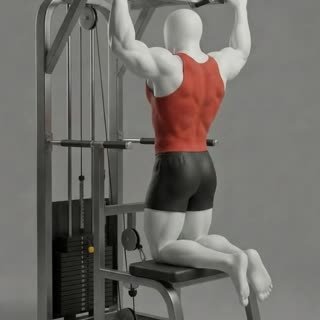 Lat pulldown or assisted pull-up: 4 x 10
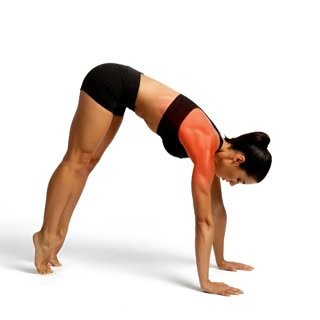 Dumbbell overhead press: 3 x 12
- Bent-over row: 3 x 12
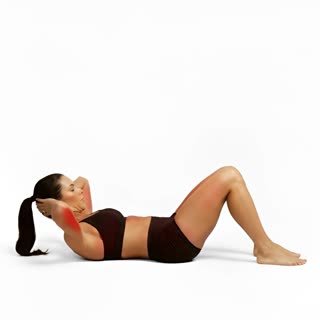 Front plank: 3 x 40 seconds
Session B – lower body
 Squat: 4 sets of 10 reps
 Walking lunges: 3 x 12 per leg
 Romanian deadlift: 3 x 10
 Leg press: 3 x 15
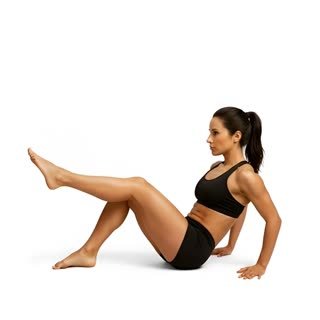 Standing calf raises: 3 x 20
Session C – full body circuit
Run through the following strength exercises back to back with only 30 seconds of rest. Do three to four full rounds. This session drives the heart rate up while keeping real strength work in play.
 Goblet squat: 15 reps
 Push-ups: as many clean reps as possible
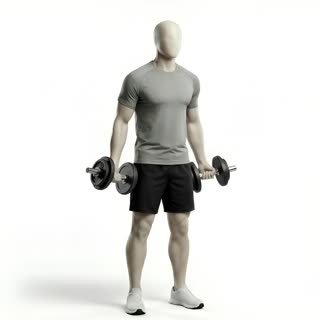 Dumbbell row: 12 per arm
 Hip thrust: 15 reps
 Mountain climbers: 30 seconds
The best strength exercises for burning fat
Not all movements are equal when the goal is to lose weight. The best ones recruit the most muscle fibers at once. They demand a whole-body effort, so they burn more.
The basic movements
Squat, deadlift, press, pull, lunge. These five families are the foundation of any serious plan. They work several joints at the same time. A squat calls on quads, glutes, abs and back. An isolation machine only touches one muscle. You can add a few at the end of a session, but never make them the priority.
Bodyweight, at home
No gym membership? Bodyweight is more than enough to get started. Push-ups, jump squats, lunges, chair dips, planks, burpees: these work anywhere. To keep progressing without equipment, play with tempo, range of motion and rest time. Lowering over four seconds turns a plain squat into something brutal. It's often the route taken by women training at home, with no time to travel to a gym.
Adding cardio, but with a method
Cardio still has its place. It raises your daily energy burn without draining the nervous system. But it should never replace the weights. The classic balance fits in one sentence: lifting builds, cardio tops it up.
Brisk walking and cycling: moderate intensity
Brisk walking is probably the most underrated physical activity there is. Thirty to forty-five minutes, three to five times a week, and the scale moves. Cycling gives you the same benefit with zero impact on the joints. These long, low-intensity outings draw readily on fat stores. They slot easily into a morning or a day away from the gym.
Short, high-intensity sessions
Short interval sessions, 12 to 20 minutes, round out the picture nicely. One or two a week is plenty. Beyond that, fatigue piles up and the quality of your strength sessions drops. Always put them after the weights, never before. Coaches widely use these methods to break through a plateau.
Nutrition: the number one lever
No amount of training makes up for chaotic eating. It's the truth every coach repeats. Your plate decides the fat loss, the gym decides the shape of your body. The two answer each other.
A sensible calorie deficit
To lose fat, you have to take in less energy than you burn. Aim for a modest deficit, around 300 to 500 calories a day. Losing 0.5 to 1% of body weight per week is a good pace. On average, that's 400 to 800 grams a week. Going faster looks tempting, but muscle loss always follows. A healthy approach is what gives lasting results. Our guide to the calorie deficit breaks down the math.
Getting your intake right
Nutrition comes down to a handful of simple markers, no obsessive kitchen scale required.
- Protein: 1.6 to 2 g per kilo of body weight. It preserves muscle mass and keeps hunger in check.
- Carbs: around your workouts, favoring whole sources.
- Fats: don't cut them out, they run your hormones.
 Vegetables and water: at every meal, no exceptions.
A dietary reset beats a strict diet. Cutting out too much at once leads to frustration, then to a binge. Put another way: build habits you'll still have in a year.
Adapting the program to your profile
The principle of strength training for fat loss is the same for everyone. Only the settings change. A woman starting out will often begin with more volume on the lower body and moderate loads. A man will tend to load up more on the upper body. Either way, progression and consistency matter more than the details.
Beginners are better off starting with full body three times a week, using simple movements. Experienced lifters can aim for a cutting phase, with a sharper deficit and a tighter training volume. If you're unsure, a strength coach will adjust the plan to your level, your equipment and your schedule.
Should you download a strength training weight loss PDF?
A strength training weight loss pdf has one real advantage: it goes everywhere with you, offline included. You tick off your sets, log your loads, see the progress in black and white. It's an excellent tracking tool. But a generic file knows nothing about your shoulder pain, your schedule or your actual level. Use it as a framework, not as law. The best plan is still the one you can actually follow, one program after the next, without quitting after three weeks.
Measuring results and staying the course
The scale lies often. Muscle weighs, water fluctuates, stress plays its part. Weigh yourself once a week, always under the same conditions, and look at the trend over a month. Add other markers: waist measurement, photos, how your clothes feel, the loads you lift. Those tell the story of your physique far better.
It's important to accept the plateaus. They happen to everyone. When progress stalls for more than three weeks, look at sleep and your plate first, before adding sessions. Doing too much is the fastest way to quit altogether.
Frequently asked questions
Can you lose fat and build muscle at the same time?
Yes, especially if you're a beginner or carrying extra weight. It's called body recomposition. You need to combine a small deficit, a high protein intake and regular strength training. For advanced lifters, it gets much slower.
How long before you see the first results?
The way you feel changes within three weeks. Visible changes usually show up after six to eight weeks. Count on three months for a clear change in your shape.
Do you have to train fasted to burn fat?
No. Across the day, total energy balance counts far more than when you train. Train when you perform best.
Are three sessions really enough?
Yes, if they're complete and progressive. Three strength sessions a week, two brisk walks and a plate you control already make a winning plan. The rest is just a question of consistency.