Working your upper body isn't just about grinding out push-ups and biceps curls. A good upper body workout program spreads the work across muscle groups, alternates heavy lifts with precise movements, and leaves enough rest for you to actually progress. In a gym, at home or on the road, the logic stays the same: a handful of well-chosen exercises, steady progression, consistency. Here's how to build a session that holds up, adapt it to your level and your equipment, and spot the moment a coach will save you months.
Upper body training: what a session really works
Above the hips, everything counts: chest, back, shoulders, arms, and the core that ties it all together. Serious upper body work improves your posture, your functional strength and your shape. It complements lower body training, which you should never sacrifice: a balanced physique is built on both floors. Plenty of lifters start with a full-body routine before splitting their week into targeted sessions.
The muscle groups people forget
Every area deserves its place, including the ones you don't see in the mirror. Back and rear delts often get dropped, even though they protect the shoulder joint and pull your chest upright. Spread these five families across your training:
 Chest: bench press, incline press, push-ups, flyes.
- Back: pull-ups, lat pulldown, barbell row, seated row.
- Shoulders: overhead press, lateral raises, rear delt flyes.
- Arms: curls, dips, cable pushdowns.
- Core: plank, hollow body, leg raises.
Compound lifts and isolation work
Compound lifts are multi-joint: they move several joints and a lot of muscle mass at once. Bench press, pull-ups, dips and overhead press all belong to this family. They're what builds strength and size, so put them at the start of the session, while you're fresh. Isolation moves come next: lateral raises, concentration curls, triceps extensions. Their job is to finish off one muscle, not to carry the session. Respect that order and you'll progress without piling on pointless exercises.
Upper body workout program at the gym
At the gym you have everything on hand: barbells, dumbbells, cables, machines. Think in movement families rather than isolated muscles. The most practical approach is to group pushing on one side and pulling on the other: chest & triceps on Monday, back and biceps on Thursday, with shoulders split across both. This template suits most intermediate lifters:
 Barbell bench press: 4 × 6 to 8.
 Lat pulldown to the chest: 4 × 10.
 Dumbbell overhead press: 3 × 8.
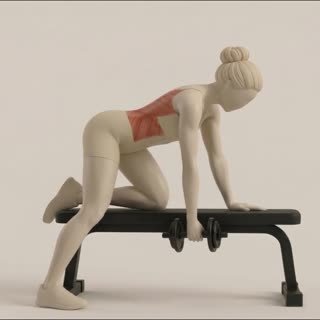 Single-arm row: 3 × 12 per side.
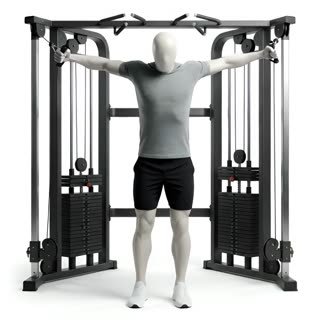 Lateral raises: 3 × 15.
 Biceps & triceps superset: 3 × 12 on each movement.
Machines or free weights?
Starting on machines is reassuring: the path is fixed, the seat takes seconds to adjust, and the risk of technical error drops sharply. The chest press, seated row and shoulder machine let you chase those last hard reps without a spotter. Free weights recruit more stabilizers and carry over better to real life. Combine the two: barbells and dumbbells for the heavy work, machines for isolation at the end of the session. Change your angles and grips every six to eight weeks too, to get progress moving again.
Upper body workout at home, with no equipment
No gym nearby? Your bodyweight is more than enough to stay in shape, and even to build muscle over the first few months. Push-ups, dips between two chairs, pull-ups on a doorway bar and core work hit the whole torso in very little space. The principle fits in one sentence: when an exercise gets easy, slow the lowering phase, pause at the bottom or change your hand spacing. Here's a home session to run two or three times a week:
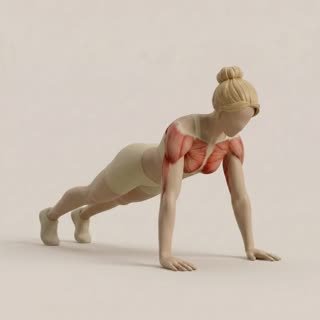 Standard push-ups: 4 sets to within 2 reps of failure, chest to the floor.
 Close-grip push-ups: 3 × 10 to 15.
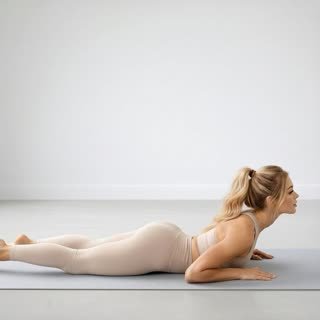 Pull-ups or rows under a table: 4 max sets.
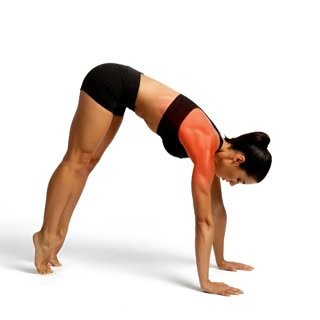
- Pike push-ups, hips high and head towards the floor: 3 × 8.
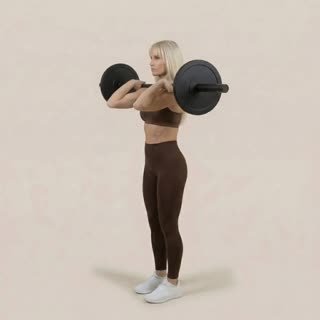 Front and side planks: 3 × 45 seconds.
Sets, reps and rest: getting the numbers right
Three dials decide the outcome: sets, reps and recovery. For strength, work in the 4 to 6 rep range with 2 to 3 minutes of rest. For size, aim for 8 to 12 reps and 90 seconds between sets. After muscular endurance? Go up to 15 or 20 reps with only 45 seconds. Rest isn't wasted time: it's what lets you attack the next set with a decent load. Keep a log, on paper or in an app, so you can find last week's numbers and know what to add.
Two sessions a week, or four?
Frequency depends on your schedule, not on some universal rule. With two sessions a week, each one has to be complete: push, pull, shoulders, arms, built on compound movements. That pace works perfectly well, as long as you don't skip weeks. At four, you can split things up: two push-focused sessions, two pull-focused, with more volume per muscle and fatigue spread more evenly. My advice: start low and add a session once your recovery keeps up. A beginner usually gets more out of two well-run sessions than four rushed ones. And when time is short, full-body remains an excellent fallback.
Upper body training for women: the real differences
Fundamentally, there aren't many. A woman builds muscle with the same exercises, the same relative loads and the same progression logic. What changes is the goal people state: many women want to shape their shoulders and back, strengthen their arms and hold a tall posture all day. The program then leans more on pulling, lateral raises and core work, with no reason to steer clear of barbells. No training plan transforms your shape in a few weeks against your will: putting on size takes time, load and a deliberate calorie surplus.
Finding a free PDF program and knowing what to do with it
Plenty of people look for an upper body workout program pdf to print out and drop in their gym bag. It's a good idea if it stops you improvising between two machines, and you'll find plenty of them free online. One caveat: a generic file knows nothing about your injury history, your shoulder mobility or your real level. Use it as a framework, then adjust the loads and the volume based on how you feel. To move faster and avoid picking up bad technical habits, have a professional look over your plan: on Koatcher, you can compare profiles and find a personal trainer who'll build a plan around your situation and correct your execution.
Frequently asked questions
How long before I see results?
The first strength gains show up in three to four weeks, visible changes around the third month. It all depends on your consistency, your sleep and your diet.
Should I train my lower body alongside this?
Yes, without question. Skipping legs creates postural imbalances and caps your overall progress. Keep at least one leg session a week.
Can I do two upper body sessions back to back?
You can, provided you alternate muscle groups: push one day, pull the next. A given muscle needs 48 hours of rest to recover properly.