What muscles lunges work, and why do them

FenteJambes
The lunge is the big single-leg movement for the lower body. It recruits the quad of the front leg, the glute max, the hamstrings and the adductors. The hip and ankle stabilizers work too, because the body is balanced over one foot. In French, the move is called a fente. Training one leg at a time fixes the imbalances a two-legged movement usually hides.
How to do a lunge: step by step
Feet hip-width apart, take a long step forward, then drop straight down until both knees form a right angle. Keep the chest upright and your center of gravity between the two feet. Push through the front heel to come back up. Full range, with the back hip opening properly, beats a short, fast dip.
Knee caving in, chest tipping forward: the mistakes to fix
The most common error is the front knee drifting inward. Guide it toward your little toe all the way down. Too short a step crushes the joint; too long a step tips the chest forward. If the back knee bangs the floor, cut the range. Pain is not normal: in that case a partial version works, and a coach can adjust the load.
Forward, reverse, lateral and alternating lunges
Forward lunges demand control on the landing and load the quads most. Reverse lunges are kinder to the knee, since the foot steps back instead of braking, and they hit the glutes. Lateral lunges bring in the adductors and the glute medius. Alternating lunges switch from one leg to the other on the spot: a simple format to start with.
Bulgarian split squats and walking lunges
The Bulgarian split squat puts the back foot on a bench. All the weight goes through the front leg and the glute works in a deep stretch: it is the most demanding variation. Walking lunges move you step after step across the gym, mixing balance, volume and heart rate.
Dumbbell lunges and a leg and glute workout
A dumbbell in each hand is the most practical way to add load. Here is a sample session, to run twice a week.
- 4 x 10 dumbbell forward lunges per leg
 3 x 12 dumbbell walking lunges over 15 meters
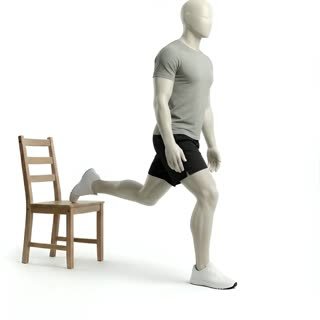 3 x 8 Bulgarian split squats per leg
 3 x 15 squats or a set on the leg press
Your questions about lunges
Forward or reverse lunges? Both, but start with reverse if your knees are sensitive. Forward comes after.
Lunges or squats? The squat takes heavier loads and builds overall strength. The lunge sharpens balance and single-leg work. Running both is the best option.
How many lunges a day? Aim for 60 to 100 reps per session, three times a week. Every day, no: muscle needs to recover.
Walking or static lunges? Static ones to learn the movement, walking ones to build endurance and coordination.
Need a plan built around you? A personal trainer can fix your position in a few sessions.