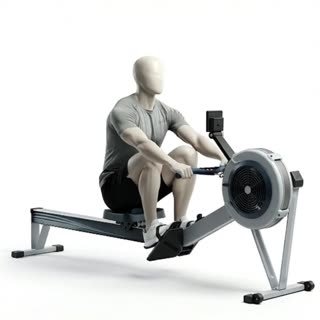
RameurCardio · machines
It sits in the corner of every gym, often busy, rarely used well. The rowing machine is a piece of kit that puts close to 80% of the body's muscles to work in a single movement, spares your joints, and burns a volume of calories few exercises can match. Provided you know what is actually working, in what order, and with what technique. Here is what happens on every stroke, how to set the resistance, and how to build sessions that match your goals.
A cardio machine that works the whole body
Unlike the bike or the treadmill, which mostly isolate the legs, the rower combines a drive from the lower body, a pull through the torso and constant core bracing. The movement is closed: your feet stay held by the strap, your hands never leave the handle, and the effort travels from one end of the body to the other. That whole-body quality is why cardio training on the rower shows up in the plans of athletes who are short on time.
Second advantage: no impact with the ground. Sat on a sliding seat, you protect your knees, hips and ankles. This cardio machine suits someone who wants to improve their physical condition just as well as someone coming back to training after a long break, as long as you look after your posture from the very first minute.
Rowing machine: which muscles does it work?
Which muscles work on a rowing machine? The rower spreads the effort along a very precise chain: legs → torso → arms on the way out, then the reverse order on the way back. Each segment has a job, and none of them carries the effort alone. That coordination is what separates an effective session from twenty minutes of messy pulling.
The lower body supplies the power

Leg pressJambes · machines
Around 60% of the work comes from the lower body. Pushing against the footplate recruits the quads first, then the glutes and hamstrings as soon as the hips open; the calves stabilise the drive. It is the most muscular part of the stroke, and the one beginners throw away by trying to pull too early with the arms. For more isolated quad work, the leg press remains a good complement.
The back and upper body finish the stroke
Then comes the pull phase. The lats draw the handle backwards, the mid traps and rhomboids bring the shoulder blades together, the biceps and forearms go along with the movement, and the rear delts lock the shoulder in place. These back muscles are what make the rower such a good antidote to the rounded shoulders and collapsed chest of people who sit all day. The upper body does not produce the force: it finishes it.
The core never switches off
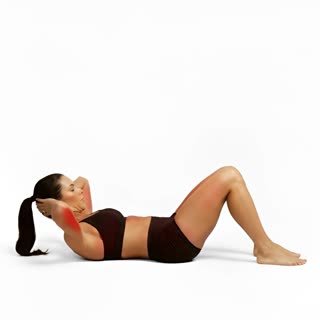
CrunchAbdominaux / Core
In between, the trunk transmits. The rectus abdominis, the obliques and the transversus hold the torso while the seat travels back, while the lower back and the spinal erectors keep the spine aligned. That constant demand is why a session leaves your core tired without a single crunch. Done properly, rowing is also a dynamic bracing exercise, which makes it valuable in fitness and in strength and conditioning alike.
The muscles the rower does not work
No machine does everything. The pecs, the triceps and the front delts stay largely out of it, since there is no pushing with the arms in the stroke. The adductors and the lateral hip muscles are barely worked either, because the movement happens in a single plane. If your goal is to build up your upper body, you will need to add iron.
The four phases of the rowing stroke
A clean stroke always breaks down the same way. Repeat the sequence until it runs on its own: it is what protects your joints and raises your output.
- The catch: shins vertical, heels close to your glutes, arms straight, back tall and eyes forward. The torso leans slightly forward.
 The drive: the legs push hard, the arms stay straight. Nothing else moves at this point.
- The pull: the torso swings back, then the elbows slide along the ribs and the handle touches the bottom of the ribcage. Squeeze the shoulder blades for a split second.
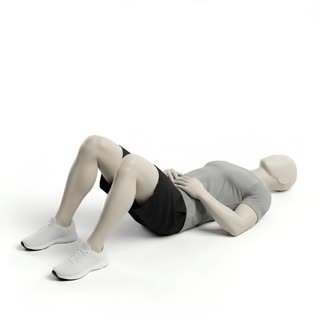 The recovery: arms, torso, legs, in that order. This phase should last about twice as long as the drive.
The mistakes that wreck your back
A rounded back tops the list: it dumps the load onto the lumbar discs and has to be avoided at all costs. Next come arms that start before the legs, shoulders creeping up towards the ears, and a stroke rate so high it chops the movement apart. Keep the shoulders down and the neck long, and aim to control the recovery rather than pile up strokes. One slow, complete movement is worth more than thirty-five sloppy strokes a minute.
Setting resistance and intensity to match your goals
On an air rower, the damper is not a "weight" but a feel of boat. A setting between 3 and 5 works for most people: it lets you engage the legs without breaking the rhythm. Go to 6 or 7 only for strength work, on short sets. To build your endurance, keep the resistance low and increase the duration instead. To gain power, cutting the work time and raising the intensity will be more productive.
A session plan to burn fat
The rower lets you burn 500 to 800 calories an hour depending on your build and your pace. Three sessions a week are enough to create a visible deficit, as long as you vary the formats instead of repeating the same easy paddle.
- Long session: 35 minutes at conversational pace, 20 to 22 strokes per minute. Ideal for laying down the aerobic base.
- Short intervals: 10 x 250 metres fast, 1 minute of recovery. The best-value format for going after body fat.
 Pyramid: 1, 2, 3, 2 then 1 minute of hard effort, with recovery equal to the work time.
Add a simple progression: ten more minutes or 300 more metres every two weeks. Without adjusting what you eat, no amount of training will be enough, but the rower remains one of the few machines that can strip fat while protecting muscle mass.
Rowing and weight training: do you have to choose?
The two are not in conflict. Put the rower after your lifting sets, at the end of a session, or on a day dedicated to cardio. Twenty minutes after a leg workout will be counterproductive; the same twenty minutes after a chest session will go down fine. A coach can make the call based on your schedule.
Common questions about rowing machine muscles
Which muscles work hardest during a session?
The quads and glutes first, then the lats and the traps. The abs and the lower back work non-stop, without ever producing any movement.
Does rowing burn belly fat?
Spot reduction does not exist. That said, the high energy cost and the constant demand on the core do slim the waistline once the calorie deficit is there.
Is a home rower as good as one in the gym?
Yes, if the rail is long enough for your height and the resistance is progressive. The muscles targeted are identical; only the feel of the slide changes.
Rowing machine or seated cable row for the back?
The seated row isolates the lats with a precise load. The rower works them for endurance inside a complete movement. The two go together very well.
Want a plan built around your level and your availability? Find a personal trainer near you and get your technique corrected from the very first sessions.